The Origin: A Visual Connection to Venice
If you are looking for the direct answer to why are shelves called gondolas, it comes down to shape and function. The term is derived from the famous Venetian boats used in Italy. Much like the long, narrow, and flat-bottomed boats that navigate the canals of Venice, a retail gondola is a long, narrow, and freestanding structure.
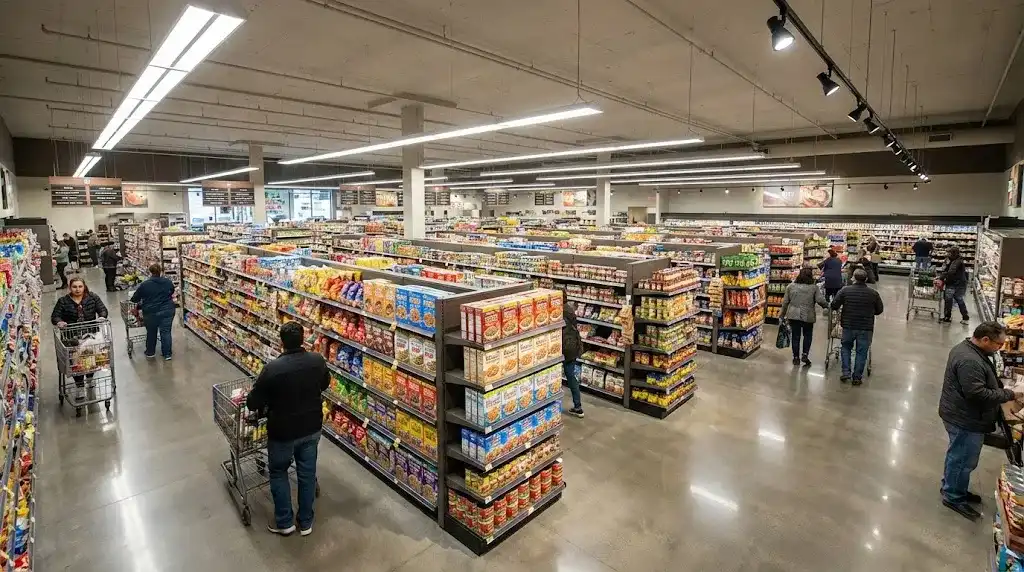
In a store environment, these shelving units are designed to be “double-sided” and placed in the center of the sales floor—essentially creating an “island” that customers flow around, just as water flows around a boat. Unlike wall units that are anchored to the building’s perimeter, a gondola is self-supporting (freestanding) and creates the navigational channels—or aisles—of your retail space.
Key Takeaways
- Visual Analogy: The name references the long, narrow shape and “floating” (freestanding) nature of Venetian boats.
- Structural Definition: A gondola is a freestanding, double-sided fixture that does not require wall mounting.
- Primary Function: It is used to create aisles and maximize the center floor space of a retail store.
- Versatility: These units are modular, meaning you can adjust shelf heights and back panel materials (pegboard, slatwall) to fit different merchandise.
- Commercial Value: They offer the highest ROI per square foot by displaying inventory on two sides simultaneously.
The Anatomy of a Gondola Shelf
To understand why this fixture is the industry standard for everyone from convenience stores to supermarkets, you need to look beyond the name and look at the engineering. A gondola is not just a “shelf”; it is a modular system.
When you purchase these fixtures, you aren’t buying a single welded piece. You are investing in a “starter unit” and “add-on units” that connect to form runs.
Core Components
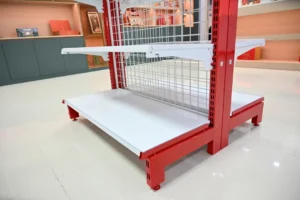
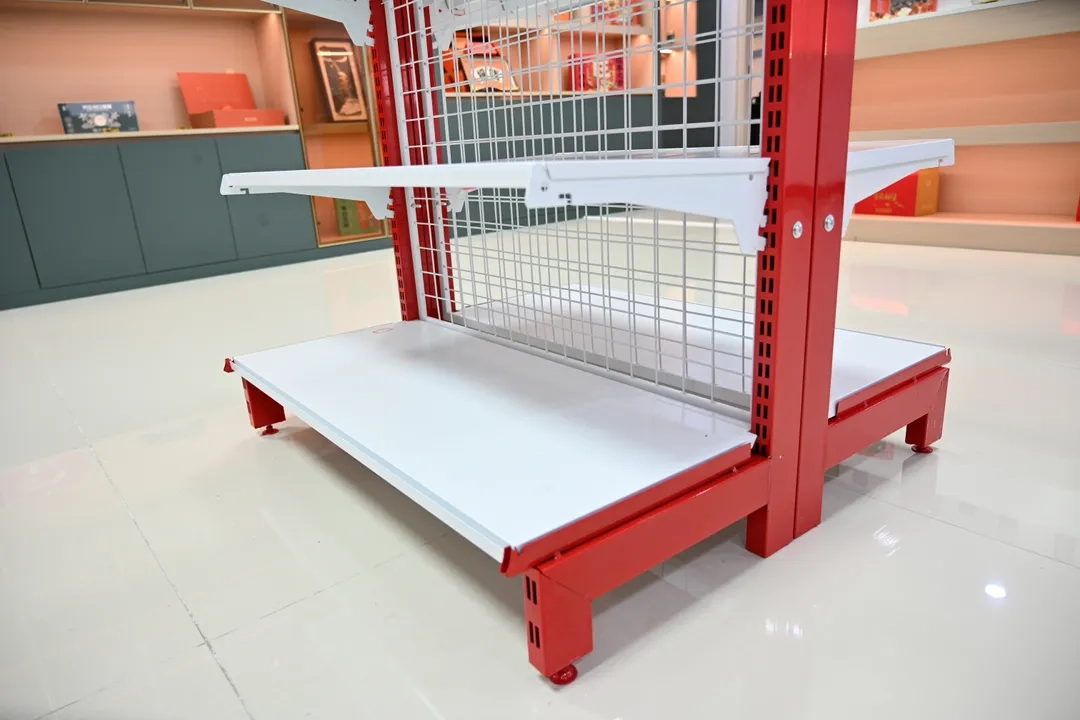
- The Base (The Shoe): This is the heavy steel foot at the bottom. It connects to the upright and provides the low center of gravity that keeps the unit from tipping over. This is what makes it “freestanding.”
- The Upright (The Vertical Post): These are the vertical columns with slots (usually on 1-inch centers). This is where you clip in your shelves.
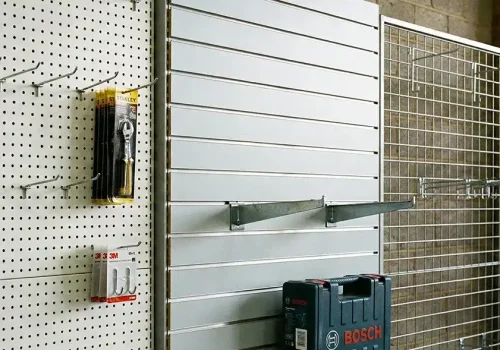
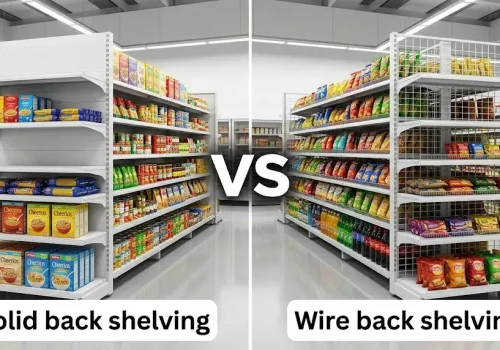
- The Back Panel: This connects the two uprights to make the unit rigid. Options usually include pegboard (for hanging hooks), solid steel, or slatwall.
If you are planning a new store layout, you might also be interested in how to select the right back panel material. Learn more in our comprehensive Gondola Shelving Dimensions Guide.
Comparing Gondolas to Wall Units and End Caps
While “gondola” is often used as a blanket term for all metal shelving, there are distinct technical differences you need to be aware of when planning your floor plan.
To understand the full picture of your shelving options, read our detailed comparison: Gondola Shelving vs Wall Shelving: Which to Choose
Retail Shelving Comparison
| Feature | Gondola Island Unit | Wall Unit (Single-Sided) | End Cap |
| Structure | Double-sided (Front & Back) | Single-sided (Front only) | Single-sided (positioned at the end) |
| Placement | Center of store floor | Perimeter/Against walls | At the end of a Gondola run |
| Anchoring | Freestanding (Self-supported) | Often anchored to wall | Attached to the Gondola run |
| Purpose | Creating aisles & Traffic flow | Maximizing vertical wall space | Promotional/High-impulse items |
| Depth | Deep footprint (Base + Base) | Shallow footprint (Single Base) | Varies (matches Gondola width) |
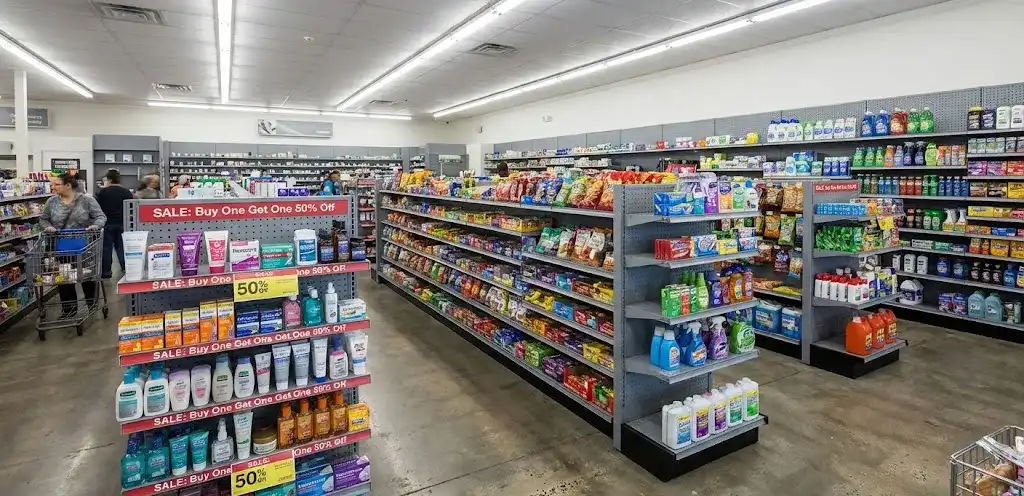
The “Gondola Island” is the workhorse for the center of your store. It is called an island because it sits isolated from the building’s architecture.
Why the “Gondola” Design Dominates Retail
1.Maximizing Merchandising Density
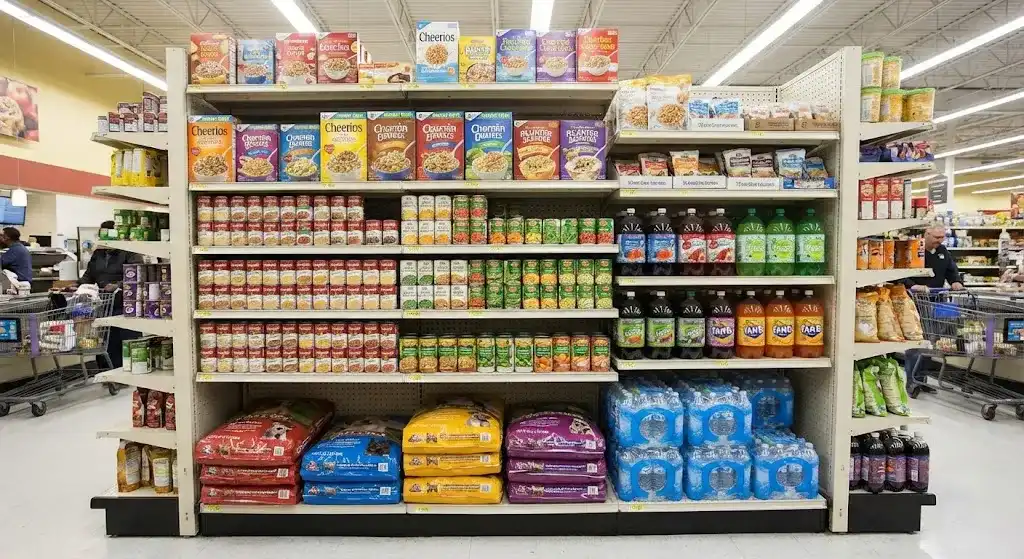
Because a gondola is double-sided, it effectively doubles your display area compared to a wall unit of the same length. For a store paying high rent per square foot, this density is non-negotiable. You can display cereal on one side and pasta on the other, using a single central structure.
2.Traffic Control and Flow
The placement of these units dictates how customers move through your store. Long runs of gondolas create the “racetrack” or grid layout seen in grocery stores. By manipulating the length of these “boats,” you control the flow of the “river” (your customers).
3.Heavy-Duty Weight Capacity
A standard metal gondola shelf is engineered to hold significant weight. Depending on the brand, compare Madix vs Lozier Gondola Shelving, a single shelf can often support between 300 to 500 pounds. This high capacity allows you to stack heavy goods like canned food, beverages, or automotive parts without fear of structural failure.
Choosing the Right Dimensions for Your Store
1.Height Considerations
- 48-54 Inches (Low Profile): These are often used in convenience stores or pharmacies. They allow customers to see over the top of the aisle, which improves security and makes the store feel larger.
- 72-84 Inches (High Profile): Standard for supermarkets and hardware stores. These maximize vertical storage but block sightlines.
2.Shelf Depth
The base deck is usually the deepest part of the unit, with upper shelves getting progressively shallower to allow light to cascade down to the bottom products. A common configuration might be a 22-inch base with 19-inch upper shelves.
For a step-by-step approach to planning your store, check out our guide: How to Plan Your Gondola Shelving Layout
Common Misconceptions About Gondola Shelving
1. “Starter” vs. “Add-on”
A common mistake buyers make is ordering all “Starter” units. A Starter unit includes two uprights. An Add-on unit includes only one upright because it shares the upright of the previous unit. If you buy five Starters to make a row, you will overpay and have extra parts. If you buy five Add-ons, you won’t be able to build the first section.
2. The “Gondola” is just the metal part
While the metal structure is the gondola, the concept includes the accessories. Without shelf fences, dividers, or price tag molding, the gondola is just a skeleton. To fully utilize the fixture, you must treat it as a canvas for your merchandising strategy.
Why are shelves called gondolas
Conclusion
Shelves are called gondolas because their long, flat, freestanding shape resembles the famous boats of Venice. But for you, the retailer, they represent much more than a historical linguistic quirk. They are the fundamental building blocks of a profitable retail layout.
They offer the structural integrity to hold heavy merchandise, the flexibility to change with your inventory, and the double-sided utility to maximize your sales per square foot. To dive deeper into the fundamentals, explore our Complete Guide to Gondola Shelving. Whether you are opening a new location or renovating an existing one, understanding the mechanics of these fixtures is the first step toward a successful build-out.
We are here to help you configure the perfect layout. We understand that calculating the mix of starters, add-ons, and accessories can be complex.Contact our design team today to get a custom quote and a free 3D layout rendering for your store.