Professional Buying Guide for Supermarkets, Wholesalers & Retail Equipment Importers
When opening a supermarket, upgrading store equipment, or replacing old carts, one of the most common questions buyers ask is: how much does a grocery cart cost?
The answer depends on cart size, material, wheel quality, quantity, and supplier location. Some stores need low-cost standard carts, while others need premium custom models with child seats, logo handles, or coin lock systems.
This guide explains grocery cart pricing by size, region, and type, with tables to make comparison easier.
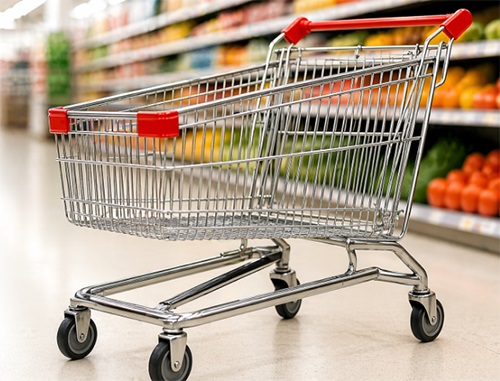
Average Grocery Cart Cost in 2026
Note: Final prices depend on quantity, customization, and shipping destination.
What Impacts Grocery Cart Pricing?
| Factor | How It Affects Cost |
|---|---|
| Size | Larger carts use more steel and larger wheels |
| Material | Better steel or stainless steel costs more |
| Finish | Zinc, chrome, or powder coating adds protection |
| Wheels | Quiet heavy-duty wheels cost more |
| Branding | Custom logo handles and colors increase price |
| Quantity | Bulk orders reduce unit cost |
Grocery Cart Cost by Size
Small Grocery Carts (60L–80L)
Best for convenience stores, urban supermarkets, pharmacies, and narrow aisles.
Price range: $60–$120
Medium Grocery Carts (100L–130L)
The most popular supermarket option worldwide.
Price range: $90–$180
Large Grocery Carts (150L–240L)
Best for hypermarkets, warehouse clubs, and family shopping stores.
Price range: $130–$260
Grocery Cart Prices by Region
| Region | Typical Price Range | Market Notes |
|---|---|---|
| China | $55–$180 | Strong factory pricing and OEM support |
| Europe | €110–€280 | Premium quality focus |
| Middle East | $95–$220 | Heavy-duty demand |
| Southeast Asia | $70–$180 | Growing supermarket market |
| Australia | Higher landed cost | Freight impacts pricing |
Conclusion
Grocery cart prices depend on size, material, and sourcing region. Small carts are budget-friendly, medium carts are the most practical, and large carts suit high-volume retail stores.
For importers and supermarket chains, China remains one of the best-value sourcing options. If you need competitive pricing, customization, and reliable export support, Spieth can be a dependable long-term supplier.