Gondola shelving is a freestanding, double-sided retail display system that forms the backbone of modern store layouts. If you’ve walked through a supermarket, convenience store, or pharmacy, you’ve interacted with gondola shelving—those central aisle fixtures that display products on both sides while customers browse.
This guide covers everything you need to know about shelving systems: how they work, the types they exist, their specifications, applications, and more.
Key Takeaways
- Gondola shelving refers to freestanding, modular retail fixtures with adjustable shelves and interchangeable back panels
- Standard heights range from 48″ to 96″, with shelf depths from 12″ to 24″
- Double-sided (island) gondolas generate 37% more sales per square foot than wall-mounted alternatives
- Initial investment ranges from $150-$600 per section depending on specifications
- Proper gondola configuration can increase product visibility by up to 40%
- 2026 trends include integrated digital price tags and sustainable materials
What is Gondola Shelving?
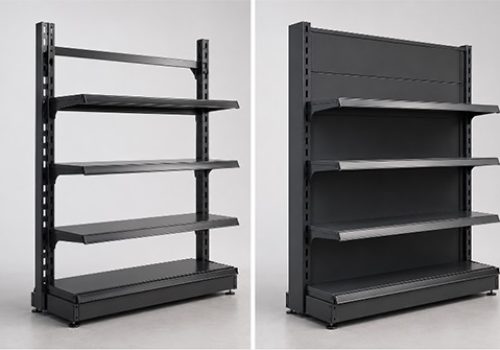
Gondola shelving is a freestanding retail display system consisting of a flat base, vertical upright posts, a back panel, and adjustable shelves. The term “gondola” derives from the resemblance to Venetian gondola boats when viewed from above—a narrow, elongated structure.
Unlike wall-mounted fixtures, gondola units stand independently on the sales floor. This design allows retailers to create aisles, define traffic patterns, and display merchandise from multiple sides.
The system gained widespread adoption in the 1950s when self-service supermarkets replaced traditional counter-service stores. Today, gondola shelving remains the dominant retail fixture category, with the global market valued at $4.2 billion in 2024.
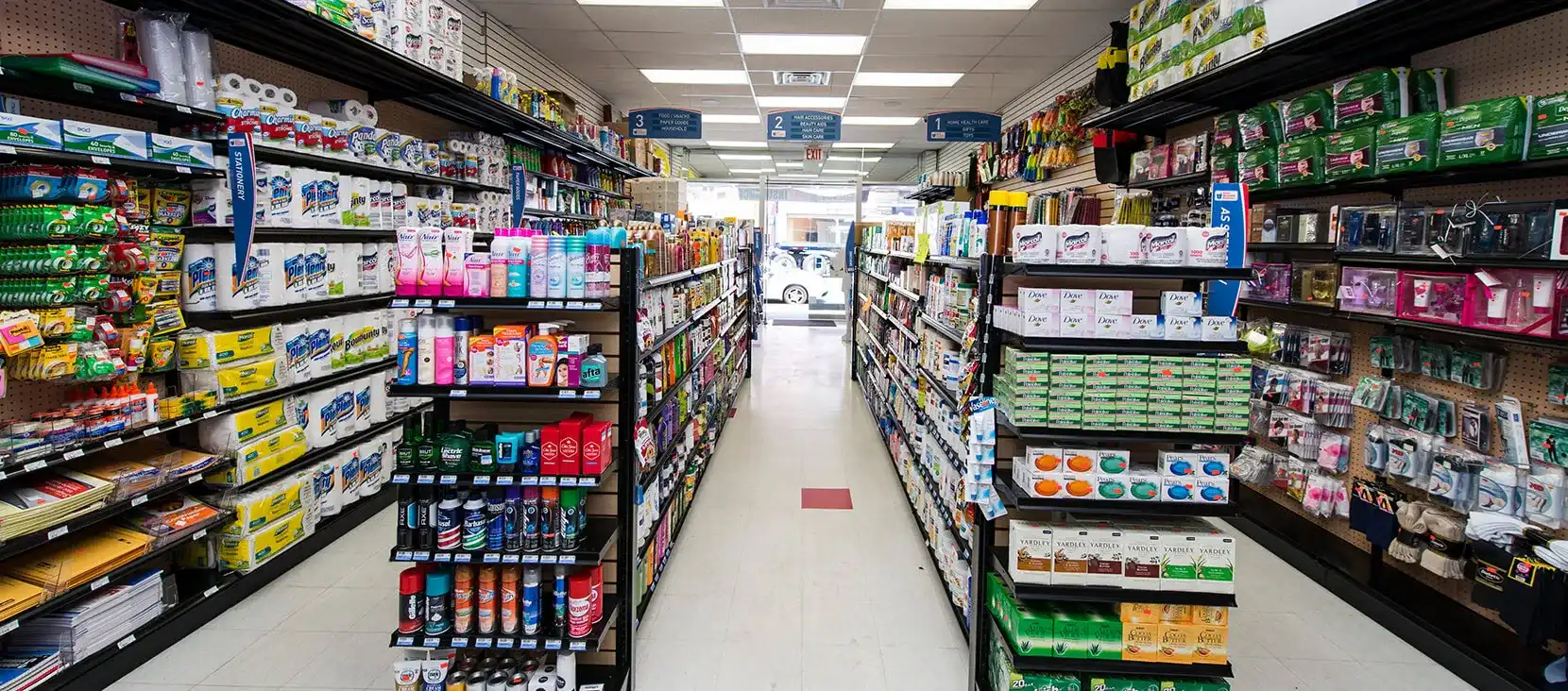
Gondola Shelving Components
Base Deck
The foundation of the gondola unit. Standard base decks measure 3-6 inches in height and provide stability while creating a bottom display shelf. Heavy-duty bases support up to 500 lbs per section.
Upright Posts
Vertical supports with slots or holes at regular intervals (typically 1″ on center) for shelf adjustment. Common heights:
| Height | Typical Application |
|---|---|
| 48″ | Checkout lanes, impulse zones |
| 54″ | Convenience stores, end caps |
| 60″ | Standard grocery aisles |
| 72″ | Supermarket center store |
| 84″ | Warehouse retail, club stores |
| 96″ | High-bay retail environments |
Back Panels
Three primary options exist:
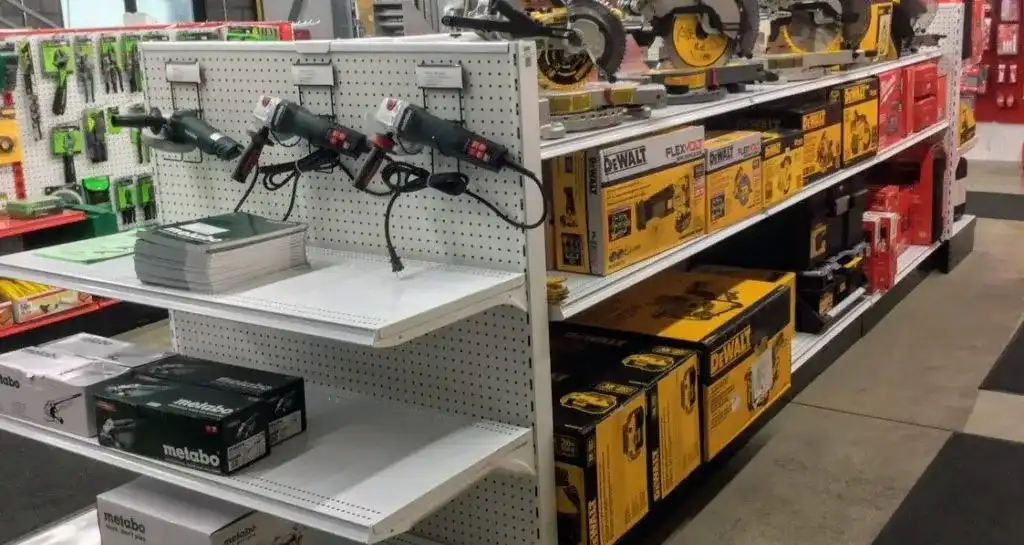
Pegboard Panels – Perforated hardboard accepting hooks and hangers. Ideal for hanging merchandise like tools, accessories, and packaged goods. Cost-effective but less durable.
Slatwall Panels – Horizontal grooves accepting specialized brackets. Provides clean aesthetics and flexible display options. Popular in apparel and specialty retail.
Solid/Flat Panels – Sheet metal or laminate surfaces. Best for shelf-only configurations. Easiest to clean and maintain.
Shelves
Adjustable shelves attach to uprights via brackets or clips. Standard depths include 12″, 16″, 19″, and 24″. Shelf capacities range from 150-350 lbs depending on material gauge and bracket type.
Accessories
- Price tag moldings and label holders
- Shelf dividers
- Hooks and pegs
- Wire baskets
- Sign holders and toppers
Types of Gondola Shelving Systems
Single-Sided Wall Gondolas
Positioned against walls with merchandise facing one direction. These units maximize wall space and typically feature heights of 72-96 inches. Wall gondolas work well for:
- Perimeter merchandising
- Category destinations
- High-inventory departments
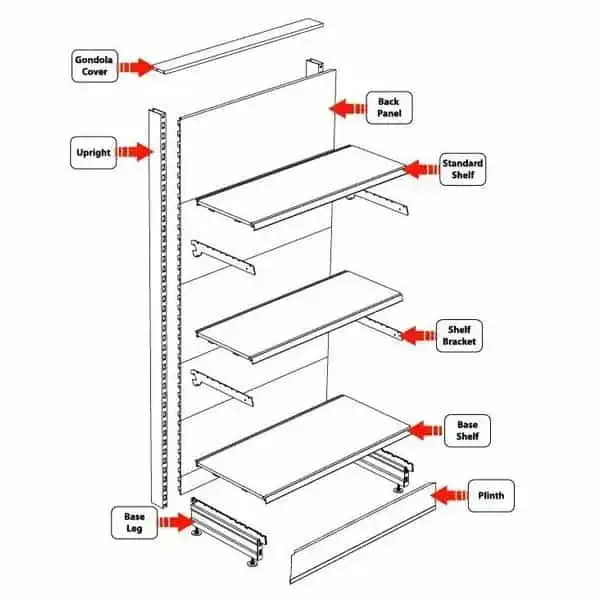
Double-Sided Island Gondolas
Freestanding units accessible from both sides. Island gondolas create store aisles and maximize floor space efficiency. A 2023 retail study found double-sided gondolas generate 37% higher sales per square foot compared to single-sided alternatives.
End Cap Gondolas
Positioned at aisle ends, end caps capture high-traffic visibility. Retailers report that end cap displays generate 4-8x higher sales velocity than mid-aisle positions. These premium locations typically feature promotional items, seasonal merchandise, or high-margin products.
Specialty Configurations
Pharmacy Gondolas – Lower heights (48-54″) for customer accessibility with lockable sections for regulated products.
Produce Gondolas – Slanted shelves with drainage and refrigeration compatibility.
Freezer/Cooler Gondolas – Corrosion-resistant materials rated for cold environments.
Gondola Shelving Dimensions
Selecting correct dimensions impacts both merchandising effectiveness and store operations.
Width Options
| Width | Common Use |
|---|---|
| 36″ | Standard sections |
| 48″ | High-volume categories |
| 24″ | Narrow aisles, specialty displays |
Depth Specifications
| Shelf Depth | Product Categories |
|---|---|
| 12″ | Small packaged goods, health & beauty |
| 16″ | Canned goods, beverages |
| 19″ | Cereal boxes, household items |
| 22″ | Bulk items, large packages |
| 24″ | Warehouse retail, club packs |
Load Capacity Considerations
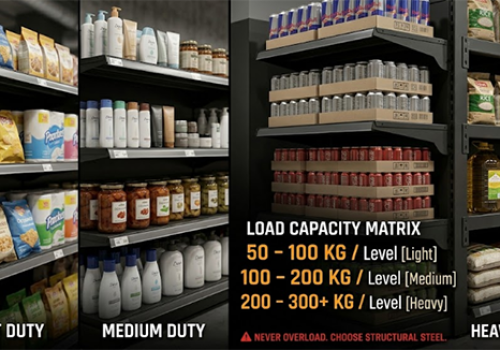
Standard commercial gondola shelves support 150-250 lbs per shelf. Heavy-duty industrial specifications reach 350-500 lbs. Always verify load ratings when merchandising dense products like beverages, canned goods, or bottled water.
Gondola Shelving Materials and Construction
Steel Gondola Systems
Cold-rolled steel construction dominates commercial applications. Benefits include:
- Superior load capacity
- 15-20 year lifespan with proper maintenance
- Fire-resistant
- Recyclable at end of life
Steel thickness (gauge) affects durability and price:
| Steel Gauge | Thickness | Application |
|---|---|---|
| 22 gauge | 0.030″ | Light-duty retail |
| 20 gauge | 0.036″ | Standard commercial |
| 18 gauge | 0.048″ | Heavy-duty/industrial |
| 16 gauge | 0.060″ | Extreme duty applications |
Finish Options
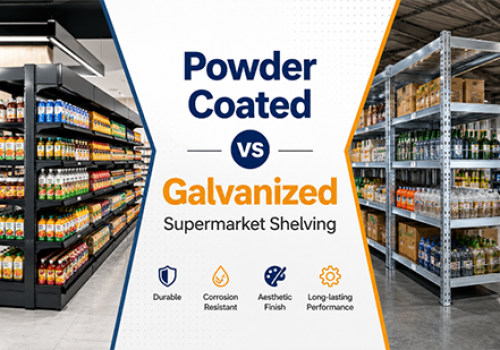
Powder Coating – Durable, scratch-resistant finish available in custom colors. Industry standard for commercial applications.
Chrome Plating – Premium aesthetic for specialty retail. Higher cost, requires more maintenance.
Zinc Plating – Corrosion resistance for refrigerated or high-humidity environments.
Gondola Shelving vs. Alternative Display Systems
| Feature | Gondola Shelving | Wall Shelving | Display Tables | Pallet Racking |
|---|---|---|---|---|
| Space efficiency | High | Medium | Low | Very high |
| Product accessibility | Excellent | Good | Excellent | Limited |
| Flexibility | High | Medium | High | Low |
| Cost per sq ft | $$ | $ | $$$ | $ |
| Best for | General retail | Perimeter | Promotions | Warehouse |
Heavy-duty gondolas support tool displays, paint supplies, and building materials. Pegboard back panels dominate for hanging merchandise.
Gondola Shelving Applications by Industry
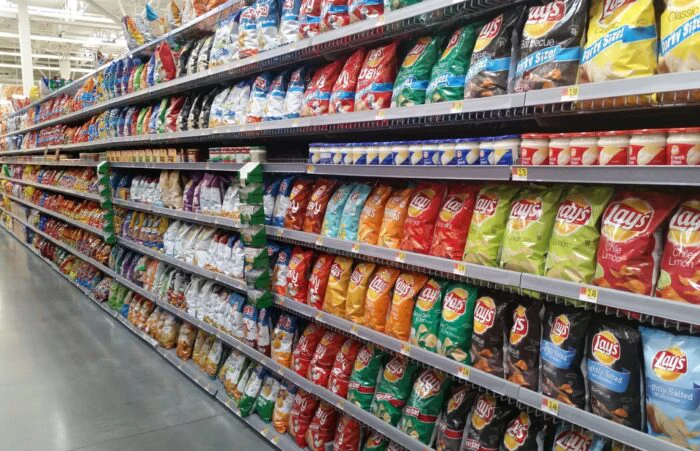
Supermarket and Grocery
Grocery stores rely on gondola shelving for 70-80% of center store merchandising. Standard configurations include:
- 72″ height for main aisles
- 54-60″ for secondary aisles
- 48″ for checkout lanes
- Specialized produce and dairy-compatible units
Convenience Stores
Space constraints demand efficient gondola layouts. C-store operators typically use:
- 54″ heights for visibility across the store
- Narrower 24-36″ sections
- End caps for promotional beverages
- Checkout counter gondolas for impulse items
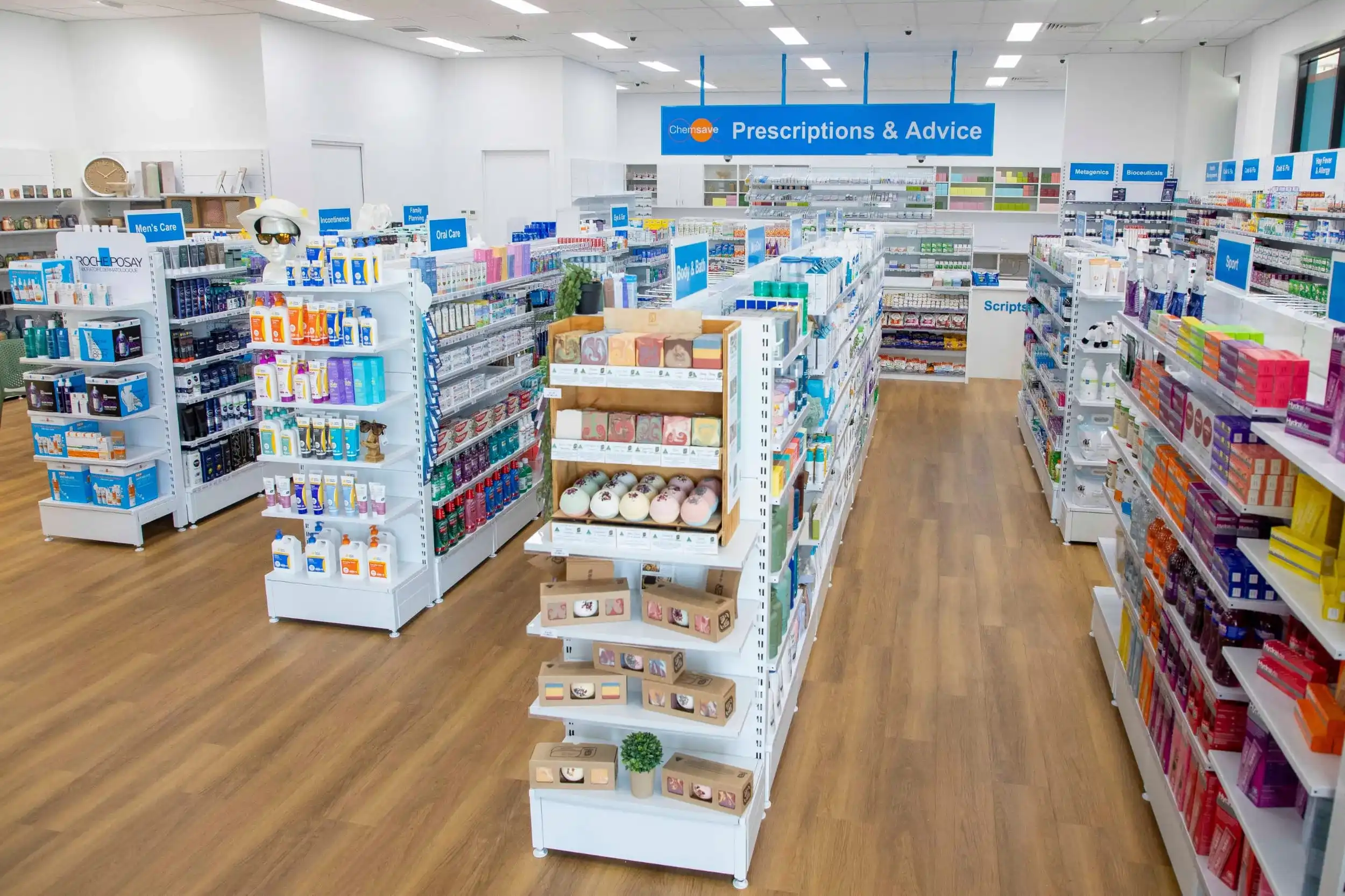
Pharmacy and Drug Stores
Pharmacy gondola requirements include:
-
- ADA-compliant heights (54″ maximum for customer access)
- Security features for high-theft categories
- Clean, clinical aesthetics
- Specialized OTC medication shelving
Hardware and Home Improvement
Heavy-duty gondolas support tool displays, paint supplies, and building materials. Pegboard back panels dominate for hanging merchandise.
Frequently Asked Questions
What is the difference between gondola shelving and wall shelving?
Gondola shelving stands independently on the retail floor, while wall shelving mounts directly to wall surfaces. Gondolas offer double-sided display capability and create store aisles. Wall shelving maximizes perimeter space but limits access to one side only.
How much weight can gondola shelving hold?
Standard commercial gondola shelves support 150-250 lbs per shelf. Heavy-duty specifications reach 350-500 lbs per shelf. Load capacity depends on steel gauge, shelf depth, bracket type, and span between uprights.
What is the standard height for gondola shelving?
Standard heights range from 48″ to 96″. Supermarkets typically use 72″ for center store aisles. Convenience stores prefer 54-60″ for cross-store visibility. Checkout lanes use 48″ heights.
How do you measure gondola shelving?
Measure three dimensions: height (floor to top of upright), width (section length, typically 36″ or 48″), and depth (front to back of shelf, ranging 12-24″). Also note back panel type and number of shelves per section.
What is the purpose of gondola end caps?
End caps position merchandise at high-visibility aisle ends. These locations capture shopper attention during store navigation. Retailers use end caps for promotions, seasonal items, and high-margin products due to superior sales velocity.
How long does gondola shelving last?
Quality commercial gondola systems last 15-20 years with proper maintenance. Steel construction resists wear, though high-traffic areas may require earlier component replacement. Powder coat finishes typically show wear after 8-10 years.
Can gondola shelving be used outdoors?
Standard gondolas are designed for indoor use only. Outdoor applications require specialized corrosion-resistant materials, marine-grade coatings, and UV-stable finishes. Outdoor-rated units cost significantly more than standard indoor specifications.
Summary
Gondola shelving remains the foundation of effective retail merchandising in 2026. Understanding specifications, materials, and configurations enables you to maximize sales floor productivity while controlling costs.
Key decisions include selecting appropriate heights for your retail format, specifying correct load capacities for your merchandise, and choosing back panel types that support your display strategy.