Selecting the right shelving system directly impacts your store’s sales performance, customer flow, and operational efficiency. Gondola shelving and wall shelving serve distinct purposes in retail environments, and understanding their differences helps you make informed purchasing decisions for your business.
This guide breaks down the practical differences between gondola and wall shelving systems, covering installation requirements, cost considerations, and real-world applications across various retail formats.
Key Takeaways
- Gondola shelving stands independently in store centers, offering double-sided display that maximizes floor space ROI by up to 40% compared to single-sided alternatives
- Wall shelving mounts directly to walls, utilizing vertical space efficiently while keeping floor areas open for customer movement
- Store format, product mix, and traffic patterns should drive your shelving choice—not just upfront cost
- Most successful retail layouts combine both systems strategically, with gondolas handling high-velocity items and wall units showcasing specialty products
- Installation requirements differ significantly: gondolas need only floor anchoring while wall units require structural assessment and proper mounting hardware
Understanding the Fundamental Differences
What is a Gondola Shelving
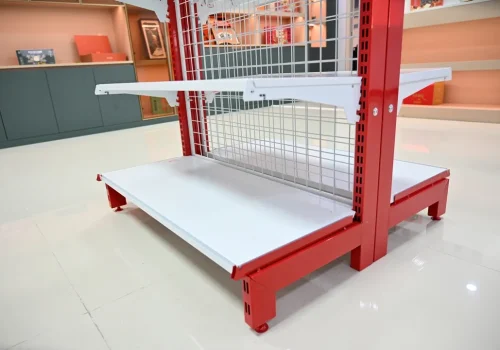
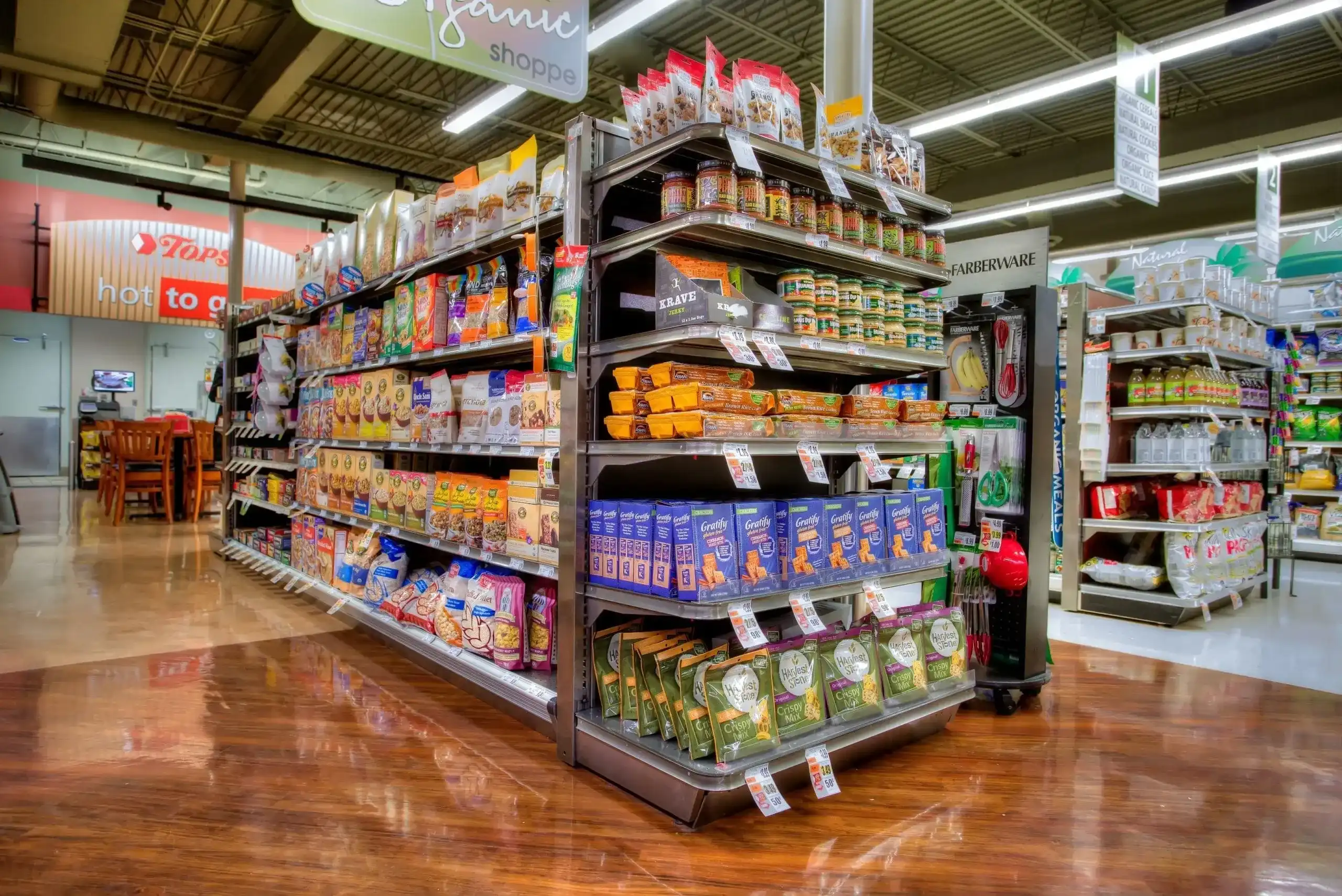
For retailers seeking versatile gondola options, The defining characteristic remains versatility. You position gondola units anywhere on the sales floor without wall dependency. This independence allows complete layout flexibility—rearrange your store seasonally, test new traffic patterns, or expand departments without construction work.
| Configuration | Typical Dimensions | Best Application |
|---|---|---|
| Single-sided (end cap) | 36″W x 54″H x 16″D | Aisle ends, promotional displays |
| Double-sided island | 48″W x 72″H x 36″D | Center store aisles |
| Pharmacy style | 36″W x 54″H x 18″D | Health and beauty sections |
| Heavy-duty | 48″W x 84″H x 24″D | Warehouse retail, bulk items |
What is a Wall Shelving
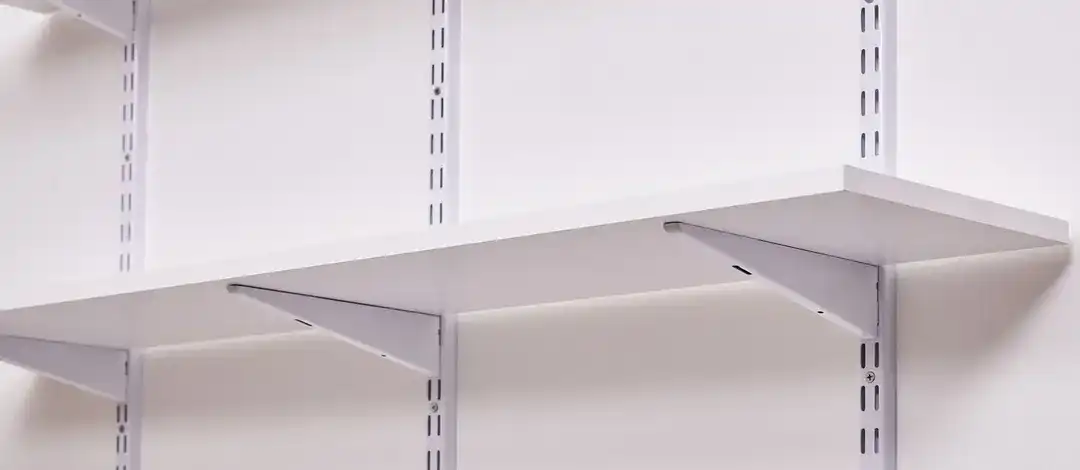
Wall-mounted shelving systems attach directly to vertical surfaces using brackets, standards, or integrated mounting rails. These single-sided units maximize perimeter space that would otherwise contribute nothing to merchandise presentation.
Wall shelving excels in vertical capacity. Without stability concerns limiting height, wall units commonly extend 8 to 12 feet high, capturing valuable airspace. This vertical advantage proves particularly valuable in smaller footprint stores where every square foot counts.
The wall dependency creates both limitation and opportunity. You cannot relocate these units without patching and repainting, but the permanent installation provides superior stability for heavy merchandise and creates clean sight lines across the store interior.
Gondola Shelving vs Wall Shelving
Space Utilization
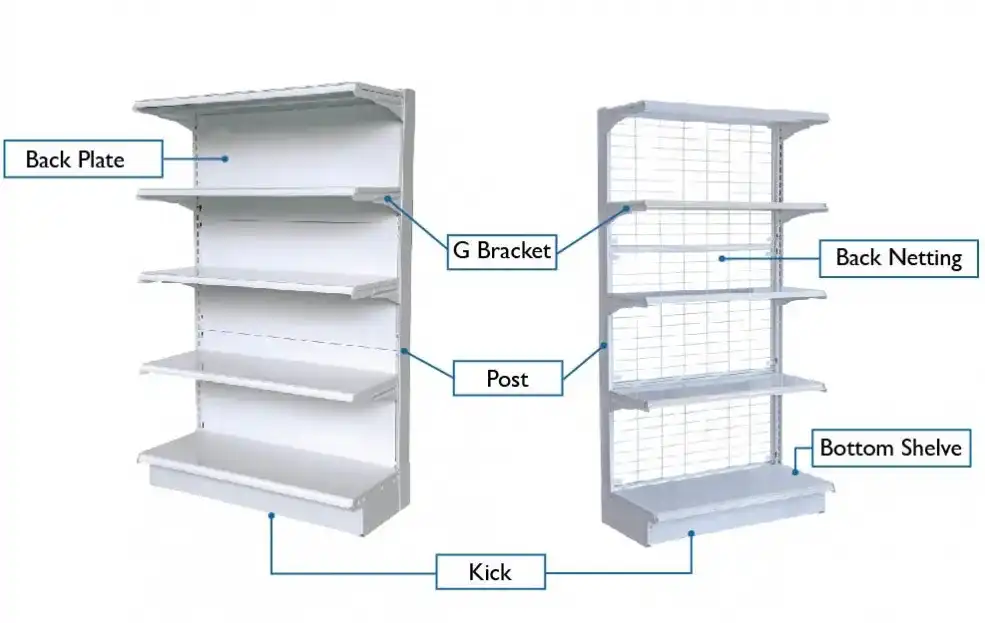
Gondola shelving transforms open floor space into productive merchandising zones. A standard 4-foot gondola run provides approximately 64 square feet of display surface when you factor in both sides and multiple shelf levels.
Wall shelving converts unused wall area into revenue-generating display space. The same 4-foot wall section might yield 32 square feet of display surface—exactly half the gondola’s capacity, but without consuming any floor area.
| Metric | Gondola Shelving | Wall Shelving |
|---|---|---|
| Floor Space Required | 8-12 sq ft per 4′ section | 0 sq ft (wall-mounted) |
| Display Surface Area | 64 sq ft per 4′ section | 32 sq ft per 4′ section |
| Customer Access | Both sides | Single side |
| Aisle Creation | Yes | No |
Load Capacity and Durability
Both shelving types handle substantial weight when properly specified, but their load-bearing mechanics differ considerably.
| Specification | Gondola Shelving | Wall Shelving |
|---|---|---|
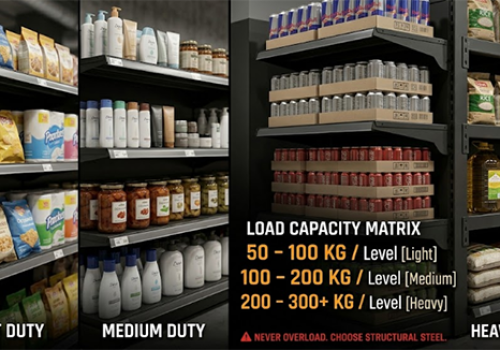
| Shelf capacity (standard) | 150-250 lbs per shelf | 100-200 lbs per shelf |
| Shelf capacity (heavy-duty) | 350-500 lbs per shelf | 250-400 lbs per shelf |
| Total unit capacity | 800-2,000 lbs | Limited by wall structure |
| Primary stress point | Base/floor connection | Wall anchors/studs |
| Failure mode | Tipping (if unanchored) | Bracket failure or wall damage |
Wall shelving capacity depends entirely on what lies behind the drywall. Metal stud construction, concrete block, and wood framing each support different maximum loads. Always verify wall composition before specifying heavy-duty wall-mounted systems.
Installation Requirements
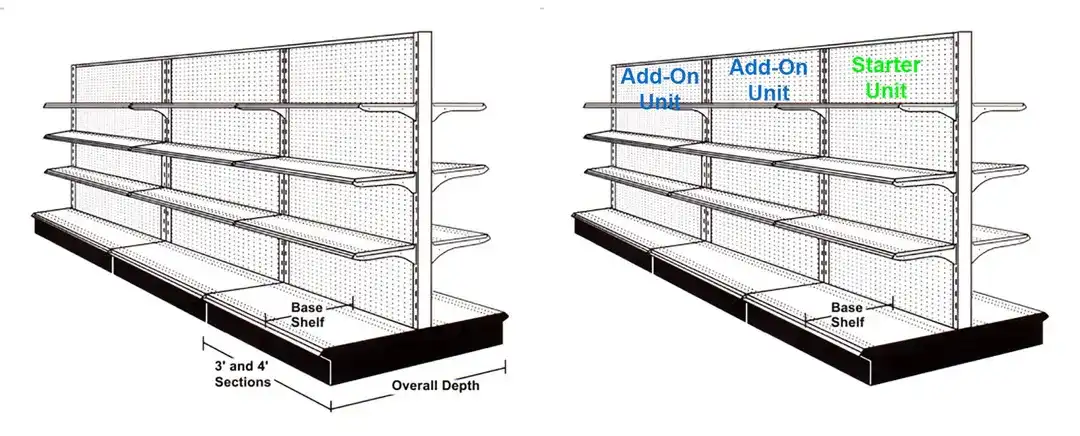
Gondola units arrive as modular components that your team assembles on-site. Most installations require:
- Level flooring surface
- Basic hand tools
- 2-3 hours per gondola run
- No wall modifications
Wall shelving installation demands more preparation:
- Wall stud location and assessment
- Load-bearing capacity verification
- Proper anchoring hardware
- Potential wall reinforcement
- Professional installation recommended for heavy-duty systems
Flexibility and Reconfiguration
Retailers frequently rearrange store layouts for seasonal promotions, new product launches, or traffic flow optimization. Here’s how each system handles changes:
Gondola advantages:
- Relocate entire units without tools
- Reconfigure aisle widths instantly
- Create temporary promotional islands
- Adjust to traffic pattern data
Wall shelving advantages:
- Vertical shelf adjustment without moving the unit
- Stable positioning reduces maintenance
- Cleaner aesthetic with hidden mounting hardware
- No floor obstruction during cleaning
Cost Comparison
Budget considerations extend beyond initial purchase price. A complete cost analysis includes installation, maintenance, and long-term value.
| Cost Category | Gondola (per 4ft section) | Wall Shelving (per 4ft section) |
|---|---|---|
| Unit cost | $180-$450 | $120-$320 |
| Hardware/accessories | $40-$80 | $60-$120 |
| Installation labor | $30-$60 | $50-$100 |
| Wall prep (if needed) | N/A | $0-$200 |
| Total range | $250-$590 | $230-$740 |
Ongoing Costs
Gondola systems incur virtually zero maintenance costs beyond occasional cleaning. Wall systems may require anchor inspection, bracket replacement, and wall repair over time. Budget 2-5% of initial wall shelving investment annually for maintenance in high-traffic retail environments.
Reconfiguration Costs
Rearranging gondola layouts costs labor time only. Relocating wall shelving requires new mounting points plus patching and painting old locations—typically $50-150 per relocated section.
For a comprehensive quote tailored to your specific store dimensions and requirements, contact Spieth’s commercial team for a detailed proposal.
Applications by Retail Format
Different retail environments benefit from specific shelving strategies. Here’s how various store types typically deploy these systems:
Supermarkets and Grocery Stores
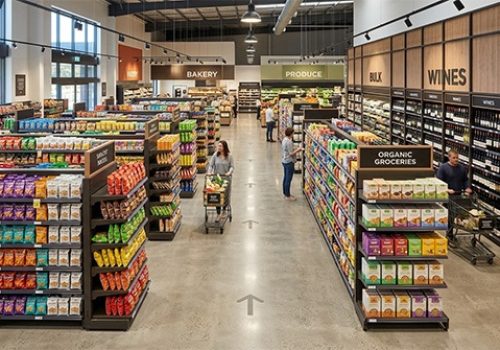
Grocery retail relies heavily on gondola shelving to create the aisle-based shopping experience customers expect. Standard configurations include:
- Center store: Double-sided gondola runs forming 5-6 foot wide aisles
- Perimeter: Wall shelving for dairy, frozen, and produce backdrops
- End caps: Gondola end units for promotional displays
- Checkout lanes: Narrow gondola units for impulse merchandise
A typical 40,000 square foot supermarket might contain 200+ gondola sections and 80+ wall shelving sections, demonstrating how most successful retailers combine both systems.
Convenience Stores and Small Format Retail
Space constraints make every square foot critical. Convenience store operators often:
- Use wall shelving along all available perimeter walls
- Position 2-3 gondola runs in the center floor area
- Install shorter gondola heights (48-54″) to maintain sightlines
- Maximize end cap positions for high-margin items
Related reading: How to Optimize Small Retail Space with Gondola Shelving
Pharmacy and Health Retail
Pharmacy layouts balance self-service merchandising with consultation areas:
- Wall shelving behind pharmacy counters for prescription storage
- Gondola units in OTC medication aisles
- Lower gondola heights near consultation windows
- Specialized wall-mounted displays for health monitoring devices
Making Your Decision
Store Layout Questions
- What is your total floor space, and how much can you dedicate to shelving fixtures?
- Do your walls support heavy-mounted shelving, or will you need reinforcement?
- How frequently do you plan to reconfigure your store layout?
- What aisle widths do your customers and local regulations require?
Product and Inventory Questions
- What are your heaviest products, and what weight capacity do you need?
- Do your products require specialized display accessories (hooks, bins, dividers)?
- How many SKUs must your shelving system accommodate?
- Will you need refrigerated or temperature-controlled shelving sections?
Budget and Timeline Questions
- What is your total fixture budget, including installation?
- Can you phase the installation, or must everything arrive simultaneously?
- What is your expected ROI timeline for the shelving investment?
Summary
Choosing between gondola shelving and wall shelving ultimately depends on your specific retail environment, budget constraints, and merchandising goals. Most successful retailers implement both systems strategically—gondola units creating productive center-floor aisles while wall shelving maximizes perimeter display space.
Gondola shelving delivers superior display capacity per dollar invested and offers unmatched flexibility for stores that frequently reconfigure layouts. Wall shelving provides cost-effective vertical merchandising and maintains clean floor space essential for smaller retail formats.
Spieth manufactures commercial-grade gondola and wall shelving systems engineered for demanding retail environments. With over 10+ years of experience supplying retailers across North America, Europe, and Asia-Pacific markets, Spieth delivers shelving solutions that balance durability, aesthetics, and value.
Request a custom quote for your retail shelving project through our contact page, and our team will provide detailed specifications and pricing within 24 hours.
Frequently Asked Questions
What is the difference between gondola shelving and wall shelving?
Gondola shelving is a freestanding, double-sided display system placed in store centers to create aisles, while wall shelving mounts directly to walls providing single-sided display surfaces. Gondola units offer twice the display area but require floor space, whereas wall shelving maximizes vertical space without occupying floor area.
Is gondola shelving more expensive than wall shelving?
Gondola shelving typically costs 40-60% more per section than comparable wall shelving. However, when calculated per square foot of display surface, gondola systems often provide better value because the double-sided design delivers twice the merchandising area from a single unit.
Can gondola shelving be used against a wall?
Yes, gondola shelving can be positioned against walls, though this eliminates access to one side. Many retailers use single-sided gondola units (also called wall gondolas) specifically designed for perimeter placement, combining gondola durability with wall-adjacent positioning.
How much weight can gondola shelves hold?
Commercial-grade gondola shelves typically support 150-300 pounds per shelf, depending on shelf depth, material thickness, and bracket design. Heavy-duty configurations designed for bulk merchandise can exceed 400 pounds per shelf with appropriate reinforcement.
What height should retail gondola shelving be?
Standard retail gondola heights range from 48 to 84 inches. Convenience stores often use 48-54 inch heights for security sightlines, while supermarkets typically install 72-84 inch units to maximize vertical merchandising. Customer demographics and product types should influence your height selection.
How do you secure gondola shelving to the floor?
Most gondola shelving remains stable through base weight and proper leveling without floor anchoring. High-traffic environments or seismic zones may require floor bolts or anchor plates. Some retailers use anti-tip cables connecting tall gondolas to walls or ceilings for additional safety.