If you are planning a supermarket, grocery store, convenience store, or other retail project, one of the most important fixture decisions is whether to use solid back shelving or wire back shelving. Both are common in retail environments, but they create different results in terms of store appearance, product visibility, airflow, maintenance, and layout flexibility.
At Spieth, we manufacture supermarket shelving systems for retailers, contractors, and distributors. In real projects, the right choice usually depends on your store format, merchandise categories, display goals, and budget rather than on a single “better” option.
✓Key Takeaways
- Solid back shelving gives your store a cleaner and more structured visual effect.
- Wire back shelving creates a lighter and more open aisle environment.
- Both options can work well in supermarkets, but they suit different display strategies.
- The best choice depends on your product type, floor plan, load requirements, and store image.
- Many retail projects use both solid back shelving and wire back shelving in different areas.
What Is Solid Back Shelving?
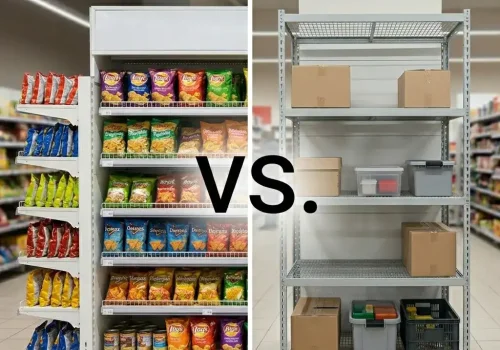
Solid back shelving is a type of retail shelving with a closed rear panel, typically made of steel back panels. This design gives the shelving a complete and continuous surface behind the products, which makes the aisle look more organized and visually consistent.
In supermarkets and retail stores, solid back shelving is often used when the goal is to create a stronger display background and clearer category separation. It is a practical choice for stores that want a neat aisle presentation and a more finished overall appearance.
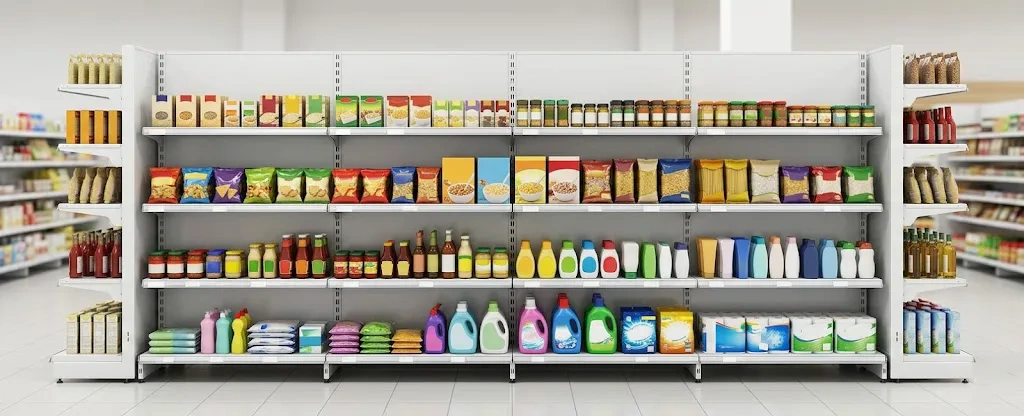
Where solid back shelving is commonly used
You will often see solid back shelving in supermarkets, pharmacies, household goods stores, and retail spaces where display order matters. It is especially suitable for packaged goods, personal care products, dry foods, and other categories that benefit from a clean backdrop.
Advantages of solid back shelving
- More complete and premium visual appearance
- Better background for packaged product display
- Useful for stores that want stronger aisle definition
- Suitable for customized color and branding integration
What Is Wire Back Shelving?
Wire back shelving uses an open wire or mesh structure at the rear instead of a solid panel. This gives the shelving a lighter look and allows more light and visibility through the aisle. In many stores, this helps the space feel less enclosed.
Wire back shelving is widely used in supermarkets, grocery stores, and convenience stores, especially when buyers want a more open store environment. It is also a practical solution for layouts where airflow and line of sight are important.
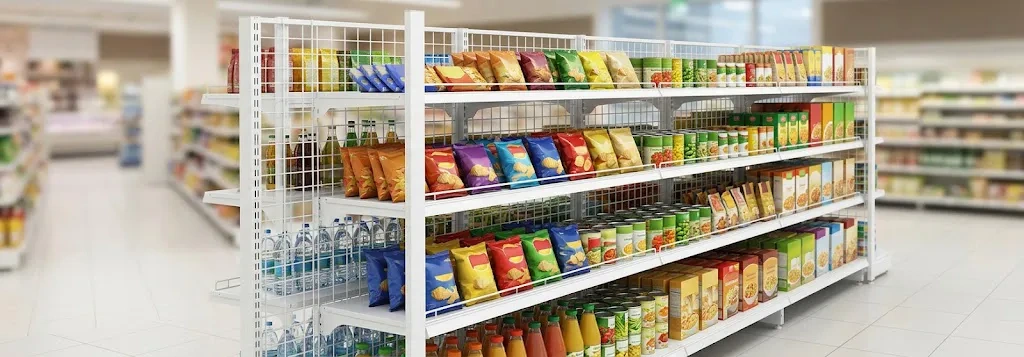
Where wire back shelving is commonly used
This shelving type works well in smaller retail spaces, compact supermarkets, convenience stores, and display areas that need a lighter visual effect. It is also useful in store sections where openness is more important than a fully closed display background.
Advantages of wire back shelving
- More open and lighter shelf appearance
- Better airflow and light transmission
- Useful in stores with limited space
- Can help a store look less crowded
Solid Back Shelving vs Wire Back Shelving
The decision becomes easier when you compare the two shelving types based on actual store use rather than appearance alone. The main differences usually involve structure, display effect, openness, cleaning, and project cost.
| Feature | Solid Back Shelving | Wire Back Shelving |
|---|---|---|
| Rear Structure | Closed back panel | Open wire or mesh back |
| Visual Effect | Structured and complete | Light and open |
| Airflow | Moderate | Better |
| Light Transmission | Lower | Higher |
| Category Separation | Stronger | More open |
| Best Use Cases | Supermarkets, pharmacies, household stores | Convenience stores, smaller grocery stores, open layouts |
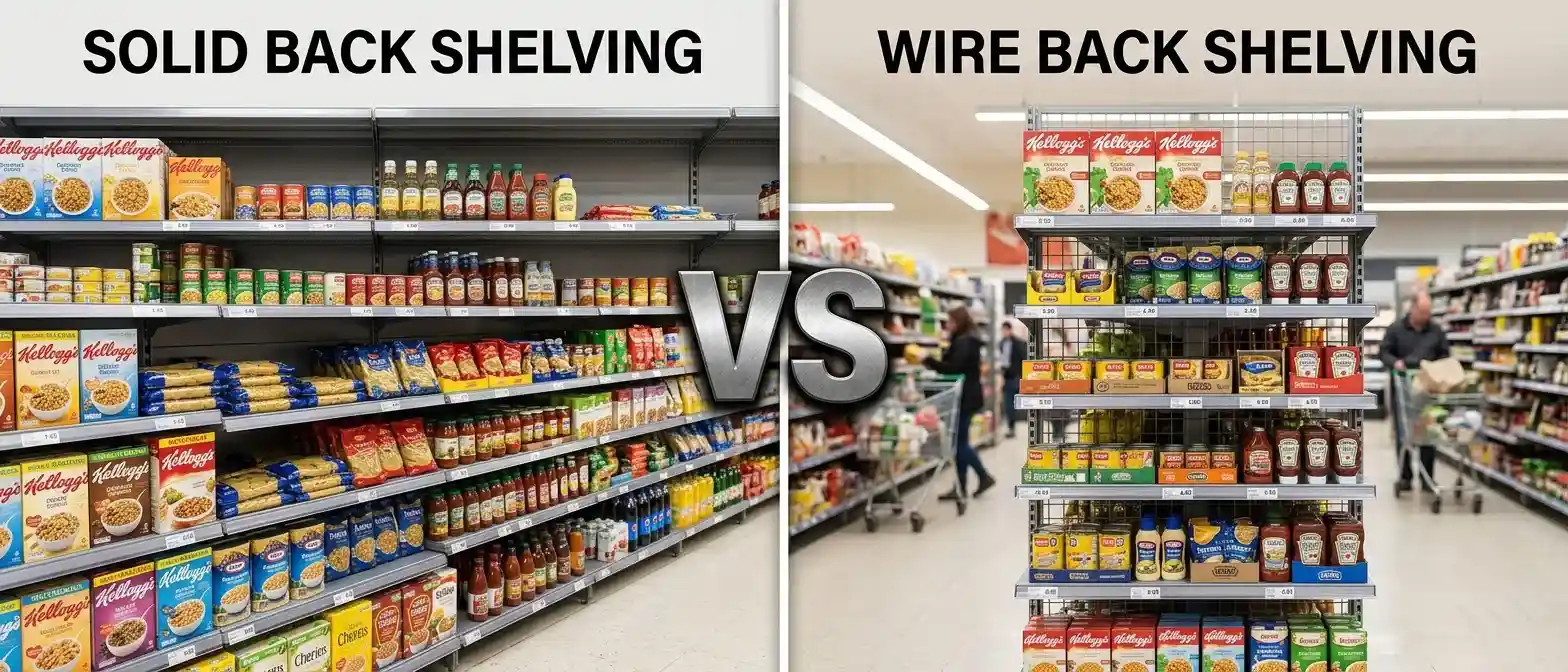
Structure and overall appearance
Solid back shelving creates a stronger aisle line because the rear panel closes the visual background. This helps your store look more uniform and gives each product section a more defined presentation.
Wire back shelving, by comparison, feels lighter. Because customers can partially see through the back, the aisle often looks less dense. If your store is compact or your ceiling height is limited, this can make a meaningful difference in how open the space feels.
Product visibility and display effect
If you want the shelving itself to support a cleaner merchandising effect, solid back shelving is often the better option. The closed rear surface works as a backdrop, which can help products look more organized and easier to scan.
If your priority is transparency and store openness, wire back shelving can be more suitable. It reduces visual blockage and can improve sightlines across the aisle, especially in smaller formats.
| Display Goal | Recommended Option |
|---|---|
| Clean and consistent category display | Solid back shelving |
| Open and lighter store appearance | Wire back shelving |
| Premium product presentation | Solid back shelving |
| Compact store layout | Wire back shelving |
| Mixed-format retail project | Combination of both |
Load capacity and stability
One common question is whether solid back shelving is stronger than wire back shelving. In practice, the answer depends on the full shelving design. Load performance is determined by factors such as upright structure, shelf brackets, steel thickness, shelf depth, and reinforcement details.
For this reason, it is better to compare technical specifications rather than assume one type is automatically stronger. A properly engineered wire back shelving system can perform well in daily retail use, and the same applies to solid back shelving.
| Technical Factor | Why It Matters |
|---|---|
| Steel thickness | Affects strength and service life |
| Upright design | Influences stability of the whole shelving system |
| Shelf depth | Changes product capacity and load distribution |
| Bracket structure | Affects shelf support performance |
| Surface treatment | Improves corrosion resistance and finish quality |
| Installation quality | Directly affects long-term stability |
Ventilation and light transmission
In terms of openness, wire back shelving has a clear advantage. The open rear structure allows more airflow and light to pass through the aisle. This can be useful in compact stores or in store sections where you want to reduce visual heaviness.
Solid back shelving offers a more enclosed and controlled display background. That can be a better match when your priority is aisle structure and product presentation rather than openness.
Cleaning and maintenance
Maintenance is another point worth considering. Solid back shelving helps create a more uniform appearance, which can make the aisle look tidy even in busy stores. Wire back shelving gives staff more visual access through the shelving line, but the wire intersections may require more detailed cleaning depending on the environment.
In most cases, the easier option depends on your store operations, product type, and cleaning routine rather than on the back structure alone.
Cost and budget considerations
Price comparisons should be made carefully. The cost of solid back shelving and wire back shelving depends on project quantity, steel thickness, dimensions, finish, loading requirements, packaging, and shipping conditions.
Instead of asking which one is always cheaper, it is more useful to evaluate which shelving type gives you the right balance of performance, appearance, and long-term value for your project.
| Cost Factor | Impact on Final Price |
|---|---|
| Order quantity | Larger projects usually reduce unit cost |
| Custom dimensions | May increase production complexity |
| Material thickness | Higher strength usually means higher cost |
| Powder coating finish | Affects durability and appearance |
| Packaging requirements | Influences shipping protection and cost |
| Shipping destination | Affects total landed cost |
Which Shelving Option Works Better for Different Retail Scenarios?
Supermarkets
In supermarkets, both shelving types are widely used. Solid back shelving is often preferred when you want stronger aisle definition and a more complete visual system. Wire back shelving can be useful in selected areas where you want to increase openness.
Convenience stores
Convenience stores usually have limited floor space, so wire back shelving is often a practical choice. It helps reduce visual congestion and supports a lighter store layout.
Grocery stores
For grocery stores, the right choice depends on the merchandise mix and store style. If display order is important, solid back shelving may be the better option. If the priority is flexibility and visual openness, wire back shelving may be more suitable.
Pharmacies and personal care stores
These environments often benefit from solid back shelving because it creates a cleaner presentation and a stronger sense of product organization.
Mixed retail projects
In mixed-format stores, using both options can be the most effective approach. Many projects use solid back shelving in core aisles and wire back shelving in lighter or more open sections.
How to Choose the Right Shelving for Your Store
To make the right decision, start with the way your store will actually operate rather than with appearance alone.
Consider your store size
If your retail space is compact, wire back shelving may help the store feel more open. In larger stores, solid back shelving can help create stronger aisle structure.
Consider your product categories
If your products need a clean display background, solid back shelving is usually more suitable. If you want lighter presentation and less visual blocking, wire back shelving may work better.
Consider your store image
A store that aims for a more structured or premium presentation often benefits from solid back shelving. A store that wants a practical and open environment may prefer wire back shelving.
Consider technical requirements
Always confirm load capacity, material specifications, and shelf configuration with your shelving supplier. Choosing the right structure is only part of the decision.
Consider customization
If your store has specific dimensions, branding requirements, or merchandising zones, a custom shelving solution will usually give you better long-term results than standard stock fixtures.
Can You Use Solid Back Shelving and Wire Back Shelving in the Same Store?
Yes. In many retail projects, using both types in different areas produces the best result. This approach allows you to create a more structured presentation in key aisles while keeping other areas visually open and flexible.
For example, you may use solid back shelving in core grocery aisles and wire back shelving in lighter categories, side sections, or convenience-oriented areas. This gives you more control over both function and store atmosphere.
Custom Supermarket Shelving from Spieth
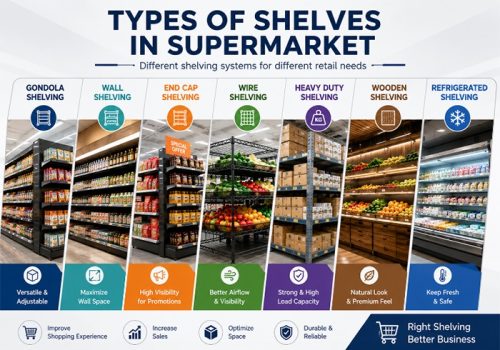
As a supermarket shelving manufacturer, Spieth supplies custom retail shelving for supermarkets, grocery stores, convenience stores, and chain retail projects. We produce both solid back shelving and wire back shelving, as well as gondola shelving, wall shelving, end displays, and project-based store fixture systems.
If you are planning a new store or upgrading an existing layout, we can help you match shelving specifications to your floor plan, merchandise categories, and budget. That includes custom sizes, loading options, color finishes, single-sided and double-sided shelving, and mixed shelving configurations.
conclusion
When you compare solid back shelving and wire back shelving, the best choice depends on how you want your store to function and how you want it to look. Solid back shelving is usually the better fit when you need a cleaner display background and stronger aisle definition. Wire back shelving is often the better option when you want more openness, airflow, and visual lightness.
If you are sourcing supermarket fixtures for a retail project, Spieth can help you evaluate the right shelving solution based on your layout, product mix, and technical requirements. Contact us to discuss your project, request specifications, or get a quotation for custom supermarket shelving.
FAQ
What is solid back shelving?
Solid back shelving is retail shelving with a closed rear panel that creates a more complete and structured display surface.
What is wire back shelving?
Wire back shelving is retail shelving with an open wire or mesh rear structure that improves airflow and visual openness.
Which is better, solid back shelving or wire back shelving?
The better choice depends on your store layout, product categories, display goals, and budget.
Is wire back shelving suitable for supermarkets?
Yes. Wire back shelving is widely used in supermarkets, grocery stores, and convenience stores.
Is solid back shelving stronger than wire back shelving?
Not always. Strength depends on the full shelving design, including materials, uprights, brackets, and load requirements.
Can I use solid back shelving and wire back shelving together?
Yes. Many stores combine both types to match different retail zones and product categories.
Do you offer custom supermarket shelving?
Yes. Spieth provides custom supermarket shelving solutions for a wide range of retail projects.
About Spieth
Spieth is a supermarket shelving manufacturer focused on custom retail shelving, gondola shelving, and store fixture solutions for supermarkets, grocery stores, convenience stores, and chain retail projects.