Double-sided gondola shelving stands as the backbone of modern retail merchandising. These freestanding display units create natural shopping aisles while maximizing product visibility from both directions. For store owners evaluating fixture investments, understanding the technical specifications, layout strategies, and ROI calculations determines whether your shelving purchase drives sales or collects dust.
This guide breaks down everything procurement managers and store planners need to know about selecting, configuring, and deploying double-sided gondola systems effectively.
Key Takeaways
- Space efficiency metrics: Double-sided gondola shelving increases product display capacity by 40-60% compared to wall-mounted alternatives in the same floor area, with specific calculations for different store formats
- Load capacity considerations: Standard double-sided units support 800-1,200 lbs per section when properly anchored, with heavy-duty variants reaching 1,500+ lbs for hardware and grocery applications
- Aisle planning formulas: Optimal gondola height-to-aisle-width ratios range from 1:1.2 to 1:1.5 depending on product category and customer traffic patterns
- Total cost of ownership: Initial investment recovery typically occurs within 18-24 months through increased sales per square foot and reduced restocking labor
- Configuration flexibility: Modular base-and-upright systems allow 47 distinct accessory combinations without tools, adapting to seasonal merchandising needs
What Makes Double-Sided Gondola Shelving Different from Other Retail Fixtures
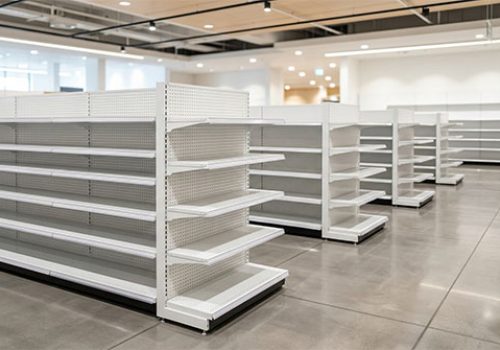
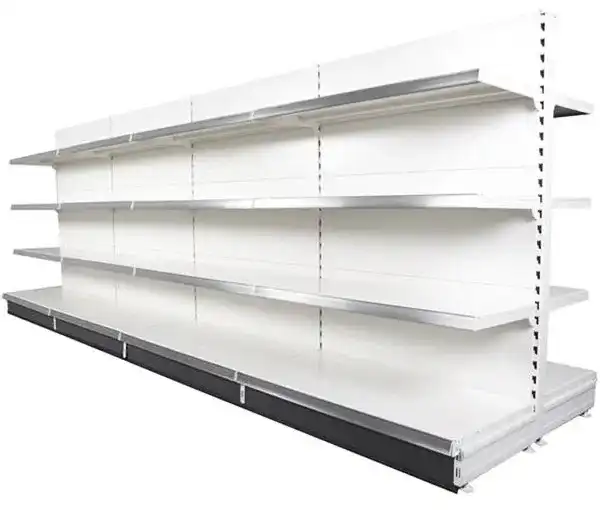
Double-sided gondola shelving functions as a freestanding island unit accessible from both sides. Unlike single-sided wall units or endcap displays, these systems create independent shopping zones within open floor plans.The structural design centers on a shared center panel connecting two display faces. This configuration eliminates wasted back-panel space while providing stability without wall anchoring.
Core Structural Components
| Component | Function | Standard Specifications |
|---|---|---|
| Base deck | Foundation stability, bottom-shelf display | 16-22 gauge steel, 3-4 inch height |
| Center back panel | Structural spine, pegboard/slatwall mounting | Perforated or solid, 18-20 gauge |
| Uprights | Vertical support, shelf positioning | 1-inch slots on 1-inch centers |
| Shelves | Product display surface | 16-19 gauge steel, multiple depths |
| Top cap | Finished appearance, signage mounting | Optional, various profiles |

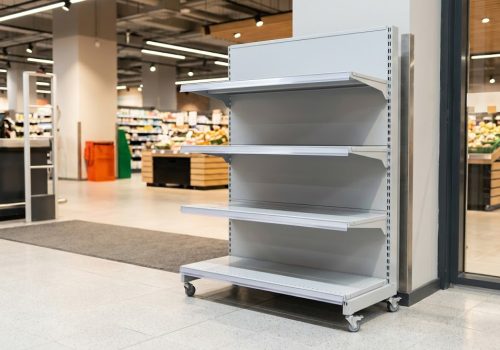
Retailers frequently confuse gondola shelving with similar-sounding fixtures. Gondola specifically refers to the freestanding island configuration, while wall units, endcaps, and checkout counters serve different merchandising functions despite sharing component compatibility.
Dimensional Planning
Choosing appropriate dimensions requires balancing product requirements, store layout constraints, and customer experience factors. The three critical measurements—height, width, and depth—each impact merchandising effectiveness differently.
Height Selection
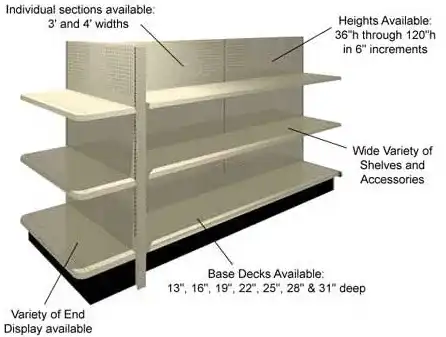
Standard double-sided gondola heights range from 48 inches to 84 inches. Your selection directly affects sightlines, product accessibility, and overall store atmosphere.
48-54 inch units suit specialty retailers prioritizing open sightlines and high-end ambiance. Customers see across the entire store, reducing perceived crowding. These shorter configurations work well for cosmetics, boutique grocery, and premium convenience formats.
60-72 inch units represent the retail industry standard. This range balances display capacity with comfortable shopping ergonomics. Most customers can reach top shelves without assistance while maintaining reasonable sightlines at major intersections.
78-84 inch units maximize vertical merchandising for warehouse-style and high-volume grocery operations. These tall configurations require step stools for top-shelf stocking and suit environments where customers expect bulk displays over boutique experiences.
Width and Depth Specifications
Section widths typically come in 36-inch and 48-inch options. The 48-inch width has become industry standard, offering better product facing efficiency and fewer upright interruptions per linear foot.
Shelf depths range from 12 to 24 inches per side. Deeper shelves suit bulky products but reduce aisle width. A common configuration pairs 16-inch shelves on grocery aisles with 12-inch shelves for health and beauty sections.
| Shelf Depth | Best Applications | Aisle Width Impact |
|---|---|---|
| 12 inches | Cosmetics, pharmacy, small packaged goods | Minimal reduction |
| 16 inches | General grocery, snacks, beverages | Moderate reduction |
| 19 inches | Bulk items, paper goods, pet food | Significant reduction |
| 22-24 inches | Hardware, automotive, large format | Maximum reduction |
Load Capacity and Structural Engineering
Understanding weight ratings prevents shelf failure, product damage, and safety hazards. Double-sided gondola systems distribute loads differently than wall-mounted fixtures, requiring specific calculations.
Weight Distribution Principles
Each shelf carries its rated capacity independently, but total section weight must not exceed base and upright limits. A section with six shelves rated at 200 lbs each can theoretically hold 1,200 lbs—but only if the base deck and uprights support that combined load.Standard commercial double-sided gondola shelving handles 150-250 lbs per shelf depending on depth and gauge. Heavy-duty versions using 16-gauge steel and reinforced uprights push individual shelf capacity to 350+ lbs.
Critical calculation: Multiply shelf capacity by number of shelves, then verify this total falls within section weight limits. Add 15% safety margin for dynamic loading during restocking.
Material Specifications Affecting Durability
Steel gauge directly correlates with strength and longevity. Lower gauge numbers indicate thicker steel:
- 22 gauge: Light-duty applications, convenience stores, low-weight merchandise
- 20 gauge: Standard retail, moderate loads, general merchandise
- 18 gauge: Heavy-duty grocery, hardware, high-turnover environments
- 16 gauge: Industrial retail, warehouse clubs, maximum durability
Powder coating thickness affects corrosion resistance. Specify minimum 2.0 mil thickness for humid environments or locations with frequent cleaning chemical exposure.
Store Layout Integration Strategies
Effective gondola placement transforms empty floor space into revenue-generating merchandising zones. Layout decisions made during initial installation prove difficult and expensive to reverse.
Traffic Flow Optimization
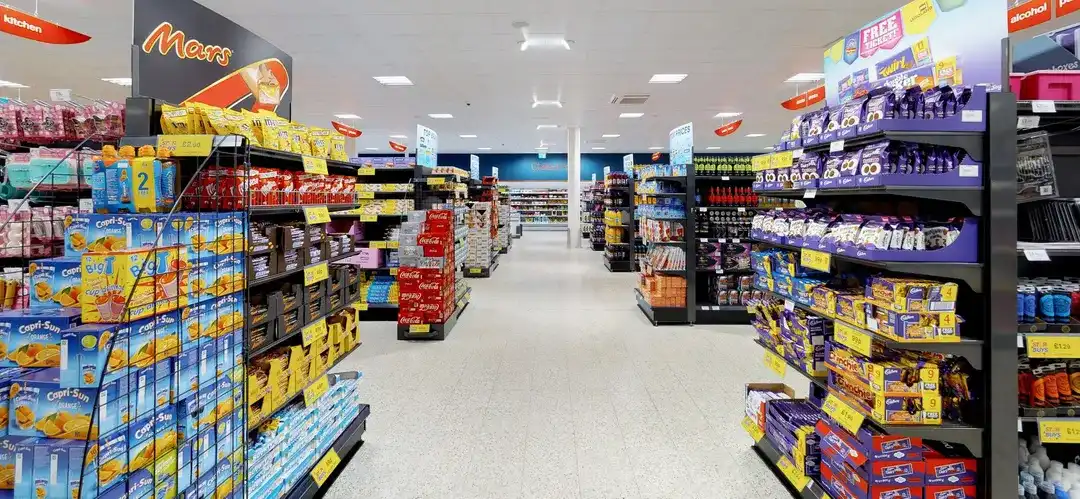
Position double-sided gondola runs to guide customer movement through high-margin departments. The decompression zone—typically the first 5-15 feet inside entrance doors—should remain fixture-free.
Primary aisle configuration: Main traffic arteries require 8-10 foot clearance between gondola faces. These wide paths accommodate shopping carts, wheelchairs, and two-way traffic during peak hours.
Secondary aisle configuration: Interior aisles between gondola runs function with 4-6 foot clearance. Narrower paths slow customer movement, increasing product exposure time and impulse purchase likelihood.
Department Zoning Applications
Different retail categories demand specific gondola configurations:
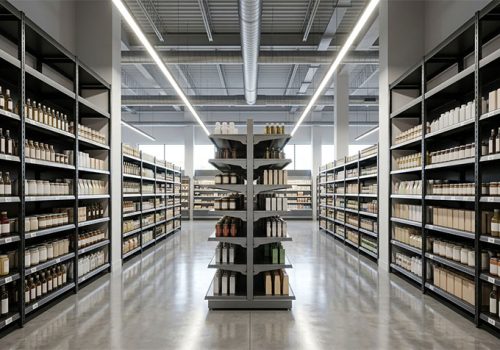
Grocery and supermarket: Standard 72-inch height double-sided units with 16-inch depth shelves. Position impulse categories at eye level (48-60 inches from floor). Reserve bottom shelves for heavy items customers expect to lift.
Convenience retail: Shorter 54-60 inch gondolas maintain sightlines for loss prevention. Deeper shelves (19-22 inches) accommodate beverage cooler adjacencies and bulk snack displays.
Hardware and home improvement: Maximum height (78-84 inches) with heavy-duty specifications. Integrate pegboard center panels for hanging merchandise. Consider reinforced base decks for paint, chemicals, and bagged goods.
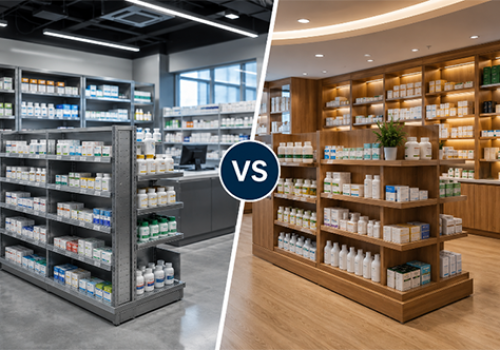
Pharmacy and health: Lower profiles (48-54 inches) for consultation visibility. Narrow depths (12-13 inches) suit small-package merchandise. Specify smooth shelf surfaces for easy cleaning and sanitization compliance.
Accessory and Merchandising Flexibility
Base gondola structures gain functionality through compatible accessories. Strategic accessory selection transforms generic shelving into category-specific merchandising solutions.
Essential Accessory
Shelf dividers and fronts: Organize product facings and prevent merchandise migration. Spring-loaded pusher systems maintain front-facing presentation as products sell through.
Pegboard and slatwall panels: Convert center back panels to hanging merchandise display. Essential for packaged goods with hanging holes, tools, and accessories.
Wire basket and bin attachments: Contain loose or irregularly shaped products. Dump bins drive impulse purchases at endcap positions.
Sign holders and price channels: Communicate pricing and promotional information. Specify channel height compatible with your label printing system.
Shelf edge lighting: LED strip integration illuminates lower shelves and creates visual hierarchy. Particularly effective for cosmetics and premium grocery categories.
Frequently Asked Questions
What is the standard height for double-sided gondola shelving in grocery stores?
Most grocery retailers specify 72-inch height for standard double-sided gondola runs. This dimension balances product capacity with customer accessibility—average shoppers can reach top shelves without assistance while the height provides substantial vertical merchandising space. Convenience stores typically choose shorter 54-60 inch units for improved sightlines and loss prevention visibility.
How much weight can a double-sided gondola shelf hold?
Individual shelf capacity ranges from 150-350 lbs depending on steel gauge, shelf depth, and bracket design. Standard 16-inch depth commercial shelves typically support 200-250 lbs. Total section weight limits usually fall between 800-1,500 lbs. Always verify both individual shelf ratings and total section capacity before loading heavy merchandise.
What is the difference between gondola shelving and wall shelving?
Gondola shelving stands freestanding without wall attachment, accessible from one or both sides depending on configuration. Wall shelving mounts directly to walls, accessible from one side only. Double-sided gondola units create store aisles as freestanding islands, while wall units maximize perimeter display space. Many retailers use both types—wall units around store perimeter with gondola runs creating interior shopping aisles.
How wide should aisles be between double-sided gondola shelving?
Primary traffic aisles require 8-10 feet between gondola faces to accommodate shopping carts, wheelchairs, and two-way traffic. Secondary aisles function adequately at 4-6 feet. ADA compliance mandates minimum 36-inch clearance, though this proves impractical for high-traffic retail. Local fire codes may specify minimum aisle widths—verify requirements before finalizing layout plans.
Can double-sided gondola shelving be reconfigured after installation?
Modular gondola design specifically enables reconfiguration. Shelf heights adjust in 1-inch increments without tools on standard slotted uprights. Accessories swap between sections as merchandising needs change. Even section relocation remains possible, though moving assembled gondola runs requires multiple workers and careful planning to avoid damage.
How long does double-sided gondola shelving last?
Quality commercial gondola systems last 15-20+ years with proper maintenance. Economy fixtures may require replacement after 5-8 years. Lifespan depends heavily on steel gauge, coating quality, traffic intensity, and maintenance practices. The regional grocery case study earlier in this guide documented fixtures remaining serviceable after 25 years, though with reduced functionality.
Conclusion
Selecting the right double-sided gondola shelving system impacts your retail operation for decades. Spieth offers complete gondola solutions including standard configurations, custom specifications, and full accessory lines
For detailed specifications on double-sided gondola configurations, explore the Spieth Gondola Shelving Product Line. Retailers planning comprehensive store fixtures should review Complete Store Shelving Solutions for integrated approaches.