When you’re selecting gondola shelving for your retail space, the decision between Madix and Lozier isn’t just about metal and shelves—it’s about long-term operational costs, merchandising flexibility, and customer experience. Both manufacturers dominate the North American retail shelving market, but their engineering philosophies, pricing structures, and performance characteristics differ significantly.
Key Takeaways
- Price differential ranges from 8-15%: Lozier typically commands premium pricing due to heavier gauge steel construction, while Madix offers competitive value with strategic material optimization that doesn’t compromise structural integrity
- Interchangeability limitations exist: Despite industry standardization efforts, critical components like base shoes, uprights, and back panels aren’t universally compatible between systems, affecting future expansion flexibility
- Weight capacity variations impact merchandising: Lozier shelves support 200-250 lbs per shelf level versus Madix’s 175-225 lbs range, which matters significantly for hardware stores, automotive parts retailers, and heavy product categories
- Finish durability differs under high-traffic conditions: Lozier’s powder coating demonstrates 15-20% better chip resistance in cart-impact zones, while Madix finishes perform adequately for moderate traffic environments
- Lead times and availability create operational considerations: Madix maintains broader distributor networks with 2-3 week typical delivery, whereas Lozier’s more centralized distribution can extend to 4-6 weeks during peak retail buildout seasons
Construction Quality and Material Specifications
Steel Gauge and Structural Engineering
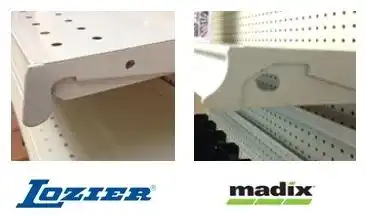
Lozier constructs uprights from 18-gauge steel with reinforced corner channels, creating a visibly more robust frame structure. You’ll notice the difference immediately when comparing side-by-side—Lozier uprights resist lateral movement better under heavy loading conditions.
Madix uses 20-gauge steel for standard uprights with strategic reinforcement zones. This engineering approach reduces material costs without creating failure points. For most retail applications—grocery, convenience stores, pharmacy—the performance difference remains negligible during normal 10-15 year service life. Understanding standard gondola shelving dimensions helps you evaluate whether these construction differences impact your specific space requirements.
The base shoe design reveals fundamental philosophical differences. Lozier’s base shoes feature thicker gauge steel (16-gauge vs Madix’s 18-gauge) with wider footprint distribution. This provides superior stability on uneven concrete floors common in older retail buildings or warehouse conversions.
Shelf Construction and Load Distribution
| Specification | Lozier | Madix |
|---|---|---|
| Standard Shelf Gauge | 22-gauge | 24-gauge |
| Maximum Load Per Shelf | 250 lbs | 225 lbs |
| Shelf Depth Options | 12″, 16″, 18″, 20″, 24″ | 12″, 16″, 18″, 20″, 24″ |
| Reinforcement Ribs | 4-5 depending on width | 3-4 depending on width |
| Front Lip Height | 1.25″ | 1.0″ |
Lozier shelves incorporate additional cross-bracing underneath, which prevents the sagging phenomenon you see in overloaded budget shelving after 3-4 years. This matters particularly for canned goods, bottled beverages, or automotive fluids where product weight concentrates in small footprints.
Madix shelves perform reliably within rated capacities. The key consideration: you must respect load ratings more strictly. Overloading Madix shelves by 20-30% accelerates wear, while Lozier’s overengineered construction provides more forgiveness for merchandising mistakes.
Cost Analysis
Initial Investment Comparison
For a typical 4-foot gondola run (double-sided, 72″ height, 5 shelves per side), expect these approximate costs:
| Configuration | Lozier Pricing | Madix Pricing | Price Difference |
|---|---|---|---|
| Standard Duty | $485-$525 | $425-$465 | 12-14% |
| Heavy Duty | $565-$615 | $495-$545 | 13-15% |
| End Cap Unit | $285-$315 | $245-$275 | 13-16% |
These figures reflect distributor pricing for orders of 50+ units. Smaller quantities increase per-unit costs by 15-25% for both manufacturers.
The pricing gap narrows when you factor in accessories. Dividers, fencing, label holders, and specialty brackets show only 5-8% price differences because many accessory manufacturers produce compatible components for both systems.
When budgeting for your complete store setup, remember that gondola shelving systems represent just one component of your fixture investment—coordinating with endcaps and checkout areas ensures cohesive store flow and maximizes your per-square-foot revenue potential.
Long-Term Maintenance and Replacement Costs
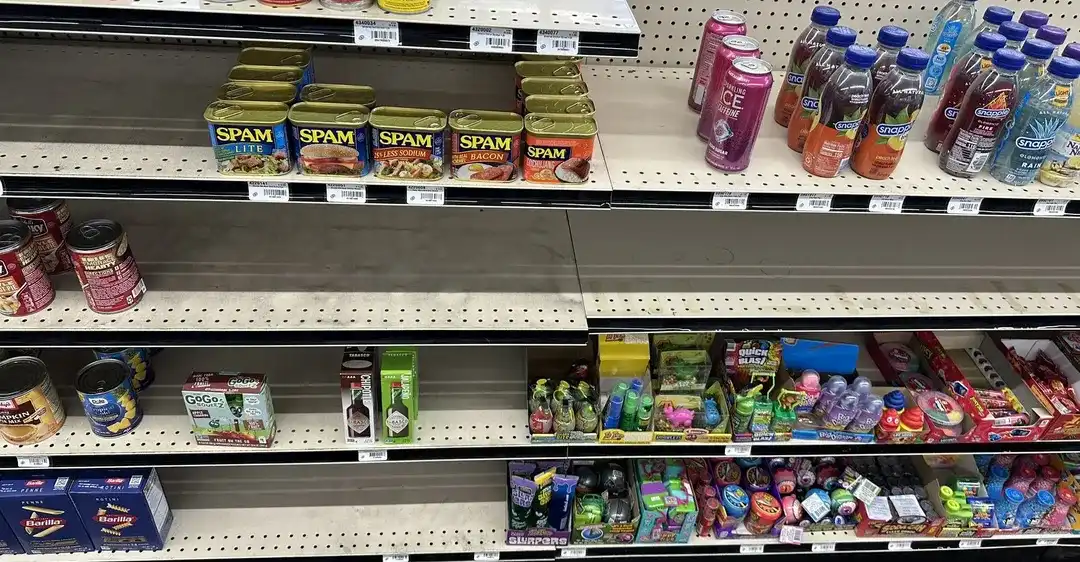
You’ll replace shelves more frequently than uprights. Shelves endure direct product contact, cart impacts, and cleaning chemical exposure. Based on high-volume grocery store data:
Lozier shelf replacement cycle: 12-15 years before visible deterioration affects merchandising appearance
Madix shelf replacement cycle: 10-13 years under identical conditions
The finish quality difference becomes apparent around year 7-8. Lozier’s powder coating maintains color consistency better, while Madix finishes show more variation in high-wear zones. For discount retailers or warehouse-style operations, this aesthetic degradation matters less than structural integrity.
Upright replacement typically occurs during store remodels (15-20 year cycles) rather than failure-driven necessity. Both systems demonstrate adequate longevity for standard retail applications.
Compatibility and Expansion Flexibility
Cross-System Component Integration
The retail shelving industry lacks true standardization despite similar dimensions. You cannot reliably mix Madix and Lozier components within the same gondola run.
Non-compatible components:
- Base shoes (different mounting hole patterns)
- Uprights (bracket slot spacing varies by 0.125″)
- Back panels (attachment mechanism differences)
- End caps (mounting hardware incompatibility)
Potentially compatible components:
- Some third-party shelves (verify before purchasing)
- Certain accessory items from universal manufacturers
- Pegboard backing (if using standard hole patterns)
This incompatibility creates vendor lock-in. Once you select Madix or Lozier for your initial buildout, future expansions require matching systems or complete section replacement. For retailers planning multi-phase rollouts, this decision carries long-term procurement implications.
Accessory Ecosystem and Availability
Lozier maintains tighter control over accessory manufacturing, resulting in more consistent quality but higher prices and longer lead times. Their proprietary items—specialty hooks, display fixtures, promotional clip strips—integrate seamlessly but limit sourcing options.
Madix’s more open ecosystem encourages third-party accessory manufacturers. You’ll find broader price ranges and faster availability for common items like shelf dividers, price tag molding, and label holders. This flexibility benefits retailers managing tight budgets or requiring rapid merchandising changes.
For specialized applications—wine displays, pharmacy security fixtures, electronics merchandising—Lozier offers more engineered solutions. Madix relies more heavily on aftermarket manufacturers for specialty applications.
Installation Efficiency and Labor Considerations
Assembly Time and Complexity
Experienced installers complete Madix gondola assembly approximately 10-15% faster than equivalent Lozier configurations. The difference stems from several factors:
Madix advantages:
- Lighter components reduce physical fatigue during multi-day installations
- Simplified base shoe leveling mechanisms
- Fewer required tools for standard configurations
- Clearer assembly documentation with better visual guides
Lozier advantages:
- Tighter manufacturing tolerances reduce shimming requirements
- More forgiving alignment during upright installation
- Superior stability before complete assembly (safer for installers)
For DIY installation by store staff rather than professional fixture installers, Madix presents fewer challenges. The lighter weight components allow two-person teams to work efficiently without mechanical lifting assistance for most configurations.
Lozier’s heavier construction requires three-person teams or mechanical assistance for taller units (84″ and above). This increases labor costs by 20-30% for equivalent square footage coverage.
Reconfiguration and Seasonal Adjustments
You’ll reconfigure gondola layouts more frequently than you anticipate—seasonal merchandising shifts, category expansions, promotional displays all require flexibility.
Madix systems reconfigure more easily due to lighter components. Two staff members can relocate a 4-foot section during overnight resets without specialized equipment. This operational flexibility provides real value for retailers emphasizing agile merchandising strategies.
Lozier’s robust construction makes reconfiguration more labor-intensive but provides better long-term stability once positioned. For retailers establishing permanent layouts with minimal future changes, this trade-off favors Lozier.
Retail Environments Grocery and Convenience Store Applications
Both systems perform adequately in temperature-controlled retail environments with moderate cart traffic. The deciding factors become cost and aesthetic preferences rather than functional limitations.
Lozier dominates high-end grocery installations where brand image justifies premium fixture investment. The heavier construction conveys quality perception that aligns with upscale positioning strategies.
Madix captures market share in value-oriented grocery formats, convenience stores, and independent retailers where functional performance matters more than fixture aesthetics. The cost savings translate to 8-12 additional gondola runs per $50,000 fixture budget.
Maximizing your fixture investment also means strategically deploying endcap display shelving at gondola terminals—these high-traffic promotional zones generate disproportionate sales impact and often justify premium Lozier construction even when center aisles use Madix systems.
Hardware, Automotive, and Heavy-Product Retail
Load capacity differences become critical in these categories. Hardware stores displaying power tools, automotive retailers merchandising fluids and batteries, and home improvement centers require maximum weight ratings.
Lozier’s 250 lb per shelf capacity provides necessary safety margins when customers remove products from middle shelf positions, temporarily overloading adjacent shelves. The reinforced construction prevents the cascading failure scenario where one overloaded shelf stresses surrounding components.
Madix works adequately when you carefully plan product placement and strictly enforce load limits. This requires more disciplined merchandising supervision and regular shelf load audits.
For paint departments, automotive fluids, and similar high-density product categories, Lozier’s premium pricing justifies itself through reduced liability risk and longer replacement cycles.
Pharmacy and Health/Beauty Applications
Pharmaceutical retail presents unique requirements—frequent reconfiguration for promotional displays, security fixture integration, and aesthetic standards that influence customer perception of product quality.
Lozier offers superior integration with pharmacy-specific security fixtures—locking pegboards, anti-theft crossbars, and controlled substance storage solutions. Their engineering team works directly with pharmacy security manufacturers to ensure compatibility.
Madix serves pharmacy applications adequately but requires more aftermarket adaptation for security features. Independent pharmacies and smaller chains often select Madix to minimize capital investment while meeting functional requirements.
The finish quality difference matters more in health/beauty categories where fixture appearance influences perceived product value. Lozier’s more durable powder coating maintains appearance longer in these high-visibility departments.
Color Selection and Customization
| Finish Category | Lozier Options | Madix Options |
|---|---|---|
| Standard Colors | 8 stock colors | 6 stock colors |
| Custom Color Minimum | 500 linear feet | 750 linear feet |
| Custom Color Lead Time | 8-10 weeks | 10-12 weeks |
| Texture Options | Smooth, textured, matte | Smooth, textured |
| Metallic Finishes | Available | Limited availability |
Lozier’s expanded color palette provides better brand alignment opportunities for retailers with specific corporate color schemes. Their custom color program accommodates smaller orders, making specialized finishes more accessible for boutique retailers or regional chains.
Madix’s more limited standard selection covers conventional retail needs—white, almond, black, gray variations handle 90% of applications. Custom colors require larger minimum orders, making them practical only for major chains or large-scale remodels.
Finish Durability and Maintenance
Powder coating quality directly impacts long-term appearance and cleaning efficiency. Lozier’s finish demonstrates superior resistance to:
- Shopping cart impacts (15-20% better chip resistance)
- Chemical cleaning agents (maintains gloss longer)
- UV exposure near storefront windows (reduced fading)
- Humidity in refrigerated sections (less corrosion)
Madix finishes perform adequately under normal conditions but show accelerated wear in high-stress zones—checkout areas, entrance sections, promotional end caps receiving frequent reconfiguration.
For retailers prioritizing appearance longevity and willing to invest in premium fixtures, Lozier’s finish quality justifies higher initial costs. Value-oriented retailers find Madix finishes acceptable, particularly when planning 10-12 year replacement cycles rather than 15-20 year horizons.
Material selection extends beyond just Madix versus Lozier specifications—understanding the broader comparison between steel, wire, and wood retail shelving materials helps contextualize why steel gondola systems dominate mainstream retail despite higher costs than alternative materials for specialized applications.
Technical Support and Design Assistance
Lozier maintains larger technical support teams with specialized retail design expertise. You’ll receive CAD drawings, load calculations, and merchandising optimization recommendations as standard service for projects exceeding $25,000.
Madix provides adequate technical support but with less depth. Basic layout assistance comes standard; detailed engineering analysis requires larger project commitments (typically $50,000+).
For complex installations—multi-level merchandising, integrated refrigeration, specialty display requirements—Lozier’s technical resources provide more value. Straightforward gondola layouts don’t require extensive engineering support, making Madix’s streamlined approach sufficient.
Making Your Selection
When Lozier Makes Better Sense
You should prioritize Lozier gondola shelving when:
- Heavy product categories dominate your merchandising mix (automotive, hardware, industrial supplies)
- Store positioning emphasizes premium brand perception where fixture quality contributes to overall image
- Long-term facility planning extends 15-20 years with minimal remodel expectations
- High-traffic locations experience significant cart impacts and physical stress
- Integrated security features and specialized pharmacy fixtures require seamless compatibility
- Budget accommodates 12-15% premium for superior construction and finish durability
When Madix Delivers Better Value
Madix represents the smarter investment when:
- Cost optimization drives fixture procurement decisions without compromising functional requirements
- Merchandising strategies emphasize flexibility with frequent layout reconfigurations
- Product mix consists primarily of moderate-weight packaged goods and general merchandise
- Store remodel cycles run 10-12 years with planned fixture replacement
- Installation timelines are compressed, requiring faster assembly and lighter components
- Distributor availability and shorter lead times provide operational advantages
Hybrid Approaches and Strategic Allocation
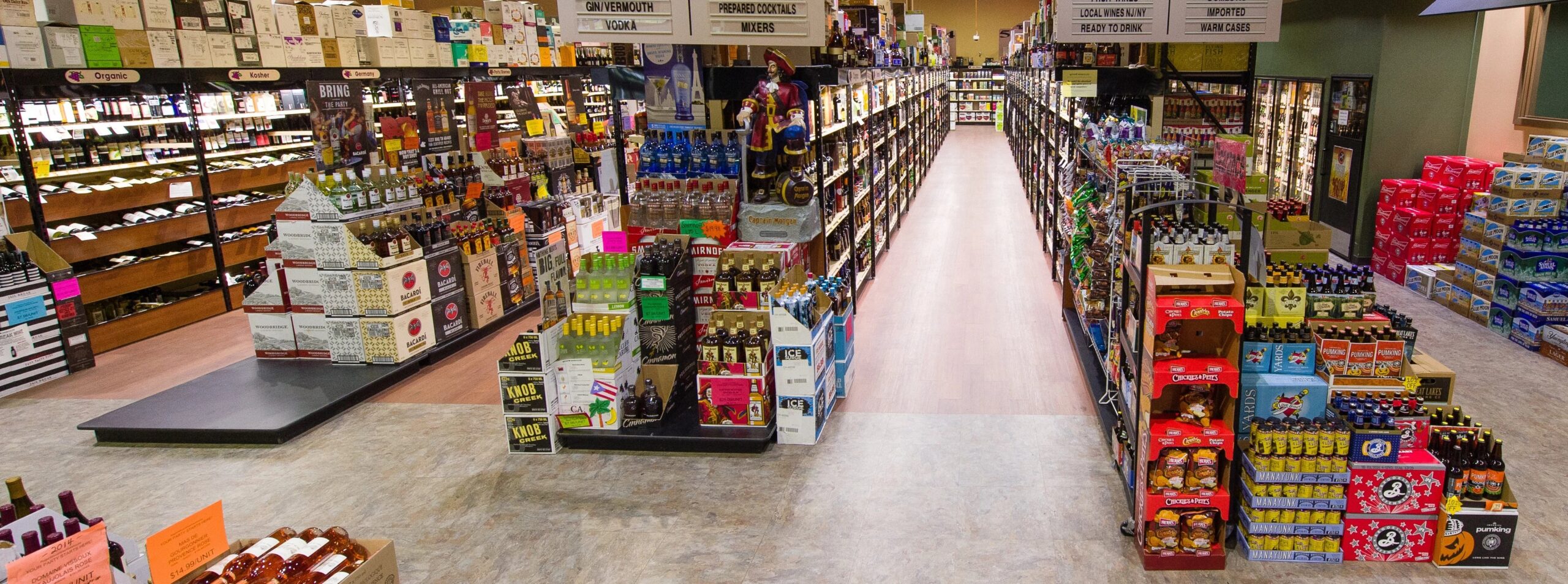
Many retailers optimize costs by deploying both systems strategically:
Lozier for: Perimeter departments, heavy-product categories, high-visibility areas, pharmacy sections
Madix for: Center store grocery aisles, seasonal departments, back-of-store categories, storage areas
This approach captures Lozier’s performance advantages where they matter most while controlling overall fixture investment through strategic Madix deployment in less demanding applications.
The compatibility limitations require clear demarcation—don’t attempt to mix systems within the same gondola runs or adjacent sections where component sharing might seem tempting.
This hybrid strategy works particularly well when implementing double-sided gondola configurations in center aisles where Madix’s cost advantages multiply across extensive linear footage, while reserving Lozier for perimeter sections experiencing heavier stress and higher customer visibility.
Related Considerations for Store Fixturing
When planning your gondola shelving investment, consider how these systems integrate with other retail fixtures. Store layout optimization significantly impacts customer flow and sales performance beyond shelving selection alone.
For retailers managing temperature-controlled environments, refrigerated display case integration with gondola shelving requires careful planning to maintain consistent aesthetic appearance and functional compatibility.
Your shelving decision should align with broader retail fixture modernization strategies that consider changing consumer shopping behaviors and omnichannel retail requirements.
Conclusion
The Madix versus Lozier decision ultimately reflects your retail business strategy more than absolute product superiority. Lozier’s premium construction delivers measurable advantages in demanding applications where durability, load capacity, and finish longevity justify higher investment. Madix provides compelling value when functional performance meets requirements without premium pricing.
Your selection should consider total cost of ownership—initial investment, installation labor, maintenance requirements, and realistic replacement timelines—rather than focusing exclusively on per-unit pricing. The 12-15% price differential compounds across large-scale installations but may represent minimal impact on overall store development budgets when considered against construction, HVAC, and technology investments.
Your gondola shelving decision represents a significant capital investment that impacts daily operations for 10-20 years. The Madix versus Lozier choice should align with your merchandising strategy, product mix, and growth projections rather than price alone. Rack Leaders specializes in helping retailers navigate these fixture decisions with detailed project assessments that consider your specific traffic patterns, product weight requirements, and budget parameters.
Whether you need heavy-duty Lozier construction for demanding applications or cost-optimized Madix systems for standard retail environments, our team provides customized recommendations backed by extensive industry experience. We’ll help you design fixture layouts that maximize sales per square foot while staying within budget constraints. Contact Rack Leaders at our contact page to discuss your project requirements, request detailed quotes comparing both systems, and receive expert guidance on optimizing your complete store fixture package including checkout counters and promotional displays.
Frequently Asked Questions
Are Madix and Lozier shelves interchangeable?
No, Madix and Lozier components are not interchangeable despite similar dimensions. The base shoes use different mounting hole patterns, uprights have varying bracket slot spacing (differing by 0.125″), and back panel attachment mechanisms are incompatible. You cannot reliably mix shelves, uprights, or structural components between the two systems within the same gondola run. This incompatibility means committing to one manufacturer for each section of your store.
Which is better: Madix or Lozier?
Neither system is universally “better”—the optimal choice depends on your specific application. Lozier excels in heavy-duty environments (hardware stores, automotive retail) where its 250 lb shelf capacity and reinforced construction justify the 12-15% price premium. Madix delivers better value for standard retail applications (grocery, convenience stores) where its 225 lb capacity meets requirements at lower cost. Consider your product weight, traffic levels, budget constraints, and planned fixture lifespan when deciding.
What is the difference between Lozier and Madix shelving?
The primary differences lie in construction gauge and pricing. Lozier uses 18-gauge steel uprights versus Madix’s 20-gauge, and 22-gauge shelves versus Madix’s 24-gauge. This translates to Lozier supporting 250 lbs per shelf compared to Madix’s 225 lbs. Lozier’s powder coating demonstrates 15-20% better chip resistance in high-traffic zones. Madix components weigh less, enabling faster installation and easier reconfiguration. Price-wise, Lozier typically costs 12-15% more for equivalent configurations.
How much does gondola shelving cost?
A standard 4-foot double-sided gondola unit (72″ height, 5 shelves per side) costs $425-$465 for Madix and $485-$525 for Lozier at distributor pricing for 50+ unit orders. Heavy-duty configurations run $495-$545 (Madix) and $565-$615 (Lozier). End cap units range from $245-$275 (Madix) to $285-$315 (Lozier). Smaller quantity orders increase per-unit costs by 15-25%. Complete store fixtures including accessories typically run $45-$75 per linear foot depending on configuration complexity.
How long does gondola shelving last?
In high-traffic retail environments, Lozier shelving maintains structural integrity and acceptable appearance for 15-18 years before requiring replacement, while Madix performs adequately for 12-14 years under identical conditions. Uprights typically last through store remodel cycles (15-20 years) for both systems. Shelves require replacement more frequently—Lozier shelves last 12-15 years versus Madix’s 10-13 years in high-volume stores. Actual lifespan varies significantly based on product weight, cart traffic, maintenance practices, and environmental conditions like humidity or temperature fluctuations.
What stores use Lozier shelving?
Major retailers using Lozier systems include CVS Pharmacy, Walgreens, Ace Hardware, AutoZone, and numerous independent grocery chains prioritizing premium fixture quality. Lozier dominates pharmacy retail due to superior integration with security fixtures and controlled substance storage solutions. High-end grocery stores and specialty retailers favor Lozier when brand image justifies premium fixture investment and heavy product categories require maximum load capacity and durability.