Choosing the right gondola shelving solution is critical for maximizing retail profitability and creating an efficient store layout that drives customer engagement. Your retail floor plan is not just about aesthetics; it is a direct driver of your Sales per Square Foot and Customer Flow. The retail shelving systems you choose define how customers navigate your space and how much inventory you can expose them to.
When outfitting a retail space, the two primary workhorses are Single-Sided Gondola Shelving (Wall Units) and Double-Sided Gondola Shelving (Island Units).
Before we delve deeper, let’s understand their definitions:
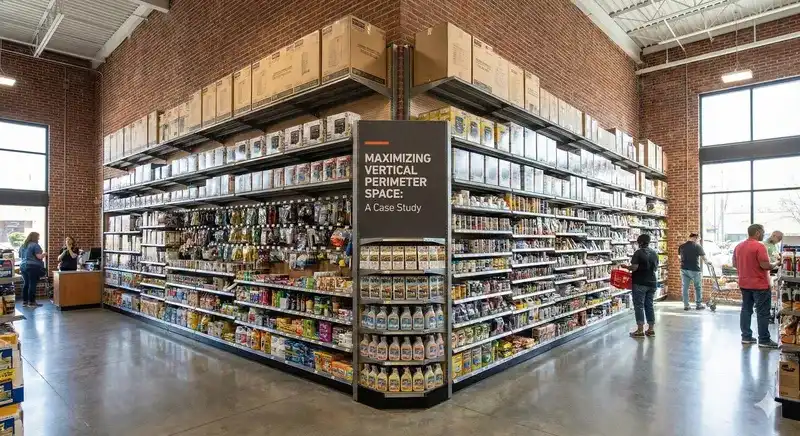
- Single-Sided (L-Shape): Designed to sit flush against a wall, maximizing vertical perimeter space.
- Double-Sided (T-Shape): Designed for the center floor, accessible from both sides to create aisles.
This guide will dissect the technical differences, advantages, and strategic layout applications of both shelving types, helping you determine the right mix for optimizing your specific retail environment.
Key Takeaways
- Space Utilization & Efficiency: Single-sided units maximize vertical wall height; double-sided units maximize floor density and retail space utilization.
- Customer Flow: Double-sided units dictate the flow of traffic (aisles), while single-sided units guide the perimeter loop.
- Versatility: Most retailers require a hybrid strategy—using single-sided units for the perimeter and double-sided units for the center core.
- Cost Efficiency & ROI: While double-sided units cost more per unit, they offer double the merchandising area, often providing better cost efficiency and higher ROI per SKU displayed.
What is Single-Sided Gondola Shelving?
Often referred to as Wall Gondola or Wall Units, these fixtures are the heavy lifters of your store’s perimeter.
Single-sided gondola shelving is the backbone of your store’s perimeter. Structurally, these units feature a heavy-duty upright column, a base foot, and shelves extending in only one direction (creating an “L” shape). While they are engineered to be self-standing, they are almost exclusively used against flat surfaces.
Single-Sided Gondola Shelving Applications
- Perimeter Walls: This is the standard application. It draws customers through the full length of your store, encouraging them to walk the “racetrack” or outer loop.
- Narrow Aisles: In tight retail footprints where a central aisle isn’t feasible, single-sided units can be placed back-to-back with a partition or against pillars.
- End-Caps: While technically a distinct category, end-caps are essentially single-sided units placed at the end of a double-sided run. They are prime real estate for high-margin impulse buys.
Single-Sided Gondola Shelving Advantages
1. Maximizes Vertical Space
Because these units are typically anchored visually by a wall, you can go higher with single-sided shelving than you can with island units. It is common to see wall units extending to 84 inches (7 feet) or 96 inches (8 feet). For detailed specifications, refer to our gondola shelving dimensions guide. This allows you to carry significant overstock on top shelves or display large items without obstructing the sightlines across the center of the store.
2. Stability and Load Capacity
While gondola systems are inherently stable, single-sided units placed against a wall offer an added layer of security. For retailers selling heavy items—such as automotive parts, hardware, or canned goods—the wall unit provides a rigid backdrop that prevents merchandise from falling off the back.
3. Visual Merchandising
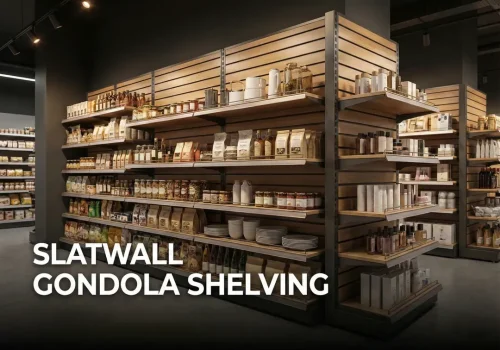
With a solid back panel (pegboard, slatwall, or solid steel), single-sided units force the customer’s attention solely on the product. There are no visual distractions from the aisle behind it. This makes them excellent for detailed displays or high-value items that require specific lighting accessories.
Pro Tip: If you are planning a layout for a space with uneven walls or obstructions, you might need customized backing. Read more about our \[custom gondola accessories and backing options\] to solve architectural challenges.
What is Double-Sided Gondola Shelving?
Double-sided gondola shelving, known widely as Island Gondola, T-Shape Gondola, or Center Store Gondolas, is the engine that drives product density in supermarkets and convenience stores.
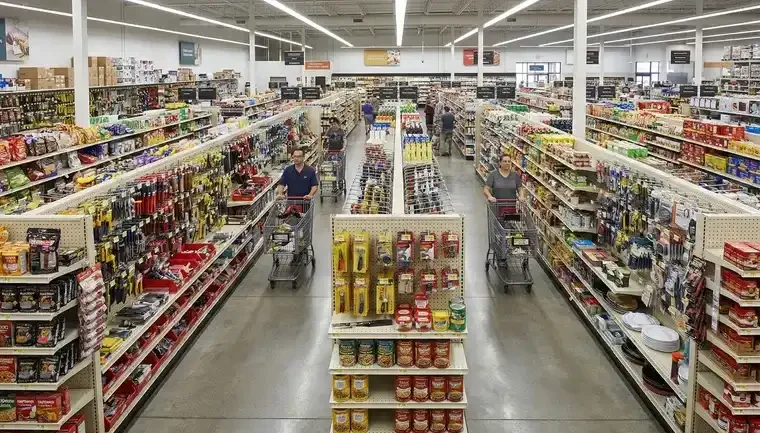
Double-sided gondola shelving is the engine of high-volume retail. These units feature a central upright column with base feet extending in both directions (creating an inverted “T” shape). They are freestanding structures that form the aisles of your store.
Double-Sided Gondola Shelving Applications
- Central Floor Area: This is where the majority of your inventory lives. Double-sided units turn open floor space into organized revenue channels.
- Creating Aisles: You use these units to dictate exactly how a customer walks. By adjusting the length of the run, you control traffic flow and dwell time.
- Department Segmentation: These units act as physical dividers, separating the “Snack” section from the “Beverage” section without closing off the space entirely.
Double-Sided Gondola Shelving Advantages
1. Double Display Capacity
The most obvious benefit is density. A single run of double-sided shelving offers two active merchandising faces. If you are paying high rent per square foot, you need to fit the maximum number of SKUs (Stock Keeping Units) on the floor. Double-sided gondolas are the most efficient way to achieve high SKU density.
2. Layout Flexibility
Unlike wall units, island gondolas are not tethered to the building’s architecture. If you notice a “dead zone” in your store where products aren’t moving, you can physically move these units to change the flow. You can reconfigure your aisles from a Grid Layout to a diagonal layout relatively easily.
3. Promotional Power
Double-sided runs naturally create “End-Cap” opportunities. Every time you set up a double-sided run, you create two prime promotional spots at the ends of the aisle. These spots historically generate the highest profit margins in a grocery or retail setting.
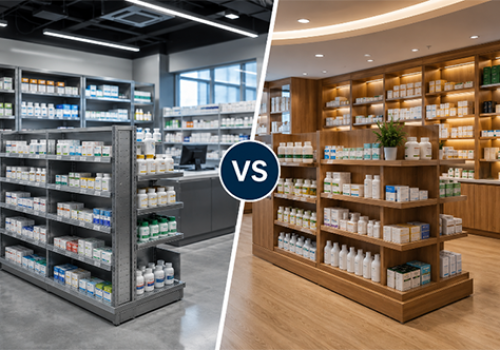
Single-Sided vs. Double-Sided Gondola Shelving Comparison
| Feature | Single-Sided (Wall) | Double-Sided (Island) |
|---|---|---|
| Primary Placement | Against Perimeter Walls | Center Floor Area |
| Structural Shape | L-Shape (One-way base) | T-Shape (Two-way base) |
| Merchandising Capacity | Standard (1 Face) | High Density (2 Faces) |
| Typical Height | High (72″ – 96″+) | Medium (54″ – 72″) |
| Floor Footprint | Low (Depth of 1 base) | Higher (Depth of 2 bases) |
| Visual Impact | Defines the room boundaries | Defines the traffic flow |
| Cost Efficiency | Lower cost per unit | Better value per SKU displayed |
| Stability | Excellent (Wall support) | Self-supporting (Requires balance) |
How should I choose between single-sided or double-sided shelving?
In professional retail planning, the decision is rarely between using only Single-Sided or only Double-Sided units. The most profitable floor plans utilize a calculated hybrid strategy. The ideal ratio depends entirely on your total square footage and your inventory density goals.
1. The Boutique or Convenience Store (Small Footprint)
Scenario: Stores under 1,000 square feet where every inch of floor space is premium.
- Perimeter Strategy: Lean heavily on Single-Sided Gondola Shelving (Wall Units). Line every available vertical wall to maximize storage capacity without encroaching on the floor.
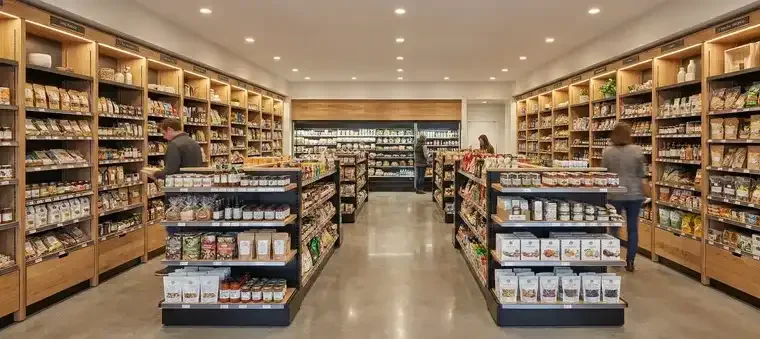
- Center Strategy: Utilize low-profile Double-Sided units (typically 54″ height) for the central floor. Keeping these island units low preserves sightlines, ensuring customers see the back wall immediately upon entering. This visual openness prevents the “claustrophobic” feeling often found in crowded small shops.
2. Supermarket or Hardware Store (Large Footprint)
Scenario: Large format stores focusing on high SKU counts and efficiency.
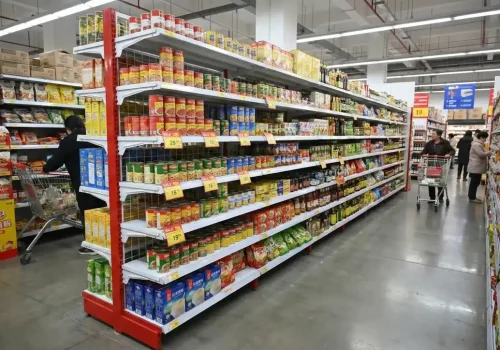
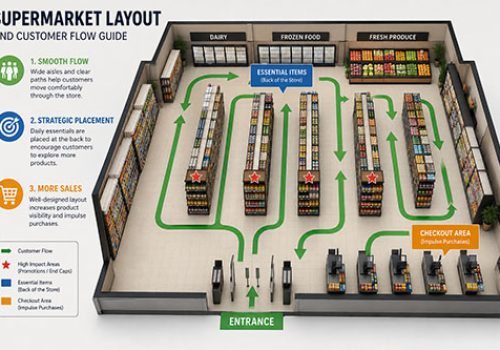
- Core Strategy: Implement a Grid Layout using long runs of Double-Sided Gondola Shelving. This creates distinct aisles and maximizes the number of products displayed per square foot of floor.
- Perimeter Strategy: Use Single-Sided units to guide the customer along the outer loop (“The Racetrack”). This is ideal for heavy bulk items or high-margin products that require the structural support of a wall.
Layout Strategy by Store Type
| Store Type | Primary Goal | Recommended Wall Unit Height | Recommended Island Unit Height | Layout Focus |
|---|---|---|---|---|
| Convenience / Boutique | Openness & Visibility | Max (84″ – 96″) | Low (54″) | Perimeter-heavy to save floor space. |
| Supermarket / Hardware | Inventory Density | Max (84″ – 96″ +) | Medium-High (60″ – 72″) | Grid layout to maximize SKU count. |
The “Starter” vs. “Add-on” Concept
As a gondola shelving manufacturer, Us often sees customers overspending by misunderstanding the hardware components. When planning your layout runs, it is critical to distinguish between Starter Bays and Add-on Bays (often called “Adders”).
- Starter Unit: A standalone structure that includes two upright columns. Every continuous row needs exactly one Starter.
- Add-on Unit: Connects to the previous unit and shares a common upright; it includes only one upright column.
If you purchase all “Starter” units for a continuous aisle, you pay for unnecessary uprights. Conversely, buying only “Add-on” units leaves you with an incomplete shelf. To optimize your budget, calculate the length of your run and order 1 Starter + (X) Add-ons.
Note: Confused about your component list? Review our guide on \[Starter vs. Add-on Bays: How to Order Correctly\] to ensure you don’t overspend on hardware.
Conclusion
Single-sided units maximize your vertical wall space, while double-sided units turn your open floor into a high-density sales machine. Neglecting either results in wasted square footage and lost revenue.
If you are struggling to visualize how many runs of each you can fit without cluttering your floor, Contact Spieth for a Free Layout Consultation Don’t guess with your floor plan. At Spieth, we specialize in optimizing retail density. Reach out to us today for a custom quote, professional retail shelving solutions, or a floor plan design that balances traffic flow with maximum SKU count and optimizes your retail space investment.