Are your products getting lost in the retail shuffle? Find the Right Floor Display Stand Manufacturer for Your Business. Walk into any successful store, and you’ll notice one thing immediately: strategically placed floor display stands commanding attention and driving impulse purchases. Yet many retailers still struggle with low product visibility, wasted floor space, and missed sales opportunities simply because they haven’t optimized their point-of-purchase displays.
With average consumer attention spans dropping and competition intensifying, your products have mere seconds to make an impression. Floor display stands solve this problem by transforming passive shelf space into active selling zones that capture customer attention at critical decision-making moments.
This comprehensive guide reveals everything you need to know about floor display stands—from selecting the right type for your products to maximizing ROI through strategic placement.
Key Takeaways
- Floor display stands are freestanding merchandising units designed to showcase products at eye level and high-traffic areas
- Seven proven advantages including increased visibility, impulse buying, and conversion rates up to 35%
- Five main types available from wholesale suppliers: cardboard, metal, acrylic, wood, and rotating displays—each with distinct benefits for bulk orders
- Selection criteria depend on product weight, space constraints, budget, and brand positioning
- Industry applications span retail stores, seasonal promotions, and high-margin product showcases
- Strategic placement can increase product sales by 20-200% compared to standard shelf displays
What Are Floor Display Stands?
Floor display stands are freestanding merchandising fixtures placed directly on the retail floor to showcase products outside traditional shelving systems. Unlike wall-mounted or counter displays, these units occupy floor space and serve as independent point-of-sale (POS) marketing tools designed to intercept customers during their shopping journey.
The primary function goes beyond simple product storage. These displays work as silent salespeople, creating visual focal points that draw customer attention, communicate product benefits, and trigger purchasing decisions. They’re engineered to maximize product visibility by positioning items at optimal viewing heights—typically between 30 and 60 inches—where they naturally catch the eye.
What makes floor display stands particularly effective is their flexibility. You can position them strategically in high-traffic zones like aisle endcaps, checkout queues, or store entrances where customer engagement peaks. This mobility allows retailers to adapt quickly to seasonal campaigns, promotional events, or changing merchandising strategies without permanent fixtures or costly renovations.
Modern floor displays have evolved from simple product holders into sophisticated marketing platforms. They incorporate branding elements, messaging, graphics, and sometimes interactive components that communicate your value proposition instantly. Whether showcasing new launches, clearance items, or impulse-buy products, these displays create dedicated product zones that separate featured items from general inventory.
When sourcing floor display stands for your retail business, partnering with experienced manufacturers and suppliers ensures you receive customized solutions that meet your specific merchandising requirements, volume needs, and budget constraints.
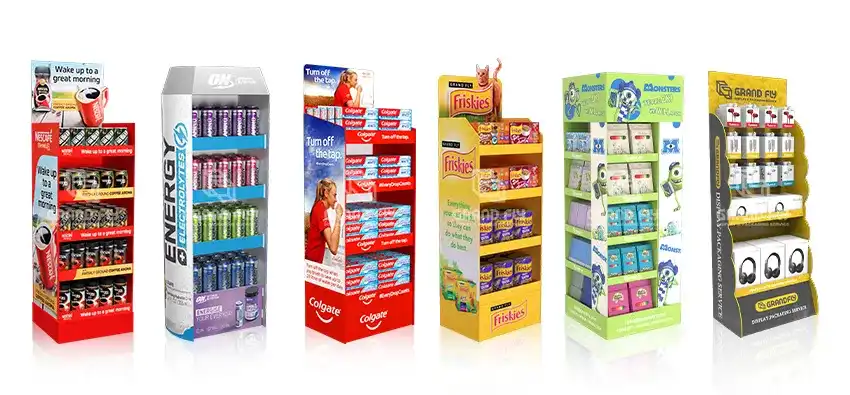
Seven Major Advantages for Retailers
✅ Enhanced Product Visibility
Floor display stands elevate products from crowded shelves into prominent positions. According to the Point of Purchase Advertising International (POPAI), products featured on floor displays receive 3-5 times more visual attention than shelf-placed items. This visibility advantage directly correlates with purchase consideration—customers can’t buy what they don’t see.
✅ Increased Impulse Buying
Research shows that 60-70% of purchase decisions occur in-store, with floor displays triggering impulse purchases at significantly higher rates. By positioning products in unexpected locations and creating visual interest, these stands intercept customers who weren’t actively searching for your product category.
✅ Optimized Floor Space Utilization
Rather than wasting valuable retail real estate, floor displays maximize underutilized areas like aisle ends, open floor sections, and transition zones. This vertical merchandising approach increases your effective selling space without expanding your physical footprint.
✅ Strengthened Brand Exposure
Custom-branded floor displays serve as three-dimensional advertisements that reinforce brand identity. The combination of logos, colors, messaging, and product presentation creates memorable brand experiences that extend beyond individual products.
✅ Improved Sales Conversion Rates
The numbers speak clearly: properly executed floor displays can boost product sales by 20-200% compared to standard shelf placement. This dramatic increase results from combining visibility, accessibility, and strategic positioning during peak shopping moments.
| Metric | Standard Shelf | Floor Display | Improvement |
|---|---|---|---|
| Visual Attention | 2-3 seconds | 8-12 seconds | 300% increase |
| Purchase Consideration | 15-20% | 35-45% | 125% increase |
| Unit Sales Lift | Baseline | 20-200% | Variable |
| Customer Engagement | Low | High | Significant |
| Impulse Purchase Rate | 12% | 28-35% | 183% increase |
✅ Flexible Marketing Campaigns
Unlike permanent fixtures, floor displays adapt quickly to changing marketing needs. Launch a new product next week? Run a holiday promotion? Test different merchandising strategies? Floor stands provide the agility to execute these initiatives without construction delays or significant investment.
✅ Cost-Effective Promotion
Compared to traditional advertising channels, floor displays deliver exceptional ROI. A well-designed display costing $50-500 can generate thousands in incremental sales over its lifespan. The cost per customer impression often runs pennies compared to dollars for digital or print advertising.
To learn more about maximizing your retail merchandising strategy, you can explore our retail display solutions including gondola shelving systems, or understand our approach to point-of-purchase marketing with specialized endcap displays.
Types of Floor Display Stands
Choosing the right display type from reliable floor display stand suppliers fundamentally impacts performance, durability, and cost-effectiveness—especially when ordering in bulk quantities. Here’s a detailed comparison of the five main categories:
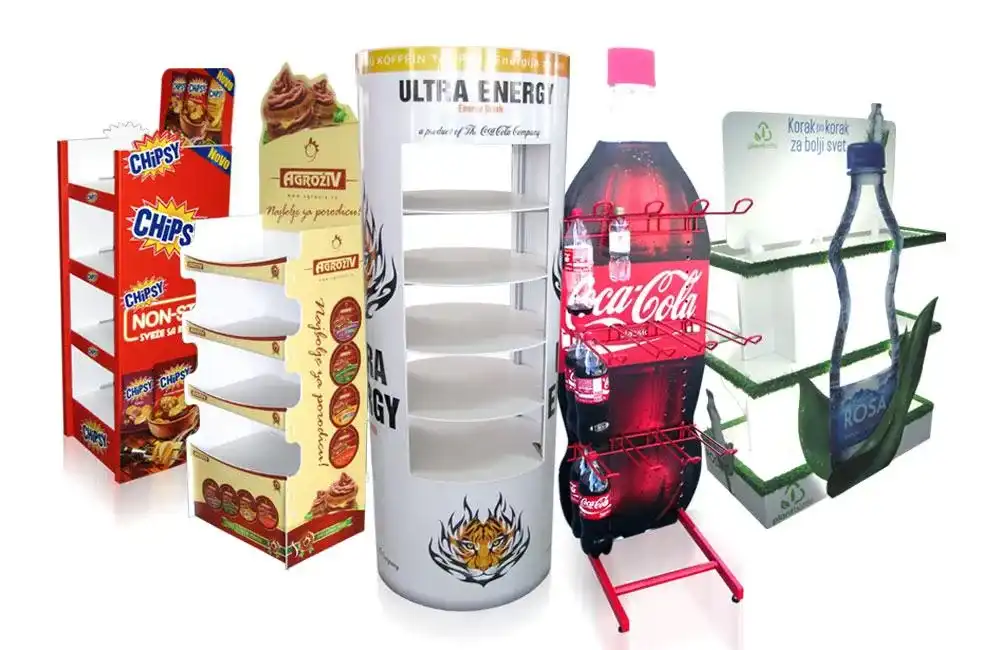
Cardboard/Corrugated Displays
These lightweight, economical options dominate temporary promotions and seasonal campaigns. Manufacturers can print high-quality graphics directly onto the material, creating eye-catching designs at low unit costs. They work exceptionally well for short-term promotions lasting 2-12 weeks, particularly when featuring lightweight products under 50 lbs total weight. High-volume campaigns and seasonal merchandise benefit most from this cost-effective solution, allowing brands to deploy multiple displays across numerous locations without significant capital investment.
However, these displays face durability challenges that retailers must consider. Their limited lifespan makes them unsuitable for long-term installations, and moisture sensitivity can compromise structural integrity in humid environments or near refrigerated sections. Weight restrictions prevent their use with heavier product categories, and the material inherently conveys a less premium appearance compared to metal, wood, or acrylic alternatives.
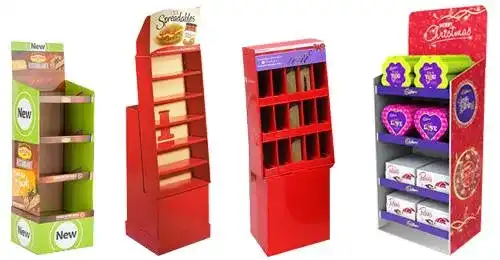
Metal/Wire Displays
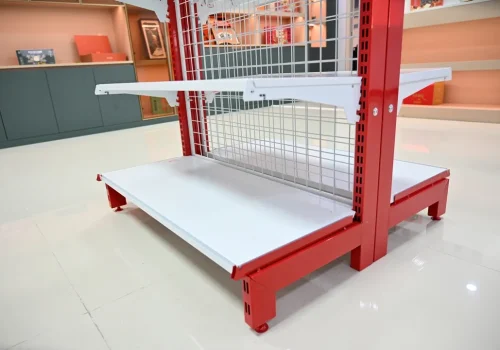
Constructed from steel, aluminum, or wire mesh, these displays offer exceptional durability and weight capacity. Their open-wire designs provide 360-degree product visibility while maintaining structural integrity. These robust fixtures excel in long-term installations where repeated customer interactions demand resilient construction. They handle heavy products effortlessly, making them perfect for high-traffic environments where cheaper alternatives would quickly deteriorate. Products requiring ventilation, such as fresh produce or certain packaged goods, benefit from the open structure that promotes air circulation.
The trade-offs include higher initial investment costs that may challenge budget-conscious retailers. Limited graphic integration capabilities mean branding opportunities rely more on hanging signage than integrated design elements. Potential rust concerns exist in humid environments unless properly coated, and the heavier weight makes repositioning more labor-intensive compared to lighter alternatives.
Acrylic Displays
Clear or colored acrylic creates modern, upscale presentations that let products shine. The transparent material minimizes visual clutter while protecting merchandise and maintaining clean aesthetics. This premium material elevates product perception, making it particularly effective for premium products where packaging and presentation drive purchase decisions. Cosmetics, electronics, jewelry, and other high-value items benefit from the protective yet visible enclosure. Environments requiring hygiene standards, such as food service or healthcare retail, appreciate acrylic’s non-porous surface that resists bacterial growth and cleans easily.
Retailers should recognize that scratch susceptibility requires careful handling and regular maintenance to preserve the pristine appearance. Higher costs compared to cardboard or basic metal options may limit deployment across multiple locations. Weight limitations prevent use with very heavy products, and the material requires regular cleaning to maintain transparency and visual appeal, adding ongoing maintenance considerations.
Wooden Displays
Natural or finished wood delivers warmth, authenticity, and premium positioning. These displays communicate quality and craftsmanship, making them perfect for lifestyle brands and specialty retailers. Organic products, artisan goods, and premium-positioned merchandise gain credibility through association with natural materials. Permanent installations benefit from wood’s timeless aesthetic that doesn’t appear dated as trends evolve. Rustic or natural branding strategies find perfect expression in wooden fixtures that reinforce brand values through material choice itself.
The premium positioning comes with corresponding investment requirements, as wooden displays typically represent the highest cost option. Heavy weight complicates installation and repositioning, requiring more labor and planning. Maintenance requirements include periodic refinishing or treatment to preserve appearance, and limited weather resistance restricts outdoor applications unless specially treated.
Rotating/Spinner Displays
These space-efficient units maximize product variety in minimal floor space. Customers can browse multiple product facings by simply rotating the display, increasing engagement and discovery. Small items like accessories, cosmetics, or packaged goods fit perfectly on rotating displays that present dozens of SKUs within a compact footprint. Variety packs benefit from the browsing experience that rotation enables, while point-of-purchase items near checkout capitalize on the interactive element that encourages customer engagement. Space-constrained locations gain significant merchandising capability without sacrificing valuable floor area.
Stability concerns emerge when displays become top-heavy, potentially creating safety hazards if improperly loaded. Mechanical wear on rotating mechanisms requires periodic maintenance or replacement, and the higher complexity compared to static displays introduces additional failure points that could compromise functionality.
| Display Type | Material Cost | Durability | Best Use Case | Typical Lifespan |
|---|---|---|---|---|
| Cardboard | $ | Low-Medium | Temporary promotions | 2-12 weeks |
| Metal/Wire | $$-$$$ | High | Permanent fixtures | 3-10 years |
| Acrylic | $$$ | Medium-High | Premium products | 2-5 years |
| Wood | $$$-$$$$ | High | Specialty retail | 5-15 years |
| Rotating | $$-$$$ | Medium | Space optimization | 2-7 years |
The material selection directly impacts your display’s performance and perception. While cardboard suits fast-moving consumer goods and limited-time offers, premium products demand materials that reflect their positioning. For a deeper dive into material properties across retail fixtures, see our comprehensive material comparison guide. Consider the complete lifecycle cost—not just initial investment—when evaluating options.
How to Choose the Right Display Stand Supplier and Product Specifications
Selecting the optimal floor display requires evaluating multiple factors beyond aesthetics. Use this systematic checklist to guide your decision:
✅ Product Type and Weight Capacity
Start with the basics: What are you displaying? A cardboard stand supporting potato chips requires vastly different engineering than one holding power tools. Calculate total weight including all products, signage, and structural components. Add a 20-30% safety margin to prevent structural failure. Before finalizing specifications, weigh your fully loaded display configuration to ensure it falls within safe operating parameters. Verify weight distribution across the base to prevent tipping hazards, paying particular attention to how products stack vertically and whether heavier items sit low in the structure for optimal stability.
✅ Store Space Dimensions
Measure your available floor space precisely, accounting for customer traffic flow. Floor displays should enhance navigation—not create obstacles. For comprehensive guidance on optimizing your entire retail layout, review our retail space planning strategies. The general rule: maintain minimum 36-inch aisles for accessibility compliance and comfortable shopping experiences. Create a scaled floor plan showing display placement, using actual measurements rather than estimates to avoid costly mistakes. Test traffic patterns during peak hours to identify optimal positioning without congestion, observing how customers naturally move through your space and where they pause or change direction.
✅ Target Audience Demographics
Your customers’ shopping behaviors should influence display design. Families with children require stable, tip-resistant designs positioned higher to prevent tampering. Elderly shoppers benefit from displays at comfortable reaching heights (30-50 inches) with clear product information. Observe customer interactions with existing displays in your environment, noting which heights, angles, and configurations generate most engagement for your specific demographic. This real-world data proves more valuable than generic design principles that may not apply to your unique customer base.
✅ Budget Constraints
Balance upfront costs against expected lifespan and sales lift. A $200 display generating $5,000 in incremental sales over six months delivers 2,400% ROI. Conversely, a $50 display lasting only two weeks may cost more per selling day than a durable alternative.
| Budget Range | Display Options | Expected Lifespan | Best For |
|---|---|---|---|
| \$25-\$100 | Basic cardboard | 2-8 weeks | Single promotions |
| \$100-\$300 | Premium cardboard, basic metal | 2-6 months | Seasonal campaigns |
| \$300-\$800 | Metal, acrylic, basic wood | 6 months-3 years | Ongoing programs |
| \$800-\$2,000+ | Premium wood, custom designs | 2-10+ years | Flagship products |
Working with Floor Display Stand Manufacturers: When evaluating quotes from different suppliers, request samples to assess build quality, inquire about minimum order quantities (MOQ), verify customization capabilities for branded displays, and confirm lead times for production and delivery. Reputable manufacturers often provide design consultation services to optimize your display investment.
✅ Durability and Material Quality
Match material durability to display duration and environment. High-humidity locations near refrigeration or outdoor areas require moisture-resistant materials that won’t warp, swell, or deteriorate. High-traffic zones demand impact-resistant construction that withstands repeated customer contact, shopping cart collisions, and general wear. Consider maintenance requirements carefully—acrylic needs regular cleaning to maintain clarity, while powder-coated metal resists fingerprints and requires minimal upkeep. Request material samples and conduct real-world testing in your actual environment rather than relying solely on manufacturer specifications. Simulate customer interactions, cleaning procedures, and environmental conditions to identify potential issues before committing to large-scale deployment.
✅ Brand Image Alignment
Your display communicates brand values nonverbally. Discount retailers might choose cost-effective cardboard that signals value pricing and temporary promotions, while luxury brands require premium materials matching product positioning and reinforcing quality perceptions. Misaligned materials create cognitive dissonance that undermines marketing messages—imagine organic skincare on cheap plastic versus natural wood that reinforces sustainability claims. Create a brand alignment matrix rating each material option against your brand attributes such as premium, eco-friendly, innovative, traditional, accessible, or exclusive. Select options scoring highest across priority attributes, ensuring your physical merchandising reinforces rather than contradicts your brand positioning.
For specialized guidance on display selection for your specific products, you can browse our custom display design services or read our article on retail merchandising best practices.
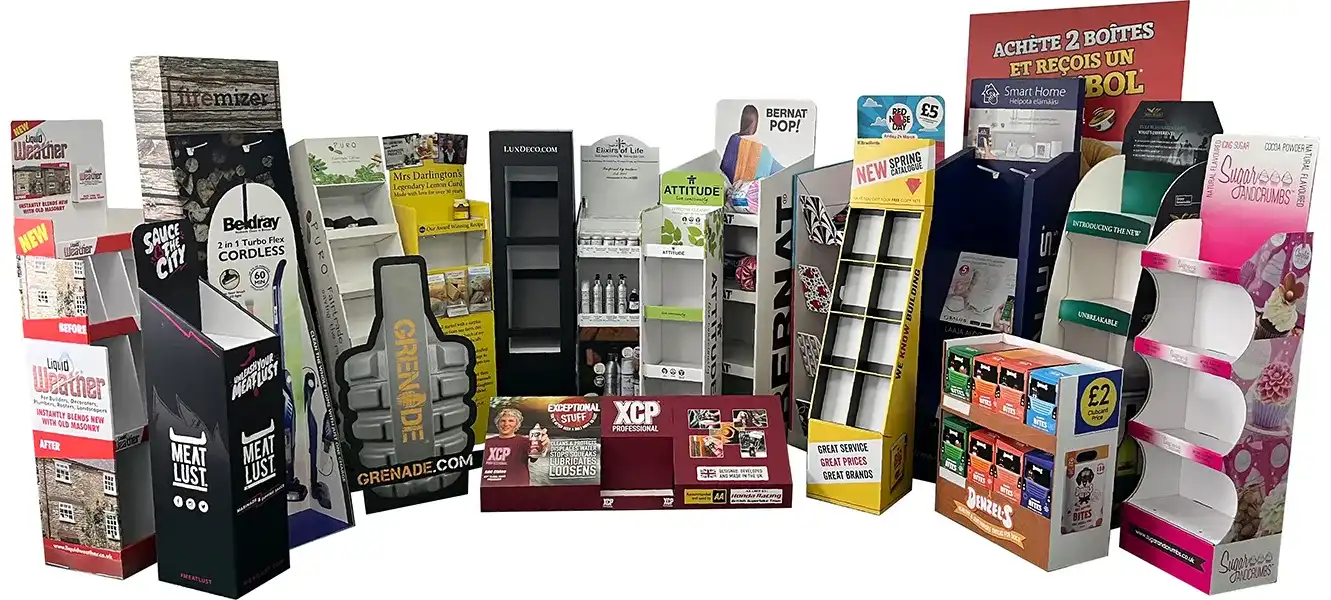
Industry Applications
Floor display stands deliver value across diverse retail environments. Here’s how different sectors leverage these merchandising tools:
✅ Retail Stores (Supermarkets, Convenience Stores)
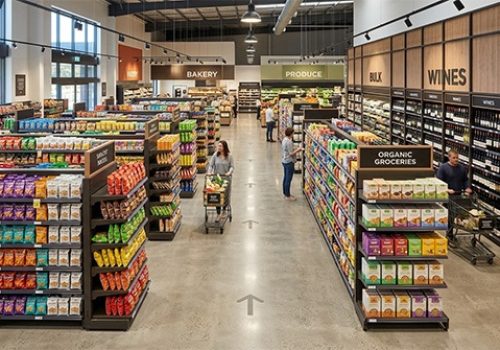
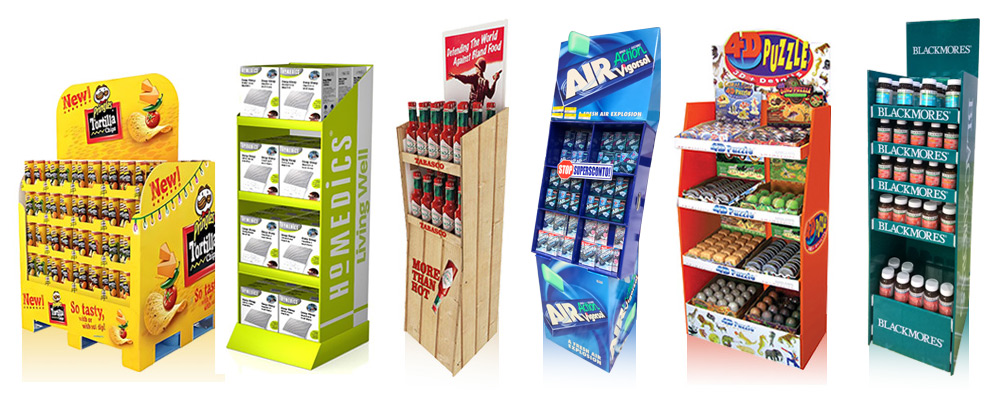
Supermarkets use floor displays primarily for new product launches requiring immediate visibility that cuts through shelf clutter, promotional pricing and multi-buy offers that drive volume, seasonal items like holiday foods or summer beverages that capitalize on timely demand, and cross-merchandising opportunities such as positioning chips near beer or salsa near tortillas to increase basket size.
Convenience stores maximize their limited space with impulse categories near checkout including candy, beverages, and magazines that capture last-minute purchase decisions. High-margin items like energy drinks and premium snacks receive prominent floor display placement to maximize profitability per square foot. Vendor-supplied displays reduce inventory investment while maintaining product presence, allowing smaller retailers to compete with larger chains.
Supermarket floor displays typically generate 30-40% of featured product sales despite occupying less than 5% of floor space, demonstrating their exceptional efficiency.
✅ Promotional Activities/Seasonal Marketing
Seasonal campaigns benefit enormously from temporary floor displays. Holiday periods drive massive volume in categories like Halloween candy, Christmas decorations, and back-to-school supplies that require temporary but high-capacity merchandising solutions. Weather-driven promotions capitalize on predictable seasonal needs—sunscreen and beach toys dominate summer displays while cold remedies and comfort foods take over in winter. Event-based marketing around occasions like the Super Bowl, Valentine’s Day, or graduation creates short-term merchandising opportunities that floor displays address perfectly.
The temporary nature allows aggressive promotional pricing without devaluing permanent shelf positions. Retailers can test new products with minimal commitment, gathering sales data before committing to regular shelf space allocation.
✅ High-Margin Product Showcases
Smart retailers use floor displays strategically for products delivering exceptional profit margins. Premium beverages including craft beers, specialty wines, and imported waters justify dedicated display investment through higher per-unit profitability. Personal care categories like cosmetics, fragrances, and grooming products combine high margins with impulse appeal. Electronics accessories such as phone cases, chargers, and headphones generate disproportionate profits relative to their size. Specialty foods including gourmet chocolates, artisan cheeses, and organic snacks attract quality-conscious consumers willing to pay premium prices.
These categories justify premium display investments because incremental sales directly impact bottom-line profitability at rates far exceeding commodity products.
✅ Pharmacy and Health Products
Pharmacies deploy floor displays for seasonal health items like allergy medications during spring or flu remedies during winter when demand spikes predictably. Wellness products including vitamins and supplements benefit from educational displays that communicate benefits. Personal care categories gain visibility outside traditional health and beauty aisles, and front-end impulse items capitalize on checkout queue dwell time.
✅ Specialty Retail Environments
Electronics stores feature new releases, accessories, and promotional bundles that require demonstration space beyond standard shelving. Home improvement retailers showcase seasonal projects, tool sets, and DIY solutions that inspire customer projects. Apparel retailers present new collections, clearance items, and accessory coordination that demonstrates complete looks. Bookstores highlight bestsellers, new releases, and themed collections that guide discovery in overwhelming inventory.
| Retail Sector | Primary Display Use | Typical Duration | Success Metric |
|---|---|---|---|
| Grocery | Promotions, new items | 2-12 weeks | Unit velocity increase |
| Convenience | Impulse categories | Permanent | Transaction attachment rate |
| Pharmacy | Seasonal health | 4-16 weeks | Category sales lift |
| Specialty | Featured collections | 4-26 weeks | Conversion rate |
| Electronics | New releases | 8-20 weeks | Margin per square foot |
The versatility of floor display stands makes them valuable across virtually every retail format. The key lies in matching display type, placement, and messaging to your specific category, customer base, and business objectives.
Frequently Asked Questions
What is a floor display stand?
What are the benefits of floor displays?
What is the difference between a floor stand and a display stand?
How much does a floor display stand cost?
What materials are best for retail floor displays?
Where should floor displays be placed in a store?
How do you make a floor display stand stable?
Are floor displays effective for increasing sales?
Where can I buy floor display stands in bulk?
What should I ask a floor display stand supplier before ordering?
Ready to Source Your Floor Display Stands?
Whether you need custom cardboard displays for a promotional campaign or durable metal fixtures for permanent installations, partnering with the right floor display stand manufacturer makes all the difference. Evaluate suppliers based on customization capabilities, production capacity, quality standards, and their understanding of your industry’s specific merchandising challenges.
Next Steps for Procurement:
- Define your display specifications (dimensions, materials, branding requirements)
- Request quotes from 3-5 qualified suppliers
- Order samples to assess quality before bulk purchase
- Verify production timelines align with your campaign launch
- Negotiate pricing based on order volume and long-term partnership potential
Need Expert Guidance? Our team specializes in custom retail display solutions tailored to your specific merchandising challenges. Contact our display experts for personalized recommendations, volume pricing, and design consultation services.