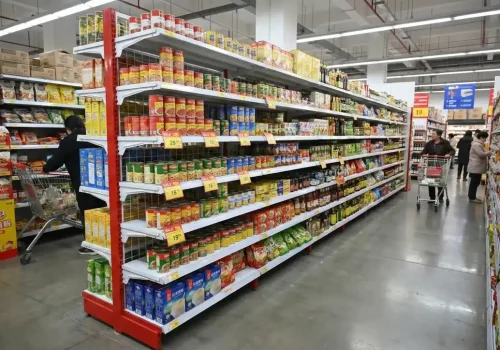
A well-organized supermarket is more than just a place to display products. The way supermarket shelves are arranged directly affects customer shopping behavior, product visibility, store efficiency, and overall sales performance. Whether you operate a small grocery store, a convenience shop, or a large retail supermarket, having the right shelving layout can significantly improve the customer experience and increase profits.
In today’s competitive retail market, smart supermarket shelf arrangement is no longer optional. A carefully planned layout helps customers find products faster, encourages impulse purchases, and maximizes the use of available floor space.
This guide explains how to arrange supermarket shelves effectively and how to choose the right shelving system for different store types.
Understand Your Store Layout Before Arranging Shelves
Before installing supermarket shelving, store owners should first evaluate the overall store layout. Every supermarket has different dimensions, customer traffic patterns, and product categories, so shelf arrangement should always match the store environment.
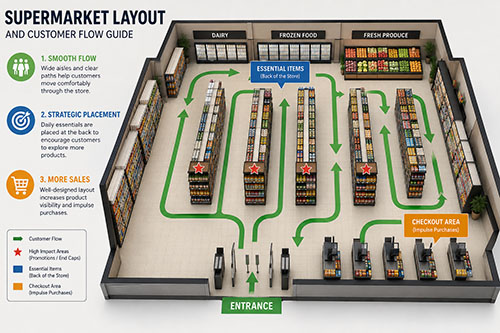
Analyze Customer Traffic Flow
Most customers naturally move in a specific direction after entering a store. Understanding these shopping patterns helps retailers place important products in strategic locations.
A well-designed traffic flow can:
- Reduce congestion
- Improve shopping comfort
- Increase exposure to more products
- Encourage customers to spend more time inside the store
For example, daily necessities such as milk, rice, and cooking oil are often placed at the back of the supermarket. Customers must walk through multiple aisles before reaching these products, increasing the chances of additional purchases.
Choose the Right Store Layout Style
Different supermarkets use different layout designs depending on store size and target customers.
Grid Layout
The most common supermarket layout. Shelves are arranged in straight aisles to maximize space efficiency and product display capacity.
Best for:
- Grocery stores
- Convenience stores
- Discount supermarkets
Loop or Racetrack Layout
This design guides customers along a fixed path around the store.
Best for:
- Large supermarkets
- Stores focusing on promotional displays
Free-Flow Layout
Shelves are arranged more creatively to create a relaxed shopping atmosphere.
Best for:
- Specialty retail stores
- Boutique supermarkets
Divide the Supermarket into Functional Product Zones
Successful supermarkets divide the store into clear sections to improve navigation and shopping efficiency.
Place Essential Products at the Back
Products customers purchase regularly should be placed farther from the entrance, including:
- Dairy products
- Eggs
- Rice
- Bread
- Household essentials
This strategy increases customer exposure to promotional and impulse-buy products located along the aisles.
Create Dedicated Product Sections
Clear category organization helps customers find products quickly and improves the overall shopping experience.
Typical supermarket sections include:
- Fresh produce
- Frozen foods
- Snacks and beverages
- Household cleaning products
- Personal care products
- Baby products
- Checkout display area
Proper zoning also helps store staff manage inventory more efficiently.
Choose the Right Supermarket Shelving System
Different shelving systems serve different purposes inside a supermarket.
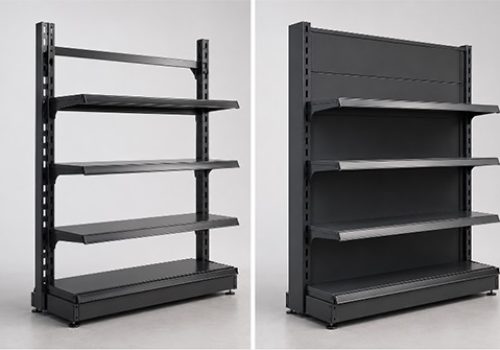
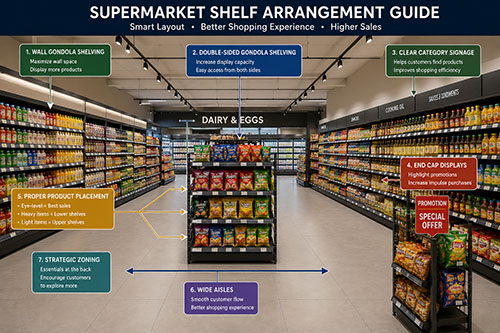
Wall Gondola Shelving
Wall gondola shelving is installed along the perimeter walls of the store. These shelves maximize vertical display space and are ideal for displaying:
- Packaged foods
- Household products
- Personal care items
Wall shelving usually offers higher storage capacity because it can be designed with taller uprights.
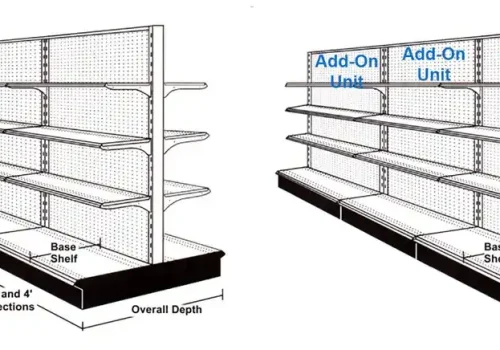
Double-Sided Gondola Shelving
Double-sided gondola shelving is commonly used in the center aisles of supermarkets. These shelves allow products to be displayed on both sides, maximizing floor space utilization.
Advantages include:
- High product capacity
- Easy customer access
- Flexible arrangement options
Double-sided gondola shelving is one of the most popular choices for modern grocery stores.
End Cap Displays
End cap shelving is placed at the end of aisles and is commonly used for:
- Promotional products
- Seasonal items
- Best-selling products
Because customers naturally notice aisle ends first, end cap displays can significantly increase impulse sales.
Optimize Shelf Height and Product Placement
Shelf positioning plays a major role in influencing customer purchasing behavior.
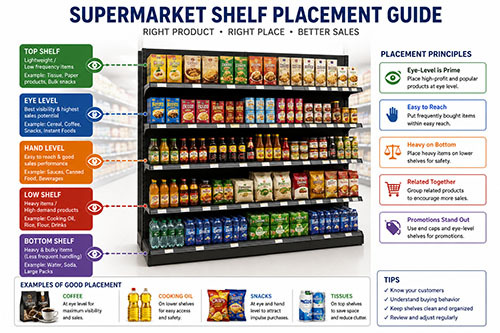
Eye-Level Shelves Generate Higher Sales
Products placed at eye level receive the highest customer attention. Retailers often place:
- Premium products
- High-profit items
- New arrivals
in these positions to increase visibility and sales.
Place Heavy Products on Lower Shelves
Large or heavy items such as beverages, bulk rice, or cooking oil should always be placed on lower shelves for:
- Safety
- Easier product handling
- Better shelf stability
Use Upper Shelves for Lightweight Products
Upper shelves are suitable for:
- Lightweight packaged goods
- Seasonal inventory
- Backup stock
This helps maximize vertical storage space without affecting customer convenience.
Maintain Proper Aisle Spacing
Aisle width has a direct impact on shopping comfort and store efficiency.
If aisles are too narrow:
- Shopping carts may block traffic
- Customers feel uncomfortable
- Shopping time decreases
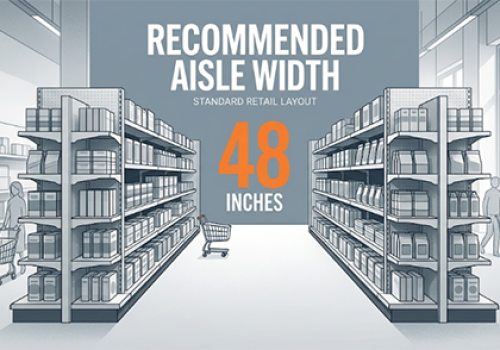
Recommended aisle widths vary depending on store size and customer volume.
Suggested Aisle Widths
- Small convenience stores: 900–1200mm
- Medium supermarkets: 1200–1800mm
- Large supermarkets: 1800mm or wider
Proper aisle spacing improves customer flow and creates a more comfortable shopping environment.
Improve Product Visibility with Lighting and Signage
Even the best supermarket shelf arrangement can fail without proper lighting and signage.
Use Bright and Even Lighting
Good lighting helps:
- Highlight featured products
- Improve store appearance
- Create a cleaner shopping environment
LED lighting is widely used in modern supermarkets because it is energy-efficient and provides better product visibility.
Install Clear Category Signage
Customers should be able to locate product categories easily from a distance.
Effective signage:
- Saves shopping time
- Improves customer satisfaction
- Encourages repeat visits
Large supermarkets often use overhead aisle signs combined with shelf labels for easier navigation.
Arrange Products Strategically to Increase Sales
Product arrangement is not only about organization; it is also a sales strategy.
Place Related Products Together
Cross-merchandising encourages customers to buy additional items.
Examples include:
- Coffee near sugar and creamers
- Chips near soft drinks
- Pasta near pasta sauce
This strategy increases average transaction value.
Rotate Promotional Displays Frequently
Changing promotional displays regularly keeps the store visually fresh and attracts customer attention.
Seasonal products, holiday items, and discount promotions should be displayed in high-traffic areas.
Common Supermarket Shelf Arrangement Mistakes
Many supermarkets lose potential sales because of poor shelving design.
Overcrowded Shelves
Too many products create visual clutter and make shopping stressful.
Poor Product Categorization
Customers may leave the store if products are difficult to find.
Shelves That Are Too High
Excessively tall shelving reduces accessibility and can create safety concerns.
Ignoring Customer Behavior
A layout that looks efficient on paper may not match real shopping habits.
Store owners should regularly observe customer movement patterns and adjust shelf arrangements accordingly.
Best Shelf Arrangement Ideas for Different Store Types
Small Grocery Stores
Small stores should focus on:
- Narrow but organized aisles
- Vertical shelving
- Compact gondola systems
Convenience Stores
Convenience stores benefit from:
- Fast customer flow
- Easy-access products
- High visibility near checkout areas
Large Supermarkets
Large stores should prioritize:
- Clear zoning
- Wide aisles
- Promotional end displays
- Customer navigation systems
Wholesale Stores
Wholesale supermarkets usually require:
- Heavy-duty shelving
- Wide pallet access
- High storage capacity
Tips for Maximizing Supermarket Space
Efficient use of space is critical for improving store profitability.
Helpful strategies include:
- Using taller shelving systems
- Installing end cap displays
- Reducing unused corner space
- Choosing modular gondola shelving
- Keeping aisles clean and organized
Modular supermarket shelving systems are especially useful because they allow retailers to adjust layouts as product categories change.
Why Modular Gondola Shelving Is Ideal for Modern Supermarkets
Modern retailers increasingly prefer modular gondola shelving because of its flexibility and cost-effectiveness.
Key benefits include:
- Easy installation
- Adjustable shelf heights
- Expandable configurations
- Better space utilization
- Long service life
Modular shelving can adapt to changing store layouts and promotional needs, making it an ideal solution for supermarkets of all sizes.
Conclusion
A smart supermarket shelf arrangement does far more than improve store appearance. It directly affects customer experience, product visibility, operational efficiency, and sales performance.
By understanding customer shopping behavior, creating effective product zones, choosing the right shelving system, and optimizing shelf placement, retailers can build a supermarket environment that encourages higher sales and customer satisfaction.
Whether you operate a small convenience store or a large retail supermarket, investing in the right supermarket shelving layout is one of the most effective ways to improve long-term business success.