If you are planning to open a supermarket, convenience store, mini market, or grocery shop, choosing the right supermarket shelving system is one of the most important decisions you will make.
A well-designed supermarket shelving system does more than display products. It helps organize merchandise, improves customer flow, increases product visibility, and makes better use of available floor space. The right shelving layout can also improve restocking efficiency and create a cleaner, more professional shopping environment.
Based on common retail project requirements, one of the most practical solutions for most stores is a combination of:
- ■ single-sided supermarket wall shelving
- ■ double-sided gondola shelving for retail stores
This guide explains what a supermarket shelving system is, how wall shelving for supermarket display and gondola shelving for retail stores work together, what specifications matter most, and how to choose the right solution for your store.
What Is a Supermarket Shelving System?
A supermarket shelving system is a modular display and storage solution used in retail stores to organize and present products in a structured way.
In most supermarket and grocery store layouts, the supermarket shelving system includes two main shelving types:
- Wall shelving for supermarket display – single-sided supermarket shelving placed along the perimeter walls
- Gondola shelving for retail stores – double-sided supermarket shelving placed in the center of the store to form aisles
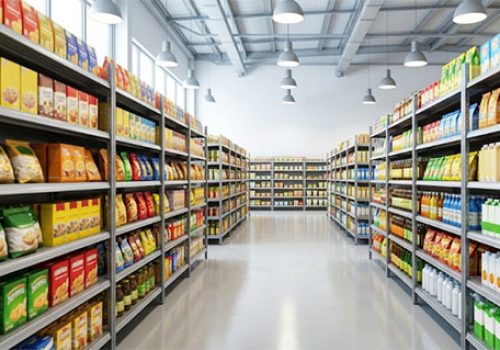
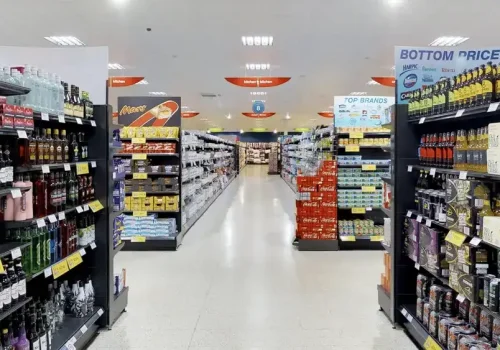
Together, wall shelving for supermarket display and gondola shelving for retail stores create the core layout of a retail store and support the display of packaged foods, beverages, household products, personal care items, and daily necessities.
Because modern supermarket shelving systems are usually modular, stores can adjust shelf heights, extend shelving runs, and add accessories as product categories change.
Why the Right Supermarket Shelving System Matters
The supermarket shelving system you choose can directly affect store operations and customer experience. A suitable supermarket shelving system helps with:
- better product organization
- clearer category presentation
- smoother customer navigation
- more efficient use of wall and floor space
- improved restocking convenience
- stronger visual merchandising
- a cleaner and more professional store appearance
For growing retailers, a modular supermarket shelving system also makes future layout changes much easier without replacing the entire setup.
Wall Shelving for Supermarket Display
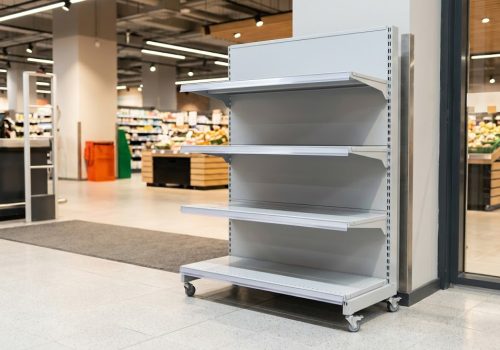
Wall shelving for supermarket display, also called single-sided supermarket shelving, is installed along the store walls. It is designed to maximize vertical display space and is commonly used for packaged goods, daily necessities, household items, and frequently purchased products.
This type of single-sided supermarket shelving is especially useful for displaying a wide product range while keeping the center of the store open for customer movement.
Specification
| Type | Single-Sided Wall Shelving |
|---|---|
| Size | H2200 × L1000 × W400 mm |
| Number of Levels | 5 Levels |
| Bottom Shelf Depth | 400 mm |
| Upper Shelf Depth | 300 mm |
| Load Capacity | 70 kg per layer |
| Starter Units | 130 sets |
| Add-on Units | 70 sets |
| Accessories | Label holders, front fences |
Why Wall Shelving for Supermarket Display Is Widely Used
- makes full use of perimeter wall space
- supports higher product display volume
- works well for packaged and medium-weight goods
- keeps product categories clearly organized
- can be extended easily with add-on units
For stores with limited floor area, taller single-sided supermarket shelving can significantly increase total display capacity.
Gondola Shelving for Retail Stores
Gondola shelving for retail stores, also called double-sided supermarket shelving, is the most common shelving used in the middle of supermarkets and retail stores. Unlike wall shelving for supermarket display, this type of shelving allows products to be displayed on both sides of the aisle.
This makes gondola shelving for retail stores ideal for central store layouts where maximizing product visibility and guiding customer traffic are important.
Specification
| Type | Double-Sided Gondola Shelving |
|---|---|
| Size | H1500 × L1000 × W800 mm |
| Number of Levels | 4 Levels |
| Bottom Shelf Depth | 400 mm |
| Upper Shelf Depth | 300 mm |
| Load Capacity | 70 kg per layer |
| Starter Units | 80 sets |
| Add-on Units | 50 sets |
| Accessories | Label holders, front fences |
Why Gondola Shelving for Retail Stores Works Well
- creating clear shopping aisles
- displaying products on both sides
- improving product exposure
- making the store feel organized and easy to navigate
- supporting category planning and promotional displays
In smaller supermarkets or convenience stores, lower gondola shelving for retail stores is often preferred because it improves visibility across the store and creates a more open shopping environment.
Material and Structural Details of a Supermarket Shelving System
A high-quality supermarket shelving system must be strong enough for daily commercial use. In retail environments, shelves are regularly loaded, unloaded, cleaned, and restocked. For this reason, material thickness and structural design are key factors in long-term durability.
Typical Material Specification
| Uprights | 40 × 60 × 2.0 mm steel |
|---|---|
| Back Mesh | 14 × 20 mm grid, 3.5 mm wire |
| Shelf Thickness | 0.7 mm |
| Brackets | 2.5 mm |
| Surface Treatment | Corrosion protection |
With this structure, each shelf layer can support up to 70 kg, making this supermarket shelving system suitable for many common retail categories such as:
- packaged foods
- beverages
- household items
- personal care products
- daily-use goods
* For stores selling heavier products, the load requirements of the supermarket shelving system should always be confirmed before ordering.
How to Choose the Right Supermarket Shelving System
Choosing a supermarket shelving system is not only about selecting standard sizes. The best solution should match your store layout, product mix, traffic flow, and future expansion plans. Here are the key factors to consider:
1. Store Size and Layout
Your store dimensions will determine the supermarket shelving system configuration that makes the most sense.
- Small stores usually benefit from compact wall shelving for supermarket display and lower gondola shelving for retail stores
- Medium-sized supermarkets often use perimeter wall shelving for supermarket display plus several center rows of gondola shelving for retail stores
- Larger stores may need taller single-sided supermarket shelving and longer runs of double-sided supermarket shelving to maximize display capacity
You should also consider aisle width, checkout position, entrance visibility, and customer movement paths.
2. Product Weight
Different products require different shelf strengths.
If your store sells:
- bottled drinks
- canned goods
- bulk groceries
- detergent
- heavier household products
then the steel thickness, bracket strength, and load capacity of the supermarket shelving system become especially important.
3. Shelf Height and Depth
Shelf depth affects what products can be displayed comfortably.
- deeper bottom shelves are better for larger and heavier items
- shallower upper shelves are suitable for smaller packaged products
The height of the supermarket shelving system should also be practical for shoppers and convenient for staff during replenishment.
4. Flexibility and Modularity
A modular supermarket shelving system allows you to:
- adjust shelf levels
- expand with add-on units
- reorganize category layouts
- adapt to seasonal products
- update your store layout without replacing the full supermarket shelving system
This is particularly valuable for retailers with changing product lines or future expansion plans.
5. Surface Protection
A corrosion-resistant finish helps the supermarket shelving system last longer, especially in humid climates or high-traffic retail environments. Good surface treatment also improves appearance and reduces maintenance over time.
6. Supplier Support
A professional supermarket shelving supplier should do more than quote prices. Ideally, the supplier should also help with:
- size recommendations
- layout planning
- starter and add-on calculation
- customization options
- shipping and installation guidance
This kind of support is especially important for new store projects or multi-store rollouts.
Common Supermarket Shelving Sizes
Although a supermarket shelving system can be customized, most retail stores use standard dimensions for easier planning and future expansion.
Typical supermarket shelving system sizes include:
- Wall shelving for supermarket display height: 1800 mm to 2400 mm
- Gondola shelving for retail stores height: 1200 mm to 1800 mm
- Shelf width: 900 mm to 1200 mm
- Shelf depth: 300 mm to 500 mm
The most suitable dimensions for a supermarket shelving system depend on several factors:
- ceiling height
- aisle width
- product categories
- customer traffic
- desired store visibility
- available floor area
For example, lower gondola shelving for retail stores is often preferred in convenience stores, while taller wall shelving for supermarket display is more common in supermarkets with larger product ranges.
Why Modular Supermarket Shelving Systems Work Well for Retail Stores
Modular supermarket shelving systems are widely used because they combine practicality, flexibility, and cost efficiency.
Key Benefits of Modular Supermarket Shelving Systems
- easy installation
- flexible expansion
- efficient use of store space
- cleaner product presentation
- improved customer navigation
- easier category management
- adaptability for different retail formats
For retailers, modular supermarket shelving systems also reduce long-term replacement costs because the structure can be modified instead of fully replaced.
Shelving Solutions for Different Types of Stores
Different store formats require different supermarket shelving system strategies. Choosing the right configuration helps improve both product display and customer experience.
Grocery Stores
Grocery stores usually need a balanced combination of:
- wall shelving for supermarket display for packaged foods and household essentials
- gondola shelving for retail stores for central aisles
- durable supermarket shelving systems for beverages, snacks, canned goods, and daily-use products
Convenience Stores
Convenience stores often have limited space, so lower gondola shelving for retail stores is commonly used to keep the store feeling open and improve sightlines from the cashier area.
Mini Markets
Mini markets need compact supermarket shelving system layouts that maximize display space without making the store feel crowded. Modular supermarket shelving systems are especially useful here because they can be adjusted to fit smaller or irregular floor plans.
Household Goods Stores
Stores that sell heavier or bulkier products may need:
- stronger uprights in the supermarket shelving system
- thicker brackets in the supermarket shelving system
- deeper shelves
- higher load capacity per layer
Common Mistakes to Avoid When Buying a Supermarket Shelving System
Many buyers focus only on shelf size or price, but several other details affect the long-term performance of a supermarket shelving system.
Here are some common mistakes to avoid:
⚠ Choosing a supermarket shelving system only by appearance
A clean design is important, but strength, adjustability, and durability matter more in daily retail use.
⚠ Ignoring product weight
Some stores underestimate how heavy beverages, detergents, or bulk groceries can be. Always match the supermarket shelving system specification to your actual product mix.
⚠ Using a supermarket shelving system that is too tall or too deep
Oversized shelving can reduce store visibility, make aisles feel narrow, and create restocking difficulties.
⚠ Not planning future expansion
A non-modular supermarket shelving system may become expensive to modify later. Add-on compatible supermarket shelving systems are usually a better long-term investment.
⚠ Not asking for layout support
Without a proper store layout plan, buyers may order the wrong mix of starter units, add-on units, or dimensions for the supermarket shelving system.
Things to Check Before You Buy a Supermarket Shelving System
Before placing an order, confirm the following details with your supermarket shelving supplier:
1. Load Capacity
Make sure each shelf layer in the supermarket shelving system can safely support the intended products.
2. Steel Thickness
Check the thickness of uprights, shelves, and brackets, especially if the supermarket shelving system is intended for medium to heavy goods.
3. Shelf Adjustability
Adjustable shelf levels give your supermarket shelving system more display flexibility for products of different sizes.
4. Surface Finish
A good powder-coated or corrosion-resistant finish improves the durability and appearance of the supermarket shelving system.
5. Customization Options
Ask whether the supermarket shelving supplier can customize dimensions, color, accessories, and layout configurations.
6. Layout and Project Support
A reliable supermarket shelving supplier should be able to review your floor plan and recommend a suitable combination of wall shelving for supermarket display and gondola shelving for retail stores.
Can a Supermarket Shelving System Be Customized?
Yes. Most supermarket shelving systems can be customized according to store size, product categories, branding requirements, and project layout.
- shelf dimensions
- shelving height and depth
- number of levels
- color
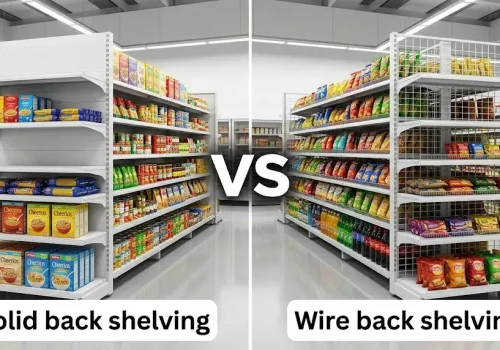
- back panel or back mesh style
- dividers
- label holders
- front fences
- end display accessories
Customization is especially useful for:
- chain stores
- branded retail stores
- supermarkets with non-standard floor plans
- stores with specific product display requirements
Frequently Asked Questions
Q: What is a supermarket shelving system used for?
A supermarket shelving system is used to organize, display, and store products in retail environments. It helps improve product visibility, customer navigation, and space utilization.
Q: What is gondola shelving for retail stores?
Gondola shelving for retail stores is a double-sided retail shelving unit placed in the center of a store. It is used to create aisles and display products on both sides.
Q: What is the difference between wall shelving for supermarket display and gondola shelving for retail stores?
Wall shelving for supermarket display is single-sided and usually installed along the perimeter walls. Gondola shelving for retail stores is double-sided and placed in the center of the store to create aisles.
Q: How much weight can a supermarket shelving system hold?
Most supermarket shelving systems support around 50 kg to 100 kg per shelf layer, depending on the design, material thickness, and structural configuration. In this system, each shelf layer supports up to 70 kg.
Q: What size supermarket shelving system is best for a supermarket?
The best supermarket shelving system size depends on your store layout, ceiling height, aisle width, and product range. Wall shelving for supermarket display usually ranges from 1800 mm to 2400 mm high, while gondola shelving for retail stores is often 1200 mm to 1800 mm high.
Q: Can a supermarket shelving system be customized?
Yes. A supermarket shelving system can usually be customized in size, color, levels, accessories, and back panel style to suit different retail formats and branding requirements.
Q: What type of supermarket shelving system is best for a small supermarket?
For small supermarkets, a combination of compact wall shelving for supermarket display and lower gondola shelving for retail stores is often the best solution. This improves visibility, keeps the store open-looking, and uses limited space efficiently.
Supermarket Shelving System Configuration for a Typical Retail Store
For many supermarkets, grocery stores, and mini markets, a practical supermarket shelving system setup includes:
- single-sided supermarket wall shelving along the perimeter
- double-sided gondola shelving for retail stores in the center aisles
This supermarket shelving system combination provides:
- clear product zoning
- efficient use of store space
- strong display capacity
- easier customer movement
- a clean and organized shopping environment
Based on the specifications above, this supermarket shelving system configuration is suitable for many retail projects that need a balance of durability, flexibility, and display efficiency.
Conclusion
For most retail stores, an effective supermarket shelving system layout includes:
- single-sided supermarket wall shelving for perimeter display
- double-sided gondola shelving for retail stores for central aisle merchandising
When selected correctly, a modular supermarket shelving system helps create a store that is:
- organized
- durable
- easy to restock
- simple for customers to shop
- adaptable for future growth
If you are looking for a reliable supermarket shelving supplier, we can provide customized supermarket shelving system solutions based on your store layout, product categories, and project requirements.
Contact us today for a quotation, layout recommendation, or tailored supermarket shelving system solution for your next retail project.