| Evaluation Factor | Low-Cost Standard Shelves | Aceally Industrial Standard |
|---|---|---|
| Steel Thickness | < 0.6mm (Prone to bending & shaking) | 0.8mm – 1.0mm (Heavy-duty stability) |
| Surface Coating | Paint < 60μm (Peels & rusts easily) | Powder Coating 80–120μm (Scratch-resistant) |
| Height Adjustability | Fixed or non-standard pitch | 32mm / 38mm Standard pitch design |
| Expected Lifespan | < 1 Year (High replacement risk) | 5 – 10+ Years (Long-term value) |
1. Only Pursuing Low Price and Ignoring Steel Thickness
This is the most common mistake for first-time buyers. Many cheap supermarket shelves use ultra-thin steel plates below 0.6mm to cut costs. Although the price is attractive, the thin beam and column deform easily after loading daily goods like drinks and canned food. Qualified supermarket shelf steel thickness should reach 0.8mm to 1.0mm for long-term stable use. In my after-sales cases, many European convenience stores had to replace all shelves within one year due to continuous bending and shaking, which cost more than a one-time high-quality procurement.
2. Matching Wrong Load Capacity with Retail Goods
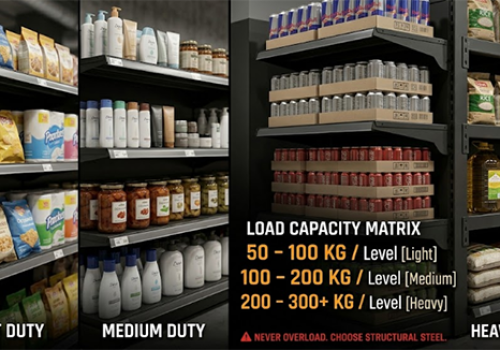
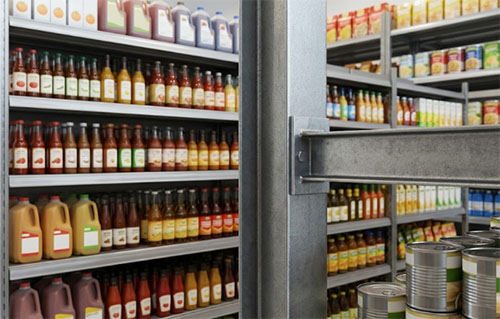
Most buyers only ask for standard shelves without classifying their products and checking UDL (uniformly distributed load) parameters. Light snacks, cosmetics, and small daily goods only need shelves with 50–80kg UDL per layer. For heavy goods such as bottled beverages, canned food, and household cleaning supplies, shelves require 100–150kg UDL per layer. Using low-load shelves for heavy goods will cause long-term structural fatigue, beam sinking, and unstable displays, bringing potential safety hazards for in-store customers.
3. Blindly Choosing Sizes Without Store Layout Calculation
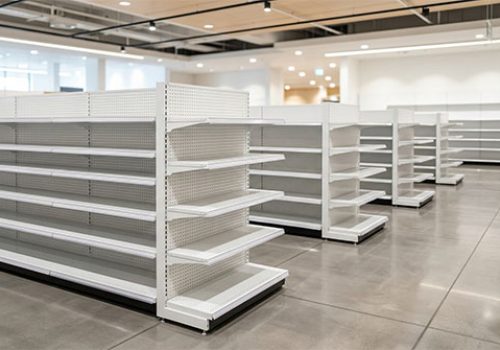
Many buyers select shelf sizes randomly without measuring store space and calculating layout. Improper dimensions easily cause operational problems. The most practical standard supermarket shelf lengths are 900mm, 1000mm, and 1200mm, with a typical depth of 300mm to 400mm. Professional retail aisle width must remain above 1.2 meters for smooth customer flow. Oversized shelves narrow the aisle and block shopping movement, while undersized units greatly reduce display capacity and waste valuable wall space.
4. Neglecting Surface Coating Quality Differences
Many buyers cannot distinguish shelf surface treatment standards. Inferior shelves adopt ordinary thin spray paint with less than 60μm thickness, which peels off and rusts quickly in humid retail environments. It makes the store look old and messy, indirectly reducing customer purchasing desire. Qualified supermarket shelves use industrial electrostatic powder coating with 80μm to 120μm thickness, featuring high scratch resistance, anti-rust performance, and a smooth matte finish for long-term neat product display.
5. Overlooking Adjustable Structure Demand
Some fixed non-adjustable shelves are cheaper, but they are very impractical for retail business. Professional supermarket shelves should adopt a standard 32mm or 38mm pitch adjustable hole design, allowing flexible layer height adjustment. Supermarkets often update product categories, with merchandise heights ranging from 10cm small boxes to 30cm tall bottles. Fixed-height shelves cannot adapt to variable product sizes, resulting in an inability to display new goods or serious vertical space waste.
6. Purchasing Without Customization Support
Generic standard shelves with fixed sizes and single colors cannot fit personalized store styles. Most ordinary suppliers only provide limited conventional sizes and basic blue or gray colors. In contrast, professional manufacturers like Aceally support full customization of thickness, size, color, and logo printing. We can customize shelf lengths from 800mm to 1200mm and match exclusive store branding colors, helping supermarkets build a unified, high-end retail style and significantly improve overall brand image.
In summary: Avoiding these purchasing mistakes is the key to cost-effective supermarket shelf procurement. Choosing the right steel thickness, load capability, coating quality, and layout plan upfront guarantees long-term efficiency and saves your store from costly early replacements.