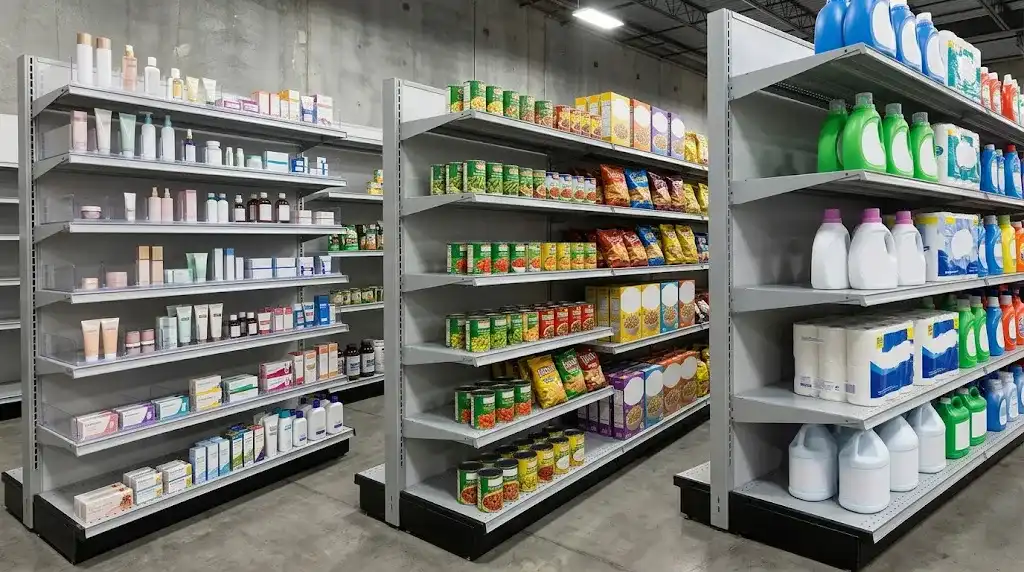
If you are choosing single-sided gondola shelving for a supermarket, convenience store, pharmacy, or specialty retail space, start with four factors: store layout, product size, shelf depth, and load capacity. For most wall display applications, the right choice is not simply the tallest or cheapest unit.
You need retail shelving that fits your product dimensions, supports safe daily use, keeps eye-level items visible, and leaves enough space for restocking and customer movement.
In most cases, the best results come from matching single-sided retail shelving to product category, wall length, and merchandising plan rather than choosing a standard size blindly.
✓
Here is what matters most before you buy:
- •
Choose retail shelving height based on visibility and store scale - •
Match shelf depth to product size, not guesswork - •
Check load capacity for daily retail use - •
Use adjustable shelves for category flexibility
- •
Plan wall display around product movement and replenishment - •
Avoid over-deep shelves that reduce visibility - •
Compare standard sizes with custom options before ordering - •
Work with an experienced supermarket shelving factory if you need long-term consistency across stores
What Is Single-Sided Gondola Shelving?
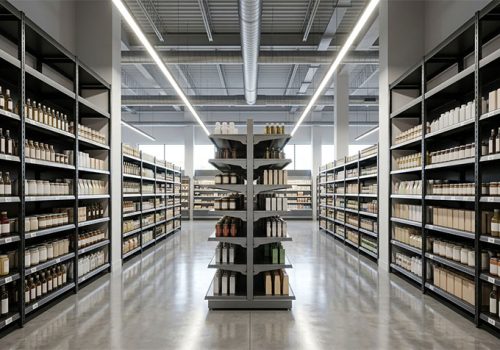
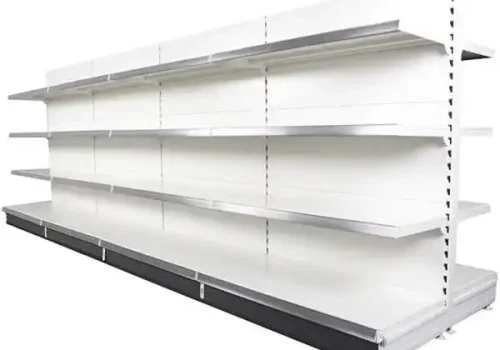
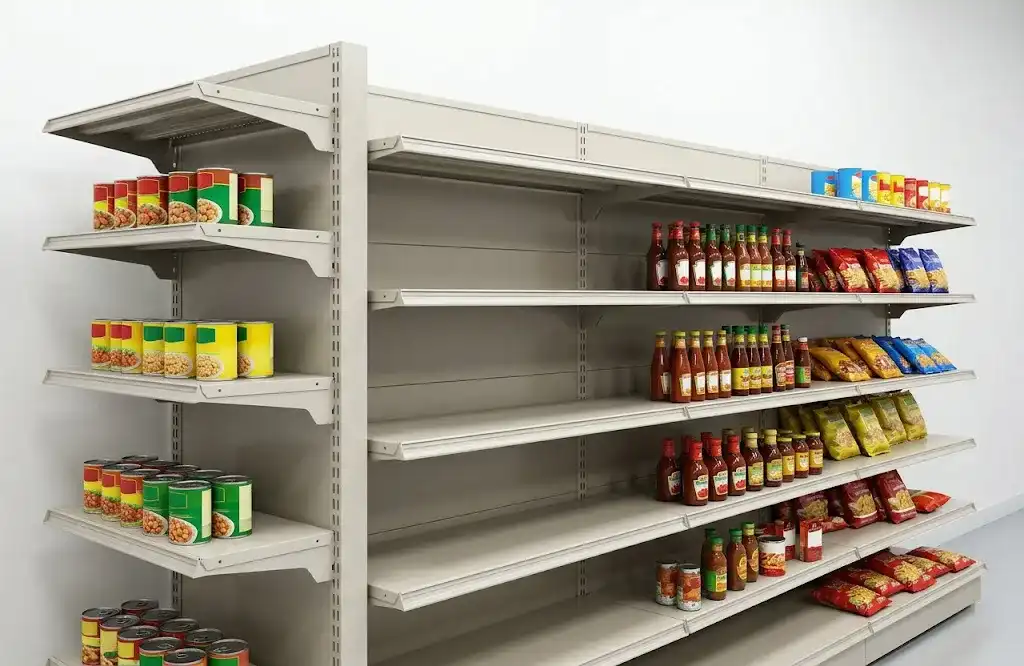
Single-sided gondola shelving is a retail shelving unit designed to stand against a wall and display products on one side only. It is widely used in supermarkets, convenience stores, pharmacies, cosmetic stores, and hardware shops because it turns wall space into organized selling space.
Unlike double-sided gondola shelving, which is placed in the center of the store, single-sided gondola shelving is built for wall merchandising. A typical unit includes uprights, a base shelf, adjustable brackets, upper shelves, a back panel, and optional accessories such as price tag holders, dividers, hooks, or header signs.
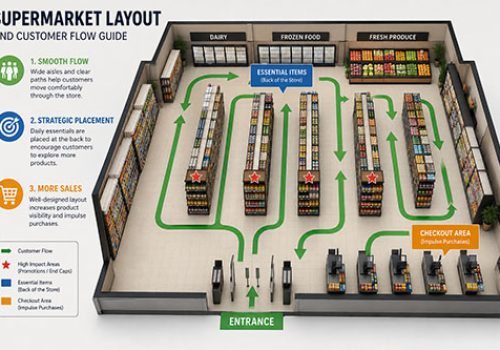
Single-sided wall shelving helps you increase display capacity without occupying valuable center-floor space. If you are planning a full store layout, wall units usually work together with center gondola runs, checkout shelving, and promotional displays.
If you are also comparing central aisle fixtures, you can explore our full guide on double-sided gondola shelving and store layout planning.
How to Choose the Right Single-Sided Gondola Shelving
The right unit depends on your product mix, wall length, customer reach, and required shelf load. For most stores, height, depth, width, and adjustability are the four main decision points.
Choose the Right Height for Your Store Layout
If your single-sided gondola shelving is too high, customers cannot reach products comfortably and the wall display becomes harder to maintain. If it is too low, you lose selling capacity. In small and medium-format stores, practical heights often balance visibility with usable shelf volume.
Use lower heights when:
- you want an open visual field
- the store is compact
- the target customer needs easier reach
- the category requires frequent restocking
Use taller heights when:
- wall space is limited
- the category has high SKU density
- you need more vertical merchandising capacity
- staff can manage replenishment efficiently
Select Shelf Depth Based on Product Size
Shelf depth has a direct effect on both display efficiency and customer visibility. If the shelf is too shallow, products will not sit safely. If it is too deep, smaller products look lost and front-facing becomes harder to maintain.
As a rule:
- shallow shelves work better for cosmetics, pharmacy items, and small packaged goods
- medium depths suit snacks, canned food, and general grocery
- deeper shelves are better for bulky household items and larger packaged products
Decide on Width and Bay Configuration
Single-sided units are usually installed in repeated bays along the wall. This means you should not only think about one shelving unit, but about the full run. Standard widths are useful for modular projects, while custom widths can help you fit columns, corners, or irregular walls.
If you are supplying chains or distributors, modularity matters. Consistent bay widths simplify replacement parts, accessories, packaging, and installation.
Check Load Capacity and Material Strength
A wall display may look simple, but poor structure creates long-term problems. Shelf deflection, unstable brackets, weak uprights, and thin steel all affect safety and product presentation. For supermarket use, this matters even more in categories such as beverages, sauces, detergents, and hardware.
When reviewing a supermarket shelving supplier, ask about:
- steel thickness
- load capacity per shelf
- upright profile
- bracket structure
- powder coating quality
- corrosion resistance
- export packing method
A gondola shelving manufacturer that also understands warehouse storage solutions, custom storage racks, or even works as a heavy duty rack manufacturer often has stronger production control over steel processing, load testing, and structural consistency. While retail gondola shelving is different from pallet racks, the discipline behind safe steel fixture manufacturing is similar.
Consider Adjustable Shelves and Accessories
A fixed shelf layout limits you as categories change. Adjustable shelves give you flexibility across seasonal products, packaging changes, and store resets. This is especially useful for importers, shopfitters, and retail chains that manage multiple store formats.
Accessories include:
- price tag holders
- wire fronts
- acrylic dividers
- hanging hooks
- signage holders
- kick plates
- lighting options
- branding panels
Standard Wall Display Sizes for Single-Sided Gondola Shelving
Most single-sided gondola shelving follows standard size ranges, but the best size depends on product category and store format. Standard sizes are useful for procurement efficiency, while custom sizes are better for special layouts or brand-specific display systems.
| Component | Common Size Range |
|---|---|
| Overall height | 1200-2400 mm |
| Bay width | 600 / 800 / 900 / 1000 mm |
| Base shelf depth | 300-500 mm |
| Upper shelf depth | 200-400 mm |
| Number of upper shelves | 3-6 |
| Shelf pitch adjustment | 25-50 mm |
| Load capacity per shelf | 30-100+ kg depending on structure |
For wall display shelving, common heights usually fall into three working levels:
| Shelving Height | Best For | Notes |
|---|---|---|
| 1200-1500 mm | small stores, low sightline layouts | easier customer reach |
| 1600-2000 mm | supermarkets, convenience stores | most balanced option |
| 2100-2400 mm | high-capacity wall merchandising | requires careful top-shelf planning |
If your store serves fast-moving daily goods, the middle range is often the safest choice. It gives enough display space without making replenishment difficult.
Recommended Shelf Depths
| Shelf Depth | Typical Use |
|---|---|
| 200-250 mm | cosmetics, pharmacy, stationery |
| 300-350 mm | snacks, canned food, packaged grocery |
| 400-500 mm | household products, larger containers, bulky items |
In practice, the base shelf is often deeper than the upper shelves. This creates a stable visual line and makes better use of heavy or larger products at the bottom.
How Many Shelves Do You Need?
Shelf quantity should follow product height and facing plan, not just maximum capacity. Adding too many shelves often reduces visibility and makes replenishment slower.
A common setup includes:
- 1 base shelf
- 4 to 5 upper shelves
That works for many supermarket wall display runs. For categories with taller items, fewer shelves usually perform better.
Recommended Shelf Sizes by Product Category
The best supermarket shelving size changes by product type. A pharmacy wall run and a beverage wall run should not use the same shelf depth or load specification. Category-based sizing improves display quality and reduces wasted space.
| Product Category | Recommended Height | Shelf Depth | Suggested Load Level | Notes |
|---|---|---|---|---|
| Packaged food | 1600-2000 mm | 300-350 mm | medium | flexible shelf spacing |
| Beverages | 1600-2200 mm | 350-500 mm | high | strong base shelf required |
| Cosmetics | 1400-1800 mm | 200-250 mm | light | better with dividers and lighting |
| Pharmacy | 1600-2000 mm | 200-300 mm | light to medium | visibility matters most |
| Household products | 1800-2200 mm | 350-450 mm | medium to high | wide facings work well |
| Hardware | 1800-2400 mm | 300-500 mm | high | often needs hooks and pegback |
For Grocery and Packaged Food
This category usually needs balanced depth and flexible shelf spacing. Most packaged food works well on medium-depth shelves, especially where SKUs vary in height. Keep fast-moving items between waist and eye level.
For Beverages and Heavy Products
Heavy categories need stronger shelves, thicker brackets, and stable uprights. Do not choose based on appearance alone. For beverages, the base shelf often carries the heaviest load, so structure matters more than decorative accessories.
For Cosmetics and Personal Care
This category benefits from clean lines, shallow shelves, and better front visibility. If products are small, deep shelves reduce display efficiency. In this scenario, a shallower wall display creates a better presentation and easier restocking.
For Pharmacy and Convenience Stores
These formats usually need compact, efficient shelving with flexible shelf spacing. Product variety is high, but packaging is often small. A modular system with adjustable shelves is usually the best fit.
For Hardware and Household Products
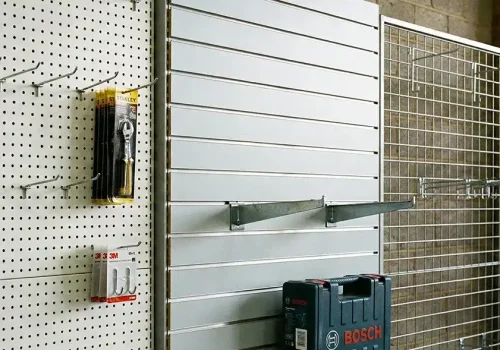
This is where structure becomes more important. Some products may require not only shelf display but also hooks or perforated back panels. If your business serves mixed retail and light industrial customers, you may also work with suppliers known as an industrial racking supplier or storage rack manufacturer, but for front-of-store display, the gondola system still needs retail-focused design.
Wall Merchandising Tips for Better Display Performance
Good merchandising starts with shelf planning, not after installation. Even the right retail shelving size will underperform if the product layout is inconsistent, difficult to shop, or hard to replenish.
Place High-Margin Products at Eye Level
Eye-level space is your best selling zone. Use it for products with stronger margins, strategic private label items, or fast-moving categories that benefit from immediate visibility.
Use Lower Shelves for Heavier Items
Lower shelves improve safety and make heavier products easier to handle. This is especially useful for beverages, cleaning products, and larger packaged goods.
Avoid Overcrowding the Wall Display
Too many SKUs on one bay weakens visibility. Clear grouping usually performs better than dense, mixed placement. Let each category have enough facing width to read as a group.
Combine Shelf Levels for Better Product Visibility
Uniform shelf spacing is not always the best choice. Different categories require different heights. If every shelf is spaced the same, you often waste vertical space.
Use Accessories to Improve Presentation
Simple accessories can improve order and reduce maintenance time. Dividers, pushers, front fences, and sign holders all help keep products aligned. If the project is brand-driven, header panels and color matching may also matter.
If you are planning a complete store fixture package, explore our guides on retail display accessories, supermarket layout planning, or how to choose checkout counters.
Common Mistakes to Avoid When Choosing Single-Sided Gondola Shelving
Most buying mistakes happen before installation. They usually come from selecting retail shelving by price only, copying another store format, or ignoring product dimensions and replenishment patterns.
Choosing Shelf Depth Without Measuring Product Size
This is one of the most common errors. If you do not measure actual packaging size, your display either wastes space or looks crowded.
Ignoring Store Traffic Flow
Wall shelving works best when customers can move easily and staff can replenish without blocking the aisle. If the wall run is too deep or too high for the aisle condition, daily operation suffers.
Using Retail Shelving That Is Too Tall for the Category
High wall display shelving increases capacity, but not every category needs it. For smaller packaged products, very high wall runs can reduce accessibility and make top shelves weak selling space.
Focusing Only on Unit Price
A low initial price often hides weak steel, unstable brackets, poor coating, or limited accessory compatibility. In long-term retail use, durability and consistency matter more than the first quotation.
Forgetting Future Expansion or Replacement
If your retail shelving supplier cannot maintain consistent specifications across future orders, repairs and store rollouts become harder. This is why importers and chain buyers often prefer an experienced supermarket shelving factory over traders with unstable sources.
Standard Sizes or Custom Sizes: Which Is Better?
Standard sizes are faster and more economical, while custom supermarket shelving is better for specific layouts, branding, or special product needs. The right choice depends on how fixed your store format is and how much flexibility you need in procurement.
| Option | Best For | Main Advantage | Main Limitation |
|---|---|---|---|
| Standard sizes | distributors, common store formats | faster production, lower cost | less layout flexibility |
| Custom sizes | chain stores, branded projects, irregular walls | better fit, better brand consistency | longer lead time |
As a factory, Spieth sees both demands. Some clients need standard supermarket shelving for fast replenishment programs. Others need custom dimensions, branded end panels, or mixed fixture programs that include both retail shelving and backroom storage. In those cases, working with one supplier that understands both selling space and operational space can reduce project friction.
What to Ask a Supermarket Shelving Factory Before Ordering
A reliable supermarket shelving manufacturer should answer technical, commercial, and production questions clearly. This helps you avoid quality gaps and delays later.
- available standard sizes
- customization range
- shelf load testing
- material thickness
- surface finish
- accessories compatibility
- packaging for export
- lead time
- MOQ
- replacement parts support
If your procurement scope also includes storage areas, some buyers combine front-end shelving with warehouse fixtures from the same group of suppliers, such as a warehouse rack manufacturer, pallet rack factory, or warehouse storage solutions supplier. That only makes sense if the supplier can maintain quality in both systems. For retail-facing fixtures, appearance, consistency, and merchandising function are still essential.
Conclusion
Choosing the right single-sided gondola shelving is not about picking a standard unit and hoping it works. You need to match shelf height, depth, width, and load capacity to your actual products, store format, and wall display strategy. When those basics are defined correctly, merchandising becomes easier, replenishment becomes faster, and the wall space performs like a selling asset instead of just storage.
PARTNER WITH SPIETH FOR YOUR SHELVING NEEDS
At Spieth, we manufacture supermarket shelving for buyers who need reliable dimensions, stable quality, and practical customization. If you are planning a new store project, comparing standard sizes, or looking for a long-term factory partner for retail display systems, you can contact our team for layout advice, specification support, and quotation based on your product categories and target market.
FAQ
What is the standard size of single-sided gondola shelving?
Common heights are 1200 mm to 2400 mm. Common widths are 600 mm, 800 mm, 900 mm, and 1000 mm. Upper shelf depths usually range from 200 mm to 400 mm, while base shelves are often 300 mm to 500 mm deep.
What is the best shelf depth for wall display shelving?
It depends on the product. Small products usually work best on 200-250 mm shelves. Packaged grocery often uses 300-350 mm shelves. Larger household products may need 400-500 mm depth.
Is single-sided gondola shelving better than double-sided shelving?
For wall placement, yes. Single-sided gondola shelving is designed for against-the-wall merchandising. Double-sided gondola shelving is better for center aisles.
How tall should supermarket wall shelving be?
For many supermarkets, 1600 mm to 2000 mm is the most practical range. It balances display capacity, visibility, and customer reach.
What material is best for supermarket shelving?
Powder-coated steel is the most common choice because it offers strength, durability, and stable long-term use in retail environments.
Can single-sided gondola shelves be adjusted?
Yes. Most quality systems use adjustable brackets so you can change shelf spacing based on product height and category needs.
How much weight can a retail gondola shelf hold?
It varies by structure and material. Light-duty shelves may hold around 30 kg per shelf, while stronger retail shelves can handle much more. Always ask the factory for tested load data.
What is the difference between retail gondola shelving and warehouse racking?
Retail gondola shelving is designed for product display and customer access. Warehouse racking is designed for storage efficiency and heavier load handling. A warehouse rack manufacturer or industrial racking supplier may produce both, but the design purpose is different.
Can I order custom supermarket shelving from a factory?
Yes. Many factories offer custom sizes, colors, header panels, accessories, and branding options. Custom shelving is useful for chain stores, special layouts, and branded retail projects.
How do I choose a reliable supermarket shelving supplier?
Check production experience, material specifications, load capacity, finish quality, export packing, customization ability, and consistency across repeat orders. A strong factory should give clear answers on all of these points.