Promotional display shelves are used to increase product visibility, support short-term campaigns, and improve sell-through in key store areas. In supermarkets, however, display performance depends on more than product placement alone. Shelf location, fixture type, product mix, store traffic, and replenishment efficiency all affect the result.
If you are planning a supermarket promotion area, you need to look at both merchandising and fixture practicality. A display may look good in concept, but if it blocks traffic, does not fit the product size, or is difficult to refill, it will not perform well in daily operation.
At Spieth, we manufacture supermarket shelving, promotional display shelves, and other retail fixture solutions for different store formats. Based on factory and project experience, the most effective promotional displays are usually the ones that combine clear visibility, simple restocking, and flexible layout use.
✓
Key Points
- Promotional display shelves should be placed in high-visibility, high-traffic areas.
- The shelf format should match the promotion type, product size, and store layout.
- Adjustable and modular shelf structures are more practical for frequent campaign changes.
- Clear signage and simple product grouping usually perform better than crowded displays.
- Customer flow should be considered before fixture placement.
- Different supermarket sizes require different promotional shelving solutions.
Why Promotional Display Shelf Arrangement Matters
A promotional area is expected to do one of three things: increase exposure, drive impulse purchases, or support a defined sales campaign. If the fixture is poorly positioned or the display is difficult to shop, those objectives are harder to achieve.
In practical terms, a well-arranged promotional display shelf can help you:
- improve product visibility
- support faster product movement
- create additional sales opportunities outside standard shelving
- make better use of entrance zones, aisle ends, and transition areas
- support seasonal or limited-time campaigns without major layout changes
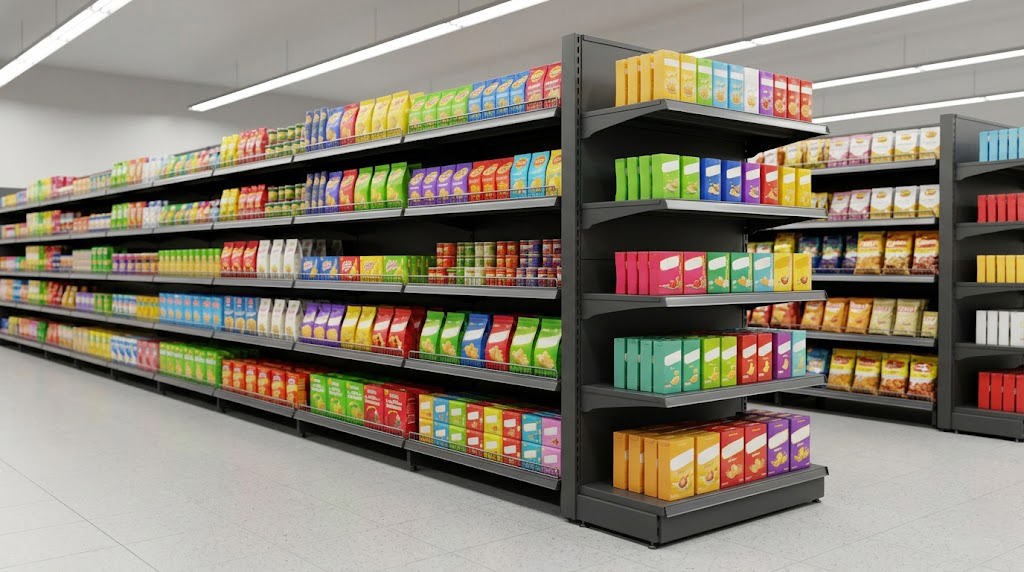
For store operators, the arrangement affects sales performance. For buyers and project teams, it also affects fixture efficiency, floor planning, and maintenance workload.
Best Locations for Promotional Display Shelves in Supermarkets
Location is usually the first decision. In most supermarkets, promotional displays perform best when they are placed where customers naturally slow down, turn, or wait.
Store Entrances
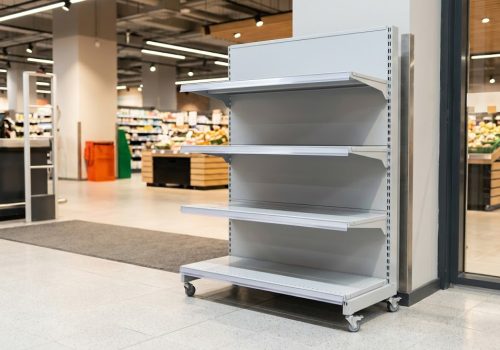
Entrance displays are commonly used for seasonal campaigns, featured products, and weekly promotions. This area has immediate visibility, so the message should be simple and easy to read.
A good entrance display should:
- present one clear theme
- avoid excessive product mixing
- allow easy access from the front and sides
- fit the store entry width without creating congestion
Main Customer Pathways
Main traffic routes are suitable for products that benefit from repeated exposure. These areas work well for fast-moving products, campaign items, and category extensions.
For these zones, the fixture should have:
- a compact footprint
- good visibility from a distance
- a stable structure for high-traffic use
- straightforward replenishment access
End Caps
End cap display shelves are one of the most effective formats in supermarkets. They are widely used because they sit at natural decision points and offer stronger visibility than standard aisle shelving.
Typical end-cap applications include:
- promotional pricing
- new product launches
- cross-merchandising
- bundled product offers
- supplier-funded in-store campaigns
Checkout Areas
Checkout displays are mainly used for small, impulse-driven items. In this area, compact size matters more than display capacity. A shelf that is too deep or too tall can reduce convenience for both customers and staff.
The most suitable fixtures for checkout zones are usually:
- compact display racks
- low-height shelves
- narrow-width units
- easy-refill impulse display solutions
High-Traffic Intersections
Aisle intersections and open cross areas can support island displays or double-sided promotional shelving. These zones can work well for short-term campaigns if visibility is clear from more than one direction.
This type of area usually requires:
- stable freestanding structures
- access from multiple sides
- controlled shelf height
- good sign support
| Store Area | Typical Promotion Use | Recommended Fixture Type |
|---|---|---|
| Store Entrance | Seasonal offers, weekly deals | Mobile promotional display shelf |
| Main pathway | Fast-moving items, feature campaigns | Freestanding display shelf |
| End cap | Discounts, bundles, launches | End cap display shelf |
| Checkout | Impulse items, low-ticket products | Compact checkout display rack |
| Cross area | Multi-direction traffic campaigns | Double-sided display shelf |
How to Choose the Right Products for Promotional Display Shelves
Not all products are suitable for promotional shelving. Product selection should be based on visibility needs, purchase behavior, and campaign objective.
Fast-Moving Consumer Goods
These products usually work well because customers already recognize them. Promotional placement can increase volume by making them easier to see and easier to pick up.
Seasonal and Campaign Products
Seasonal goods often require short-term but high-visibility placement. For this reason, stores usually need promotional display shelves that are easy to update and reposition.
New Product Launches
New products benefit from placement outside the standard shelf run. Dedicated promotional shelving gives them better exposure and helps separate them from the main category clutter.
Bundled Products
Cross-selling works best when the product relationship is obvious. Displays should make the bundle clear without requiring explanation.
High-Margin or Impulse Products
Products with strong visual packaging or low decision barriers are often a good fit for promotional areas, especially near checkout or along high-traffic paths.
Shelf Design Factors That Affect Promotional Performance
For retailers and importers, shelf performance is not just about appearance. The fixture should also support installation, replenishment, safety, and repeat campaign use.
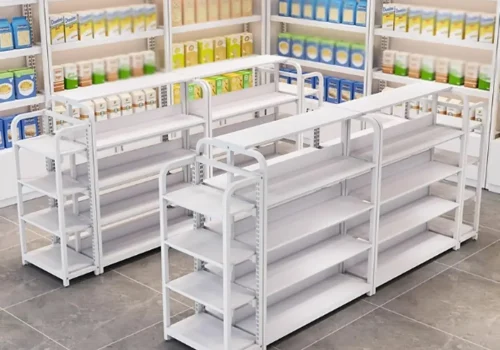
- Shelf Height and Reach: Products should remain visible and easy to reach. In many cases, medium-height promotional shelves work better than full-height units because they maintain better sightlines across the store.
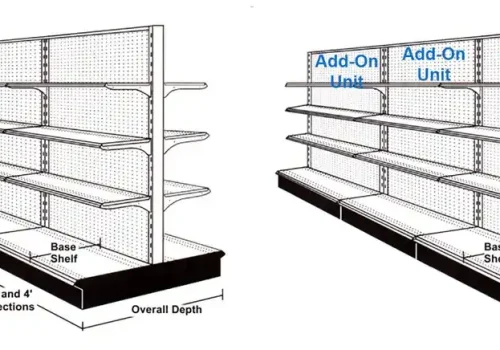
- Adjustable Shelf Levels: Adjustability is important when campaign products change size or packaging. A fixed shelf structure may limit future use, while adjustable shelving provides better long-term value.
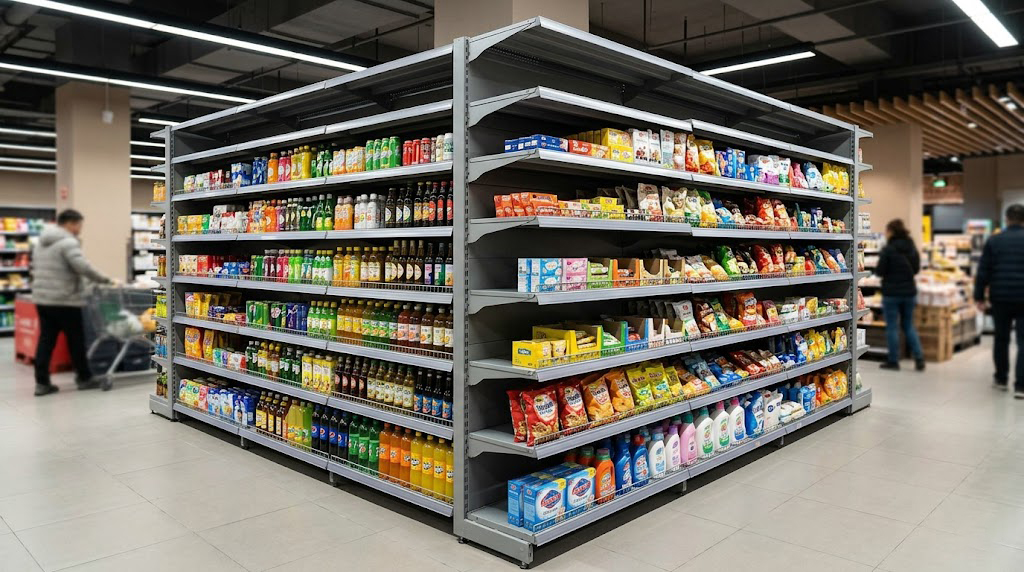
- Open Shelf Design: Open structures generally perform better for supermarket promotions because they reduce visual blockage and improve product access.
- Sign Holders and Display Accessories: Integrated sign holders, price strips, hooks, dividers, and baskets improve display clarity and help staff keep the promotion organized.
- Mobile and Modular Construction: If the store updates campaign zones regularly, mobile and modular shelving is often the most practical solution. This is especially relevant for chain stores, rollout projects, and seasonal retail programs.
| Feature | Why It Matters |
|---|---|
| Adjustable shelves | Fits different product sizes |
| Sign holders | Improves promotion visibility |
| Modular frame | Supports campaign changes |
| Mobile base option | Easier to reposition |
| Stable structure | Better for high-traffic zones |
| Compact footprint | Suitable for smaller store layouts |
| Open design | Better visibility and access |
Optimization Strategies & Guidelines
Visual Merchandising Guidelines for Promotional Areas
Fixture selection is only part of the setup. The display itself should be easy to read and easy to shop.
- Keep the Message Focused: A display should communicate one promotion clearly. Too many product types or mixed price messages reduce effectiveness.
- Use Clear Price Communication: If the customer cannot understand the offer quickly, the display loses value. Price tickets, campaign signs, and promotional headers should be visible without effort.
- Put Priority Products at Eye Level: The main promotional item should be placed where customer attention naturally goes first.
- Do Not Overload the Fixture: Overfilling reduces clarity and can make the display look unmanaged. A balanced presentation is usually more effective than maximum packing.
- Group Products Logically: Products should be grouped by use, campaign, or category relationship so that the display can be understood quickly.
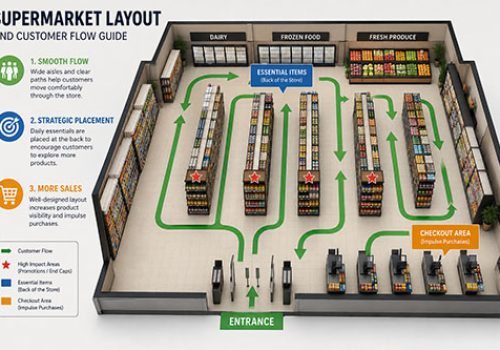
Customer Flow Should Guide Fixture Placement
A promotional shelf should fit into store movement, not interrupt it. This is especially important in supermarkets with narrow aisles or heavy traffic at peak hours.
- Work With Natural Traffic Patterns: Place promotional fixtures where customers already pass, pause, or turn. This improves visibility without forcing movement.
- Use Transition Zones Carefully: Promotions placed between related departments can be effective, but only if the display remains easy to access and does not create congestion.
- Avoid Blocking Aisles: This is a common planning issue. A display may seem effective on paper but perform poorly in operation if it disrupts circulation.
- Use Pause Points: End caps, freestanding displays, and island shelving can create useful pause points when positioned correctly.
Common Mistakes in Promotional Display Planning
Several issues appear repeatedly in supermarket display projects.
- Poor Placement: Low-traffic locations reduce exposure, regardless of product or fixture quality.
- Wrong Product Selection: Some products do not benefit enough from promotional placement to justify the space.
- Oversized Fixtures: A display that is too large for the area can reduce store efficiency and customer convenience.
- Weak Signage: If the offer is not immediately clear, customers often ignore the display.
- Difficult Restocking: If staff cannot refill the shelf quickly, promotional execution becomes inconsistent.
- Low Flexibility: Fixtures that only support one product format may have limited long-term value.
How to Choose Promotional Display Shelving for Different Store Formats
Fixture selection should match the store format, available floor space, and campaign frequency.
- Small Supermarkets: narrow promotional shelves, low-profile fixtures, mobile display units, compact checkout displays.
- Medium-Sized Grocery Stores: end cap display shelves, freestanding promotional racks, category-linked campaign displays, modular shelving for rotating promotions.
- Large Supermarkets and Hypermarkets: double-sided promotional shelving, island display units, coordinated campaign zones, higher-capacity freestanding display structures.
- Seasonal Promotion Programs: easy to move, easy to update, compatible with different product sizes, practical for short setup cycles.
If you are planning a full store fixture package, this is also the point where related systems such as gondola shelving, checkout displays, and category shelving should be reviewed together.
Practical Checklist for Buyers
Before sourcing promotional display shelves, it is useful to confirm the following:
| Buyer Checkpoint | Key Question |
|---|---|
| Store area | Where will the display be placed? |
| Product type | What size, weight, and packaging will it hold? |
| Campaign frequency | Will the display be changed weekly, monthly, or seasonally? |
| Shelf adjustability | Does the fixture support different product formats? |
| Replenishment access | Can staff refill it quickly during store hours? |
| Signage support | Is there space for clear price and promotion communication? |
| Footprint | Does it fit the available floor area without blocking traffic? |
| Rollout plan | Will the same fixture be used across multiple stores? |
For importers, distributors, and project contractors, these points also help evaluate production consistency and container efficiency during sourcing.
Partner With Spieth For Your Shelving Needs
Conclusion
Effective promotional display shelves in supermarkets are defined by practicality as much as visibility. The right fixture should fit the store layout, support the promotion objective, and remain easy to manage in daily operation. Good results usually come from simple decisions made correctly: proper location, suitable product selection, clear signage, and shelf structures that match the retail environment.
At Spieth, we supply supermarket shelving and promotional display solutions for different retail projects and store formats. If you are comparing fixture options for a new store, a rollout program, or a supermarket renovation, you can contact our team for product details, configuration support, or project discussion.
Frequently Asked Questions
What is the best location for promotional display shelves in a supermarket?
The best locations are usually store entrances, end caps, main traffic pathways, checkout zones, and aisle intersections.
What products are best for promotional display shelves?
Fast-moving products, seasonal items, new launches, bundled goods, and impulse products are common choices.
Are end cap display shelves more effective than standard shelves?
In many cases, yes. End caps typically provide better visibility and stronger shopper attention.
What type of shelf is best for seasonal promotions?
Modular or mobile promotional display shelves are usually the most practical for seasonal use.
How tall should a promotional display shelf be?
It depends on the store layout and product type, but the shelf should keep products visible and easy to reach.
What should buyers look for when sourcing promotional display shelves?
Key points include shelf adjustability, structure stability, signage support, footprint, replenishment access, and suitability for the store layout.