Quick Answer
The main difference between supermarket shelving and standard shelving is their intended use. Supermarket shelving is built for retail display, customer access, and merchandising, while standard shelving is built for storage, stock holding, and general organization. Supermarket shelving is more suitable for supermarkets, grocery stores, and convenience stores, while standard shelving is more suitable for stockrooms and warehouses.
If you are choosing between supermarket shelving and standard shelving, the main difference is simple: supermarket shelving is built for retail display and customer access, while standard shelving is built mainly for storage and basic organization. They differ in layout design, merchandising function, accessories, load strategy, and the environments they are meant for, such as supermarkets, grocery stores, convenience stores, stockrooms, and warehouses.
For buyers, this is not just a technical distinction. The right shelving system affects store layout, product visibility, replenishment efficiency, and long-term operating cost. If you run a customer-facing retail space, supermarket shelving is usually the better fit. If your priority is backroom storage or non-retail organization, standard shelving often makes more sense.
✓Key Takeaways
- Supermarket shelving is designed for retail display, shopper access, and aisle planning.
- Standard shelving is designed for storage, stock holding, and general organization.
- The biggest differences are in purpose, structure, accessories, display effect, and layout flexibility.
- Gondola shelving, end units, price tag channels, dividers, and display accessories are common in supermarket shelving.
- Standard shelving may work well in stockrooms, utility spaces, and warehouses, but it is usually less effective for front-of-store retail presentation.
- If your business needs both retail display and backroom storage, a mixed shelving solution is often the best approach.
Supermarket Shelving vs. Standard Shelving
If you need a fast answer, supermarket shelving is the right choice for retail floors, while standard shelving is usually better for storage-focused environments.
| Factor | Supermarket Shelving | Standard Shelving |
|---|---|---|
| Primary purpose | Retail display and customer access | Storage and organization |
| Environments | Supermarkets, grocery stores, convenience stores, pharmacies | Stockrooms, warehouses, utility areas, back-of-house |
| Design focus | Product visibility and merchandising | Practical storage function |
| Common configuration | Single-sided, double-sided, gondola shelving, end caps | Simple shelf tiers, storage bays, utility shelving |
| Accessories | Price tag holders, dividers, hooks, wire baskets, signage holders | Fewer display accessories |
| Customer-facing use | Yes | Limited |
| Layout role | Supports aisle planning and retail flow | Supports storage efficiency |
| Appearance | Retail-ready finish | Functional appearance |
| Load approach | Light to medium retail loads, depending on model | Varies widely by type and application |
| Use case | Selling products on the shop floor | Holding stock and supplies |
This comparison matters because shelving is not only about holding products. In a supermarket or convenience store, the shelving system also shapes how customers move, what they notice, and how easily staff can restock the space.
What Is Supermarket Shelving?
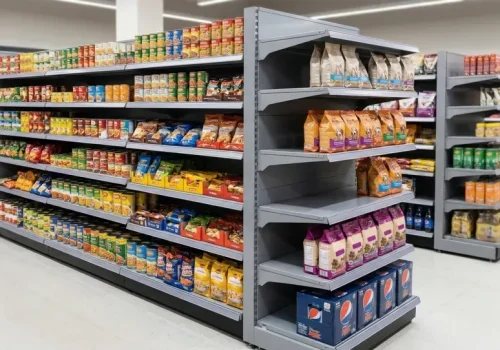
Supermarket shelving is a retail shelving system designed to display products clearly, guide shopper movement, and support efficient merchandising.
When you use supermarket shelving, you are not just adding storage. You are building a sales environment. This type of shelving is common in supermarkets, grocery stores, convenience stores, mini markets, pharmacies, and retail shops where product visibility and customer access matter.
Main Features of Supermarket Shelving
Most supermarket shelving systems include:
- Upright posts
- Base shelves
- Adjustable upper shelves
- Back panels
- Brackets
- Price tag channels
- Optional accessories such as dividers, front fences, hooks, and wire baskets
Common Types of Supermarket Shelving
- Single-sided shelving for wall placement
- Double-sided shelving for center aisles
- Gondola shelving for flexible retail layouts
- End cap shelving for promotional display
- Checkout display shelving for small, high-turnover items
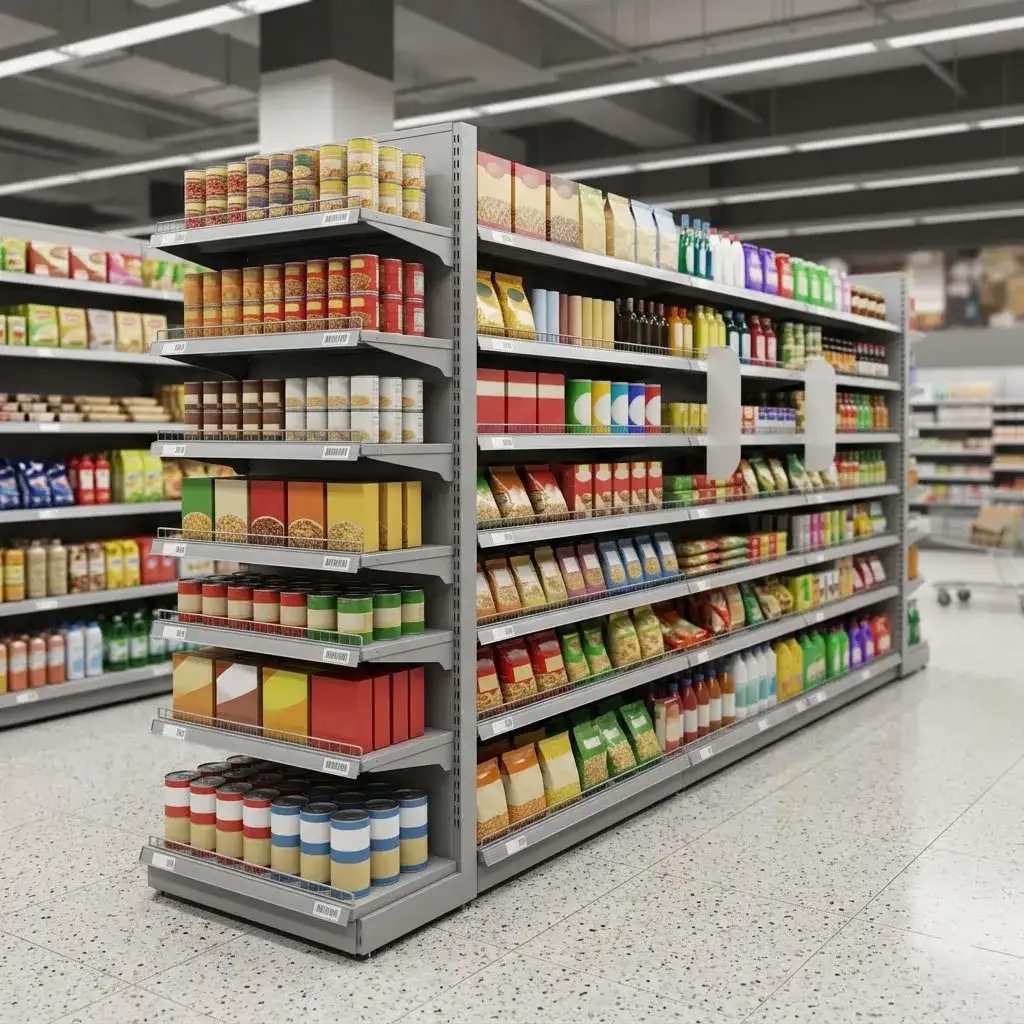
If you are planning a retail floor, you may also want to review topics like how to plan your gondola shelving layout, retail display shelving for grocery stores, or how to choose shelving for convenience stores.
What Is Standard Shelving?
Standard shelving is built mainly for storage and organization, not for customer-facing product presentation.
Standard shelving is a broad category. In most commercial settings, it refers to shelving used to hold items in a practical way without a strong focus on merchandising. You often see it in stockrooms, warehouses, backrooms, maintenance areas, offices, and utility spaces.
Main Features of Standard Shelving
- Simpler frame and shelf structure
- Fewer merchandising accessories
- More basic finish requirements
- Utility-focused layout
- Wider variation in load capacity depending on the model
Standard shelving can be useful when your goal is to store boxed inventory, tools, packing materials, or reserve stock. It is often easier to deploy in non-retail areas, but it usually lacks the visual and functional features needed on a sales floor.
Where Standard Shelving Works Best
You may prefer standard shelving if you need:
- Backroom stock organization
- Warehouse storage
- Non-customer-facing shelving
- Basic material handling support
- Low-complexity storage setups
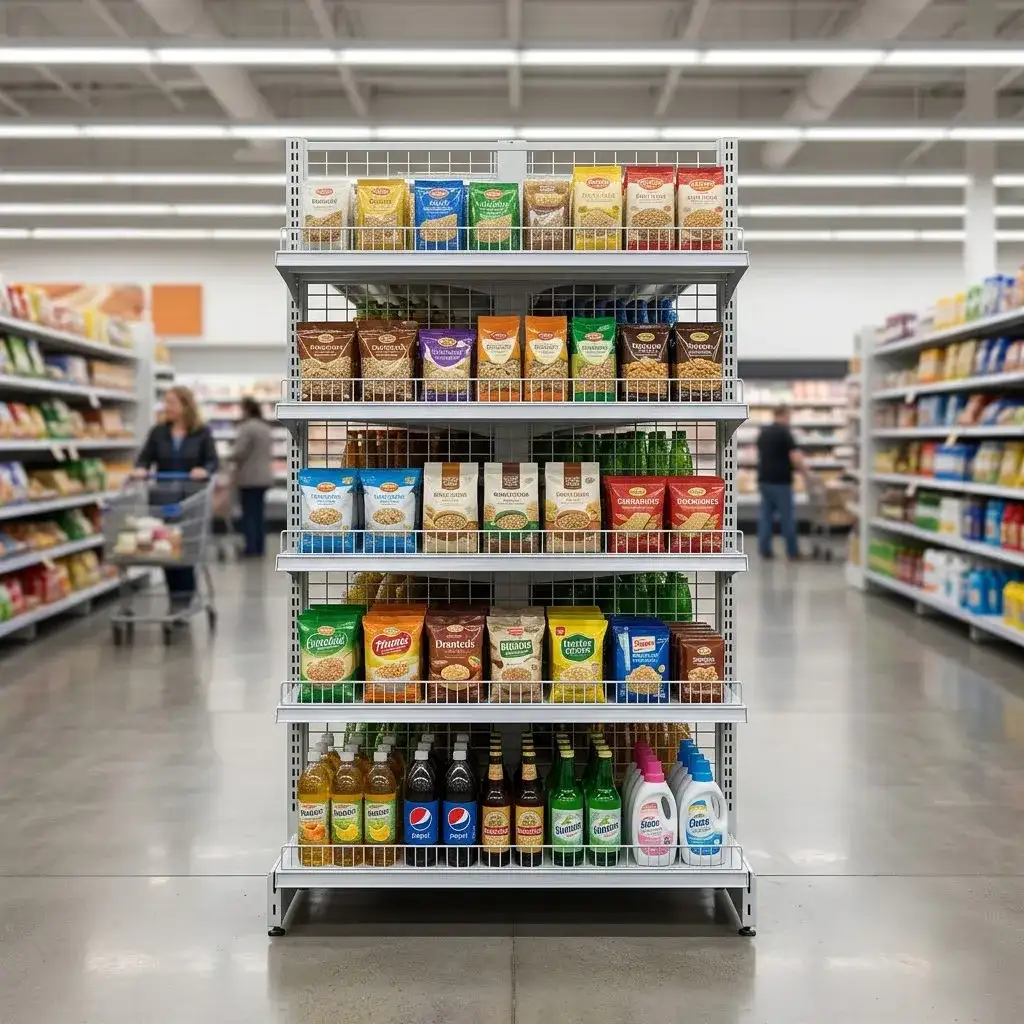
For a retail business, standard shelving can still play a role behind the scenes. Many stores use supermarket shelving on the shop floor and standard shelving in the backroom.
Key Differences Between Supermarket Shelving and Standard Shelving
The two systems may look similar at first, but they serve different commercial purposes. The real differences appear in function, display value, structural details, and the way they support daily operations.
1. Purpose and Function
Supermarket shelving supports sales. Standard shelving supports storage.This is the clearest difference. Supermarket shelving is designed to help customers see, reach, and compare products. It supports merchandising, category management, promotional display, and aisle navigation.
Standard shelving is more about holding goods in an orderly way. It works well for reserve stock and utility storage, but it is not optimized for customer interaction.
2. Structural Design
Supermarket shelving is more modular and display-oriented, while standard shelving is usually simpler and more functional.
A supermarket shelving system often includes adjustable shelves, perforated or solid back panels, price channels, and modular add-ons. These details help you adapt the display to different product categories such as snacks, bottled drinks, dry goods, household items, and personal care products.
Standard shelving can also be adjustable, but the structure is usually less focused on merchandising. In many cases, it has fewer retail-specific components.
| Design Element | Supermarket Shelving | Standard Shelving |
|---|---|---|
| Shelf adjustability | Common | Common |
| Price tag channel | Common | Rare |
| Retail back panels | Common | Less common |
| Display accessories | Extensive | Limited |
| End cap integration | Common | Rare |
| Aisle planning support | Strong | Limited |
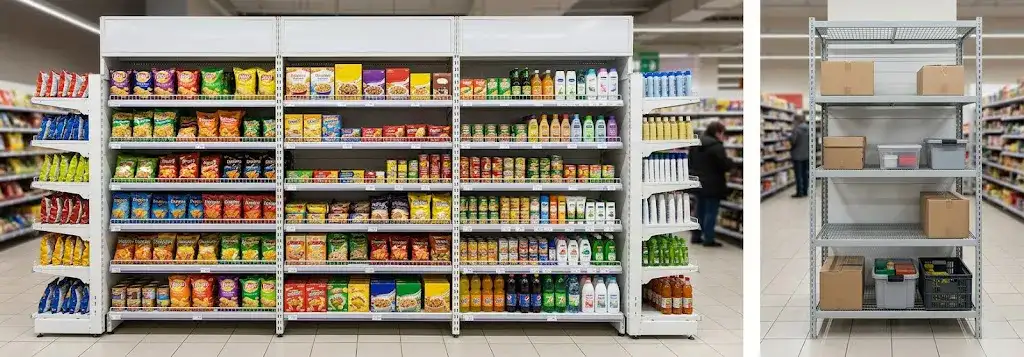
3. Product Display and Merchandising
If you need strong product presentation, supermarket shelving performs better.
Retail success depends on product visibility. Supermarket shelving helps you present products at eye level, create category blocks, support promotions, and improve shelf organization. This is especially important in grocery stores, convenience stores, pharmacies, and neighborhood supermarkets.
Standard shelving may hold the same products, but it does not usually support the same level of visual control. That can reduce display quality and weaken the shopping experience.
4. Accessories and Customization
In customer-facing environments, details matter. Supermarket shelving often supports:
- Price tag holders
- Sign holders
- Hooks
- Dividers
- Front fences
- Wire baskets
- End caps
- Brand color customization
These accessories make the system more useful for different product types and seasonal display changes. A factory with OEM or ODM capability can usually adjust dimensions, colors, shelf depths, and accessory combinations to fit your store layout.
Standard shelving tends to have fewer options because it is not built around merchandising.
5. Load Capacity
Standard shelving may offer broader load options, but load capacity depends on the exact shelving design, material thickness, and intended use.
Some buyers assume that standard shelving is always stronger. That is not necessarily true. The right comparison is not “which is stronger” in general, but which shelving system is engineered for your product load and use environment.
Supermarket shelving is usually designed for light to medium retail loads, with the exact capacity depending on shelf width, steel thickness, reinforcement, and bracket design. Standard shelving can range from light-duty to more storage-oriented systems.
| Application Scenario | Recommended Priority |
|---|---|
| Packaged food display | Supermarket shelving |
| Beverage display | Supermarket shelving with reinforced shelves |
| Backroom stock storage | Standard shelving or storage shelving |
| Mixed retail + reserve stock | Combined shelving solution |
If you are comparing systems for heavy goods, it helps to review shelf loading requirements before finalizing a layout.
6. Installation and Layout Flexibility
Supermarket shelving is better for organized aisle layouts and store traffic flow.
You may need center gondola runs, wall shelving, promotional end caps, and clear paths for shopping carts. Supermarket shelving is made for this kind of planning.
Standard shelving can be used in open storage areas, but it is usually less effective for customer-facing aisle structure. If you are designing a supermarket, grocery store, or convenience store, the shelving system should support both the floor plan and the customer journey.
7. Appearance and Retail Readiness
A front-of-store system has to do more than hold products. It needs a finish that supports the store image. Powder-coated steel, clean lines, and consistent shelf alignment all contribute to a better retail presentation.
Standard shelving may be suitable for utility spaces, but it often does not meet the same visual standard expected in modern retail environments.
8. Cost and Long-Term Value
The correct question is not only “Which one is cheaper?” but “Which one supports your business model?”
If you are selling directly to customers, poor display performance can affect product turnover, category management, and labor efficiency. In that context, supermarket shelving often produces better long-term value.
If your need is simple stock storage in a non-retail area, standard shelving may be the more cost-effective option.
Which Shelving Is Better for Your Business?
For Supermarkets and Grocery Stores
If you operate a supermarket, grocery store, or mini market, supermarket shelving is usually the right choice. It is designed for aisle layout, product display, restocking access, and customer movement.
For Convenience Stores and Pharmacies
In smaller retail spaces, shelf depth, visibility, and flexibility matter even more. Supermarket shelving helps you use limited floor space efficiently while keeping products easy to find.
For Stockrooms and Warehouses
If the shelving is placed in a non-customer area, standard shelving may be enough. It can support reserve stock, packaging materials, or housekeeping supplies without the extra cost of retail display features.
For Mixed Retail and Storage Environments
Many businesses need both. A practical setup is to use supermarket shelving in the selling area and standard shelving in the backroom. This gives you better front-end presentation and efficient stock storage behind the scenes.
How to Choose the Right Shelving System
- Consider Your Store Layout
If you need clear aisles, shopper flow, and category display, supermarket shelving is usually the better system. Wall bays, center gondolas, and end caps give you more layout control. - Evaluate Product Weight and Size
For packaged foods, snacks, personal care products, and household goods, supermarket shelving is usually suitable. For heavy reserve stock or bulk storage, standard shelving or another storage system may be more appropriate. - Think About Customer Access
If customers need to browse, compare, and self-select products, use supermarket shelving. If the shelving is only for staff access, standard shelving may be enough. - Review Accessory Requirements
If you need hooks, dividers, sign holders, or brand color customization, supermarket shelving gives you more options. This matters in stores with varied categories and frequent planogram changes. - Balance Budget and Long-Term Use
The lower initial price is not always the lower operating cost. In retail, a better shelving system can improve presentation, reduce clutter, and support smoother replenishment.
FAQ
Conclusion
If your goal is to present products clearly, improve the shopping experience, and build an efficient retail layout, supermarket shelving is the better option. If your goal is simple stock holding in a backroom or warehouse, standard shelving may be enough. The right decision depends on where the system will be used, what products it will carry, and whether display performance matters to your business.
At Spieth, we manufacture supermarket shelving systems for supermarkets, grocery stores, convenience stores, and other retail environments. If you are planning a new store, upgrading an existing layout, or comparing retail shelving with storage shelving, you can contact our team for practical guidance based on your product mix, floor plan, and project requirements.