When you source store fixtures for your retail business, understanding the precise manufacturing processes behind your retail gondola shelving ensures you receive durable, high-quality, and safe units. This definitive guide details the exact production methods for commercial gondola shelving, from the initial selection of raw steel to the final powder-coated finish.
By examining the rigorous engineering standards applied in a gondola shelving factory setting, you gain the technical insight needed to evaluate your supply chain and make informed purchasing decisions for your store layouts.
Key Takeaways
High-grade cold-rolled steel forms the structural foundation, ensuring maximum load-bearing capacity for gondola display shelves.
Precision roll forming and metal stamping guarantee tight tolerances for seamless installation.
Automated robotic welding provides consistent structural integrity across all heavy-duty components.
A multi-stage chemical pretreatment and powder coating process prevents corrosion and offers customized aesthetics.
Rigorous quality control and load testing at every stage validate the safety of the retail gondola shelving before packaging.
Understanding the Foundations of Making Gondola Display Shelves
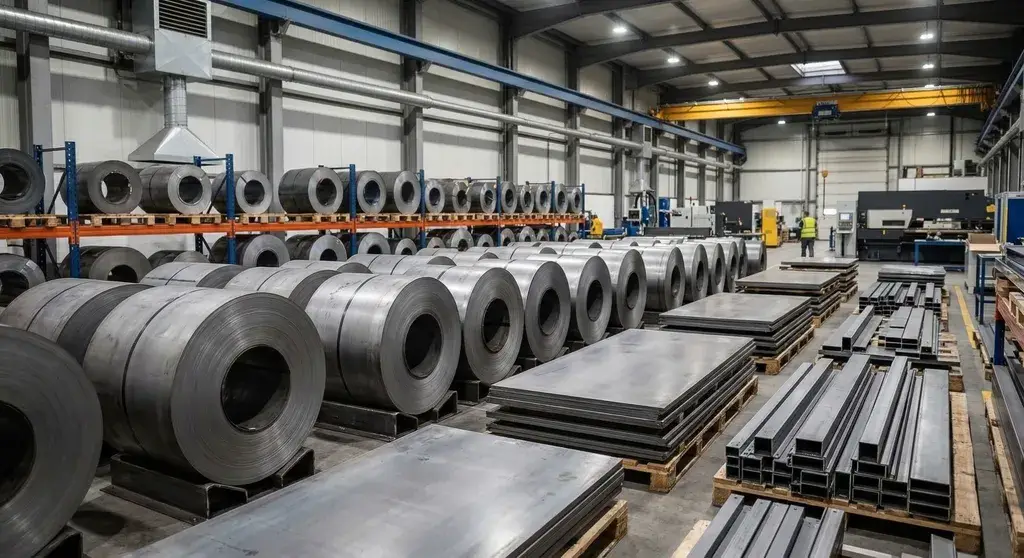
The process of making gondola display shelves begins long before any metal is cut. It starts with meticulous raw material selection. As a retailer, you need fixtures that will not bow under the weight of heavy merchandise or degrade over time. To achieve this, gondola shelving factories exclusively utilize premium cold-rolled steel, specifically grades like Q235 or SPCC.
Cold-rolled steel is chosen over hot-rolled alternatives because it provides a superior surface finish and tighter dimensional tolerances. When you invest in heavy-duty retail gondola shelving, the structural integrity of the steel dictates the lifespan of your investment. The steel arrives at the factory in massive coils, which are then inspected for thickness consistency, tensile strength, and surface defects before entering the primary production line.
Material Specifications and Engineering Design
Before physical production starts, engineers use advanced CAD (Computer-Aided Design) software to draft the exact dimensions, weight capacities, and connection points of the components. This step is critical because any slight deviation in the design phase will compound into assembly issues on your shop floor. The blueprints dictate the exact steps to fabricate retail gondola shelving, mapping out the precise locations for slotted holes, bracket angles, and base foot alignments.
Detailed Steps to Fabricate Retail Gondola Shelving
Fabrication is where the raw steel is transformed into recognizable, functional components. The steps to fabricate retail gondola shelving are highly automated to ensure absolute consistency across thousands of parts. This consistency means that when you order expansion units months or years down the line, they will interface perfectly with your existing gondola display shelves.
Slitting, Punching, and Stamping
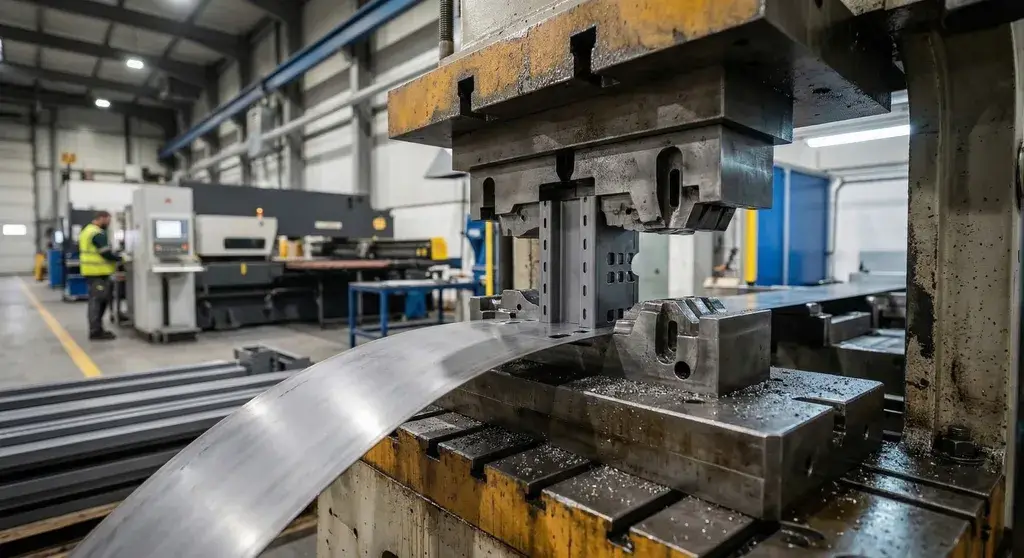
The first mechanical step involves slitting the large steel coils into specific widths required for the uprights, base shoes, and gondola display shelves. Once cut to size, the steel strips enter the punching press.
Punching is a critical operation. Heavy-duty hydraulic presses stamp the precise slot patterns into the upright posts. These slots must be perfectly aligned and cleanly cut; otherwise, the shelf brackets will not lock securely into place, creating a severe safety hazard in your store. Simultaneously, other stamping machines press out the intricate shapes required for brackets, base gussets, and back panel louvers.
Precision Bending and Roll Forming
After punching, the flat metal must be formed into rigid, structural shapes. Roll forming is the standard for manufacturing the continuous lengths of upright posts. The steel strip passes through a series of progressive rollers that gradually bend the metal into its final, multi-faceted profile. This method increases the tensile strength of the steel without compromising its integrity.
For the gondola shelf panels themselves, CNC (Computer Numerical Control) press brakes are utilized. These machines fold the edges of the flat steel sheets to create a reinforced box edge. The precision of the CNC press brake ensures that every gondola display shelf is perfectly flat and capable of distributing weight evenly.
| Component | Manufacturing Process | Material Thickness (Standard) | Key Quality Metric |
|---|---|---|---|
| Upright Posts | Continuous Roll Forming | 2.0mm – 2.5mm | Slot alignment precision |
| Base Shoes | Heavy Stamping & Welding | 2.5mm – 3.0mm | Weld penetration depth |
| Gondola Shelf Panels | CNC Press Brake Bending | 0.7mm – 1.2mm | Edge fold accuracy / Flatness |
| Brackets | Hydraulic Stamping | 2.0mm – 3.0mm | Locking tooth tolerance |
If you are currently evaluating your overall store design and how different fixture dimensions might impact customer flow, you might want to review our extensive guide on [Store Layout Optimization Strategies and Fixture Placement] to maximize the utility of your new retail gondola shelving.
How to Manufacture Gondola Shelving Units: Welding and Assembly
Knowing exactly how to manufacture gondola shelving units requires a deep understanding of metallurgy and joining techniques. The uprights, base shoes, and brackets must be permanently joined with absolute security.
Automated Robotic Welding Protocols
To eliminate the inconsistencies associated with manual welding, leading gondola shelving factories utilize automated robotic welding cells. When welding the heavy base shoe to the vertical upright post—the most critical structural joint of the entire system—robotic arms apply continuous, flawless MIG (Metal Inert Gas) welds.
This automation guarantees deep weld penetration and eliminates porosity, ensuring that the base structure can withstand extreme cantilevered loads. For you, this means peace of mind knowing the base of your retail gondola shelving will not fail under the weight of heavy inventory like canned goods or hardware supplies.
Component Smoothing and Grinding
Following the welding process, the components undergo grinding and smoothing. Slag and sharp weld spatter are removed. This step is non-negotiable, as sharp edges present a liability during installation and restock, and any surface impurities will prevent the powder coating from adhering correctly to the gondola display shelves.
Production Methods for Commercial Gondola Shelving
The visual appeal and longevity of your fixtures depend entirely on the finishing processes. The production methods for commercial gondola shelving feature highly sophisticated surface treatment lines designed to protect the raw steel from oxidation and daily wear-and-tear.
Chemical Pretreatment and Degreasing
Before any color is applied, the fabricated steel parts travel via an overhead conveyor system through a multi-stage chemical wash. This series of baths strips away all manufacturing oils, cutting fluids, welding residues, and microscopic impurities.
- Alkaline Degreasing: Removes heavy oils and grease.
- Rinsing: Washes away the alkaline agents.
- Phosphating/Silane Treatment: Creates a micro-crystalline layer on the steel surface. This layer acts as a bonding agent for the powder coating and prevents rust from creeping under the paint if the surface is ever scratched.
- Final Deionized Rinse: Ensures zero chemical residue remains on the retail gondola shelving components.
Electrostatic Powder Coating Application
Once dried, the components enter the environmentally controlled powder coating booth. Utilizing electrostatic spray guns, fine particles of dry plastic resin and pigment are sprayed onto the grounded metal parts. The static charge causes the powder to wrap around the metal, ensuring an even, thick coat across all edges, slots, and hidden corners.
The coated parts are then transported into a high-temperature curing oven (typically operating around 200°C). The heat melts the powder, allowing it to flow and cross-link into a continuous, hardened shell. This finish is vastly superior to traditional liquid paint, offering unparalleled resistance to chipping, scratching, and fading in high-traffic retail environments.
| Quality Control Parameter | Testing Method | Factory Standard |
|---|---|---|
| Coating Thickness | Magnetic Thickness Gauge | 60 – 80 Microns |
| Adhesion Strength | Cross-Hatch Cutter Test | Minimum 5B Rating (No Flaking) |
| Impact Resistance | Falling Weight Impact Tester | No cracking or delamination |
| Salt Spray Resistance | Neutral Salt Spray Chamber | 500+ Hours without rust |
For businesses looking to integrate specialized merchandising into these systems, understanding how to customize your accessories is crucial. You can transition smoothly into planning your specific display needs by exploring our insights on [Integrating Custom Retail Displays with Standard Fixtures].
Quality Control and Logistics Preparation
The final production methods for commercial gondola shelving involve rigorous load testing and secure packaging. A percentage of every production run is assembled and subjected to dynamic and static weight tests to verify that the deflection limits remain within safe engineering tolerances.
Once cleared by the quality assurance team, the components are systematically packed. Uprights and gondola display shelves are layered with custom-fitted protective cardboard, edge protectors, and shrink wrap to prevent metal-on-metal friction during transit. This precise packaging protocol ensures your commercial gondola shelving arrives at your facility in pristine condition, ready for immediate installation.
Conclusion
Understanding the meticulous processes behind making gondola display shelves empowers you to source equipment with confidence. From the precise roll forming of high-grade steel to the robotic welding of critical joints and the resilient powder-coated finish, every step is engineered to deliver safety, durability, and functional aesthetics. You’ll understand when you work with the manufacturer of Spieth gondola shelving, you secure the reliable infrastructure necessary to support your retail operations and drive sales effectively.
Are you ready to upgrade your retail space with structurally superior, expertly manufactured fixtures? Contact our manufacturing team today. We provide factory pricing, customized engineering solutions, and rigorous quality guarantees tailored to your specific commercial gondola shelving requirements. Reach out now to discuss your upcoming project and request a detailed technical consultation.
Frequently Asked Questions
What is gondola shelving made of?
Commercial gondola shelving is primarily manufactured from heavy-duty cold-rolled steel (such as Q235 grade). The metal is stamped, roll-formed, welded, and then finished with a baked-on electrostatic powder coating to prevent rust and provide a durable, scratch-resistant surface.
How much weight can a gondola shelf hold?
A standard retail gondola display shelf typically holds between 200 to 500 pounds (90 to 225 kg) per shelf level, depending on the thickness of the steel, the depth of the shelf, and the design of the supporting brackets. Heavy-duty units engineered for hardware or grocery stores can support significantly higher capacities.
What are the standard sizes for retail gondola shelving?
Standard widths for gondola display shelves are typically 36 inches or 48 inches (914mm or 1219mm). Heights generally range from 36 inches to 96 inches (914mm to 2438mm), while base depths commonly vary between 12 inches and 30 inches (300mm to 762mm) based on the merchandising requirements.
How do you assemble a gondola shelving unit?
Assembly is a tool-less, modular process. It begins by attaching the base shoes to the vertical upright posts. Next, the back panels (solid or pegboard) are slid into the upright channels. The base gondola shelves are then laid onto the base shoes, and finally, the upper shelf brackets are hooked into the slotted uprights at your desired heights.