Walking into a poorly planned retail store feels chaotic. If aisles are too cramped for two carts to pass, or if shelves are visibly sagging under the weight of heavy stock, you aren’t just losing visual appeal—you are actively dropping sales.
Choosing the right commercial retail fixtures is one of the most critical ROI decisions in store design. Your shelving system dictates your store’s traffic flow, directly impacts product visibility, and heavily influences a customer’s impulse to buy.
This professional guide breaks down exactly how to select and source commercial supermarket shelving based on store type, load capacity, structural dimensions, and long-term scaling needs.
01
Store Typology Dictates Your Fixture Strategy
Before looking at individual units, you must align your shelving with your specific retail model. Store footprint and customer buying habits determine the physical architecture of your shelves.
The Footprint: Tight spaces, narrow aisles, fast customer turnover.
The Strategy: Opt for lightweight, slim-profile retail shelving. Keep central island heights under 1350mm to maintain a clear line of sight across the floor. This minimizes shrinkage (theft) and prevents the store from feeling claustrophobic.
The Footprint: High SKU diversity, fluctuating seasonal inventory, mid-to-high traffic.
The Strategy: Highly modular, adjustable gondola shelving systems are essential here. You need the flexibility to easily swap out shelves for pegboards or wire baskets as your inventory changes.
The Footprint: Heavy bulk merchandising, pallet-to-shelf restocking, constant heavy foot traffic.
The Strategy: Heavy-duty integrated storage racking (hybrid pallet racking). These systems feature structural steel uprights built to handle massive vertical weight without bowing under continuous structural stress.
02
Core Commercial Shelving Types & Strategic Placement
A high-converting retail layout relies on a calculated mix of different structural fixtures to guide the customer journey.
■ Island Gondola Shelving (The Main Aisle Workhorse)
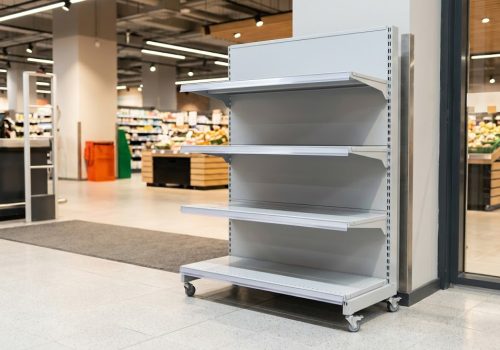
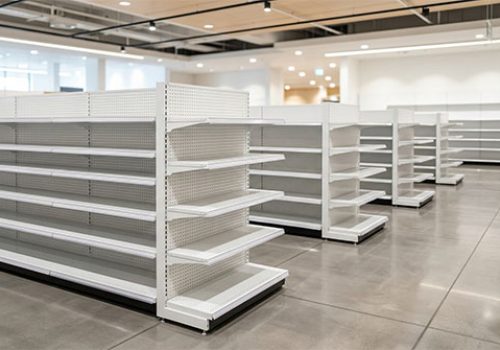
Gondolas are freestanding, double-sided units that form the primary shopping aisles of your store. They feature vertical uprights with standard slotting intervals, allowing you to adjust individual shelf heights based on product packaging.
Best for: Center-aisle grocery, packaged fast-moving consumer goods (FMCG), and general merchandise.
■ Perimeter Wall Shelving (The Border Anchor)
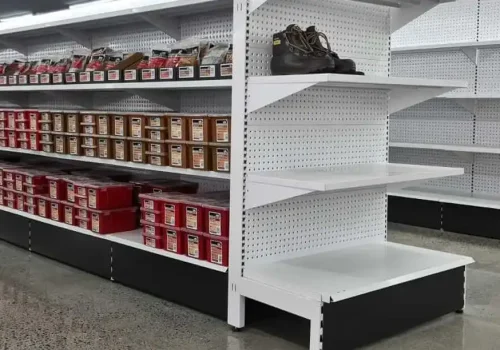
Single-sided sections designed to anchor directly against or flush with your store’s perimeter walls. They turn vertical dead space into high-margin display zones.
Best for: High-end wine and liquor displays, cosmetics, premium electronics, or backing up bakery and dairy departments.
■ Promotional End Caps (The High-Traffic “Action Alleys”)
These units sit at the very tip of a gondola run, facing the primary traffic corridors. Because every shopper passes them, they represent the highest-converting real estate on your floor.
Best for: High-margin impulse items, seasonal product launches, or brand-sponsored promotional displays.
03
Demystifying Load Capacity (Weight Ratings)
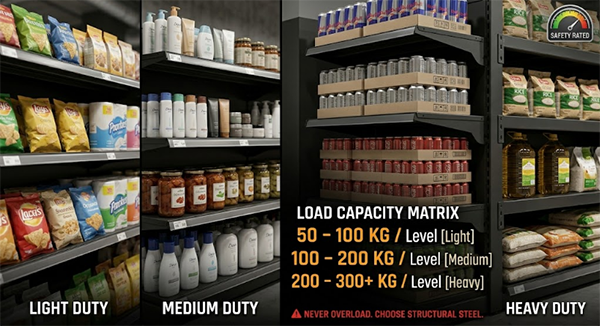
Overloading a commercial shelf isn’t just bad for the hardware—it is a massive structural liability if a shelf collapses near a customer. Always audit your heaviest inventory at maximum capacity before ordering wholesale shelving.
| Capacity Tier | Weight Rating (Per Level) | Typical Inventory Match |
|---|---|---|
| Light Duty | 50 – 100 kg | Chips, puffed snacks, paper goods, bakery items |
| Medium Duty | 100 – 200 kg | Condiments, baking goods, personal care, packaged coffee |
| Heavy Duty | 200 – 300+ kg | Gallons of milk, bulk soda crates, canned goods, heavy bags of rice |
⚠️ Industry Rule of Thumb
If you are merchandising liquids, ceramics, or glass jars, skip light-duty options entirely. Always specify a capacity tier higher than your average weight to account for aggressive over-stocking during peak holiday rushes.
04
Specifying Dimensions for High-Density Merchandising
Your fixture dimensions directly control both your stock density per square meter and the overall psychological feel of the retail space.
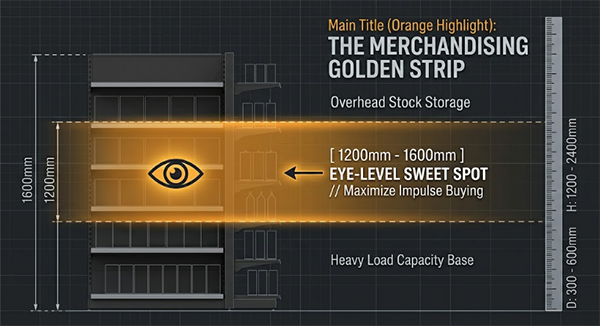
1200mm – 2400mm
300mm – 600mm
900mm – 1200mm
This is your premium real estate. Place your highest-margin products or leading brands directly at adult eye level to maximize impulse buying.
Keeping central gondolas around 1350mm to 1500mm ensures customers can easily navigate the store. It improves store aesthetics and allows staff to supervise the floor easily.
Utilize 2100mm+ wall shelves on the outer borders. The top levels can be used for “top-stock” storage, allowing staff to quickly pull down inventory for quick overhead replenishment without leaving the floor.
05
Aligning Fixtures with Commercial Store Layouts
Your shelving configuration must match the overarching psychological flow of your commercial floor plan.
The Grid Layout (Parallel Aisles)
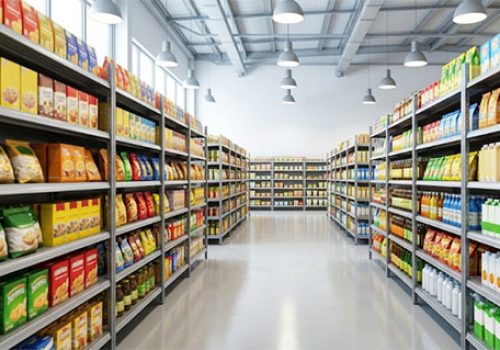
Maximized floor space utilization, maximized shelving density, and predictable pathways that allow shoppers to locate staples quickly. Essential for high-volume grocery operations.
The Racetrack Layout (Forced Loop)
A central loop forces customer traffic down a single main highway, with specialized shelving alcoves branching off it. Guarantees every single department gets maximum exposure.
The Free-Flow Layout (Boutique Zones)
Asymmetrical, angled shelving clusters with varied fixture types. Creates a premium, experiential shopping environment. Works perfectly for organic grocers, high-end wine shops, or gourmet boutiques.
06
Materials and Surface Finishes: Total Cost of Ownership
Almost all modern retail shelves are manufactured from cold-rolled steel, but the external surface treatment dictates how well they handle daily wear and tear from shopping carts and heavy restocking.
Powder Coating (Static Spray)
The industry standard. It creates a durable, scratch-resistant barrier against metal shopping carts and can be customized to match your branding (matte black, charcoal grey, and classic white are standard).
Galvanized Steel
Zinc-coated steel engineered for wet, harsh conditions. This is mandatory for walk-in freezers, cold rooms, or outdoor garden displays to prevent rust and structural degradation.
Chrome Plating
A sleek, high-gloss reflective finish. It catches ambient light beautifully, making it excellent for high-end cosmetics or premium health and wellness products, though it requires frequent wiping to remain smudge-free.
07
Modular Engineering and Future-Proofing
Retail inventory trends change quickly. The commercial shelving you buy today should easily adapt to changing product dimensions next season.
- Toolless Pitch Adjustment: Ensure uprights feature closely spaced H-slots (typically every 25mm to 50mm). This allows your staff to adjust individual shelf levels on the fly without breaking out tools or closing down an entire aisle.
- Accessory Ecosystem: Verify that the system accommodates standard commercial accessories: peg hooks, slatwall inserts, wire dividers, pricing data strips, and integrated under-shelf LED lighting tracks.
- Universal Scalability: Source your fixtures from a supplier utilizing standardized international sizing. If you open a second retail location or expand a run, you cannot afford to find out your proprietary parts have been discontinued.
08
Avoid These Top 5 Sourcing & Layout Pitfalls
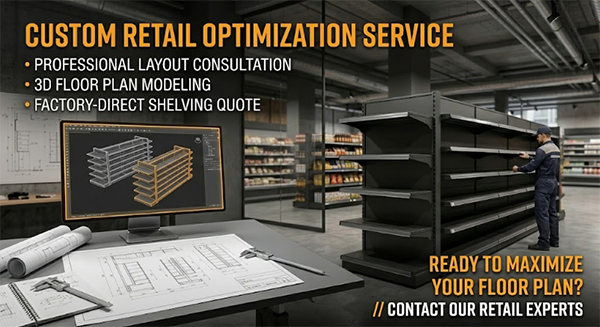
Ready to Maximize Your Retail Floor Plan?
Don’t guess on dimensions and load capacities. Contact our commercial store design team today for a professional layout consultation, 3D floor plan modeling, and a custom factory-direct shelving quote.